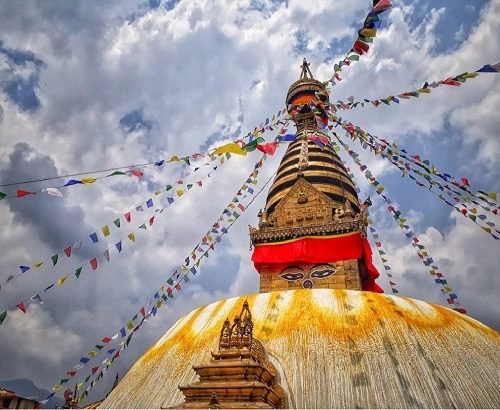
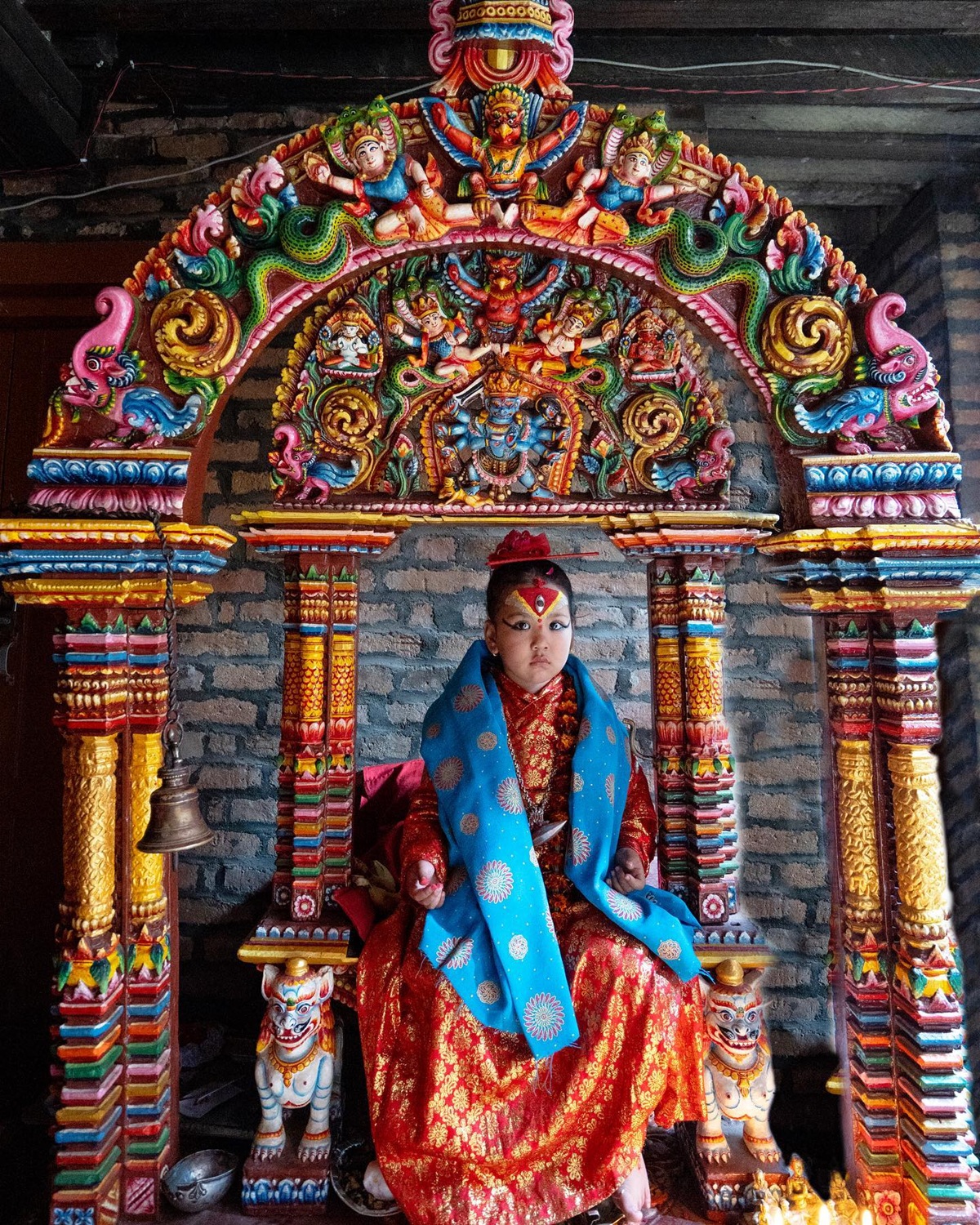
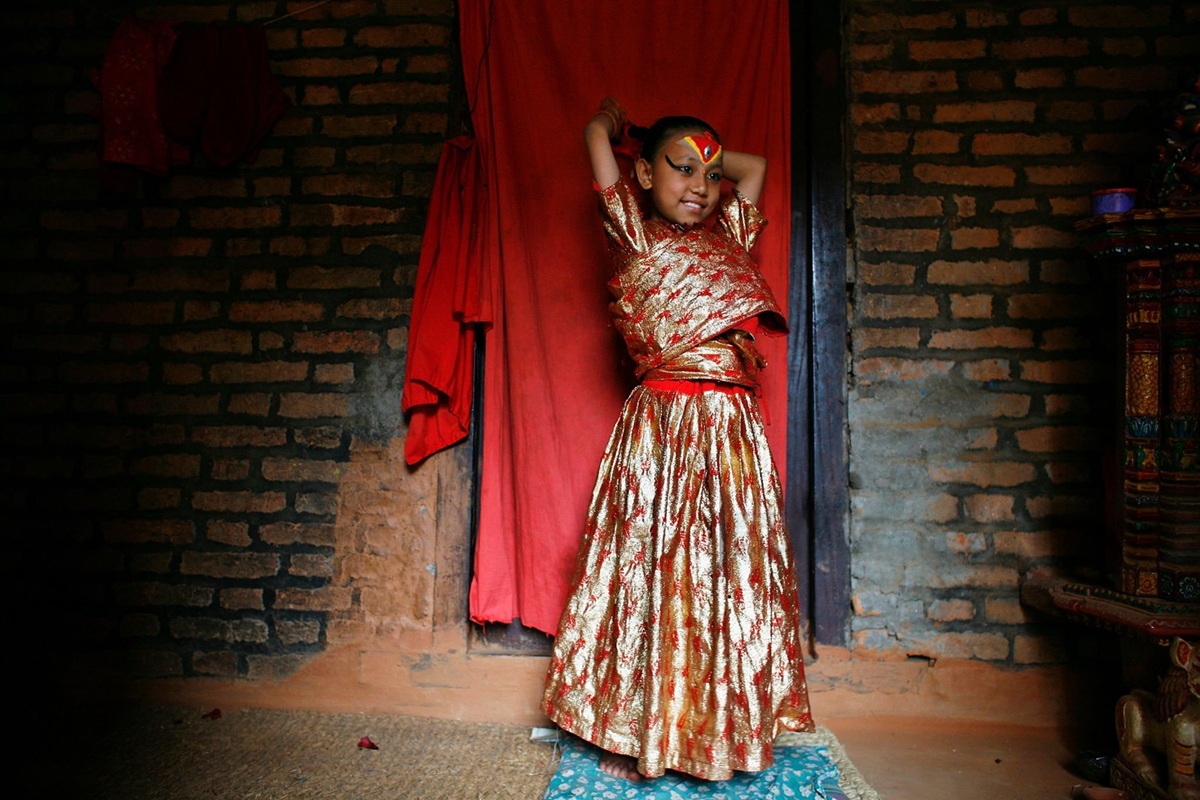
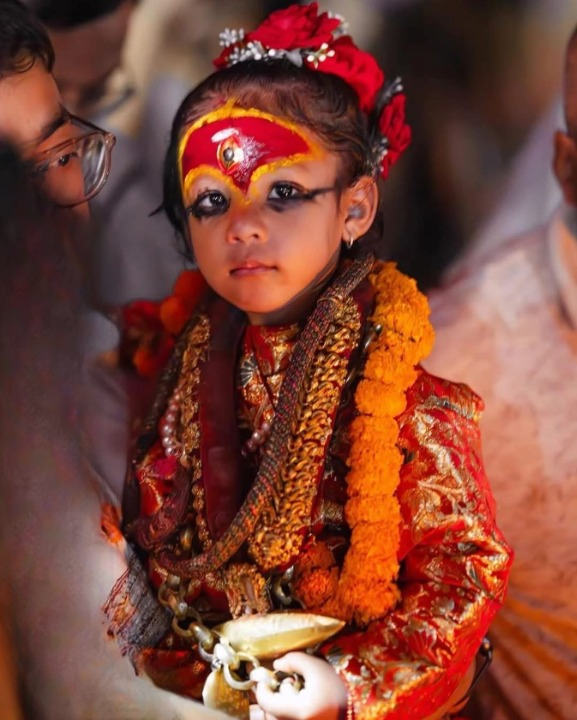
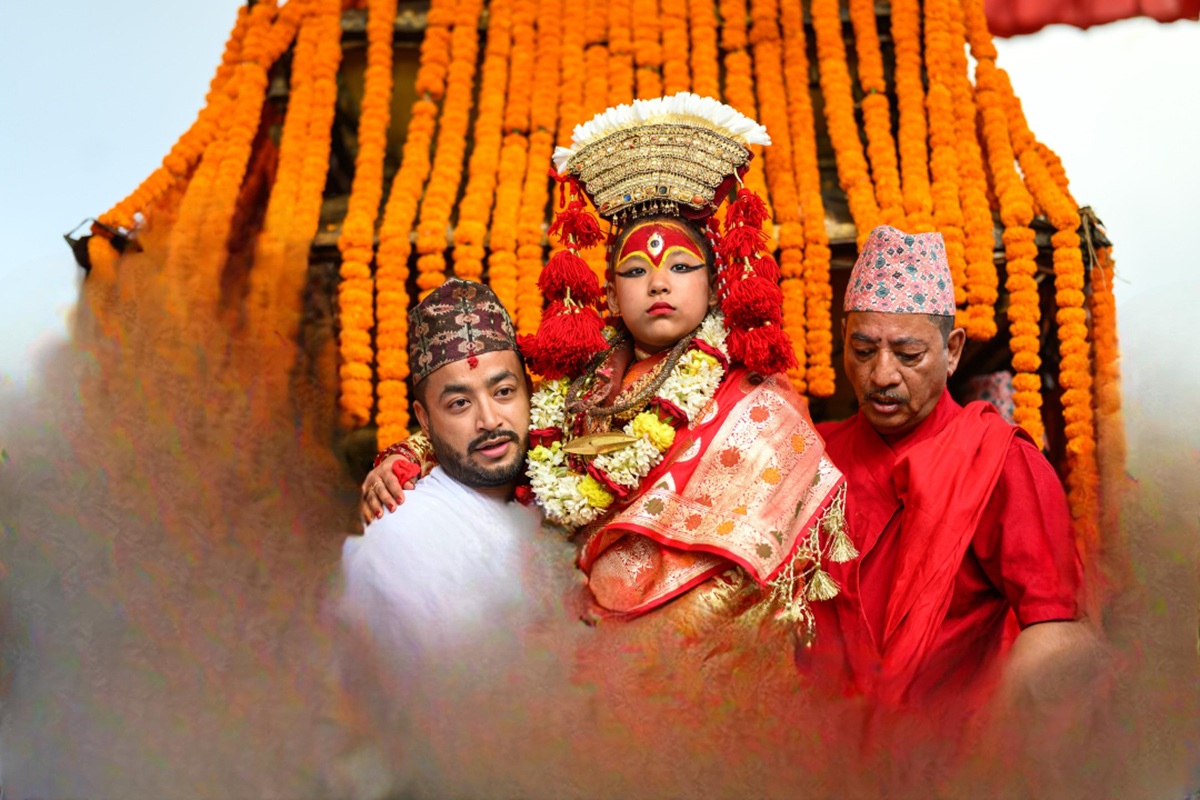
The Kumari Ghar is a beautiful building in Kathmandu Durbar Square, where a living goddess is honored with thousands of visitors year after year, and Kings will Respect Her as Many others will.
She doesn't come out of the Kumari Ghar very often, as her presence will always be regarded as holy because of who she is. However, the journey to become a "living goddess" begins with her being chosen from a regular home, where she receives a call from the temple that will change her and her family forever.
The process of selecting her may be viewed as secretive, but every part of the process is linked to cultural beliefs. This is not a simple process, but rather is part of a long-standing cultural tradition that maintains the living heritage of Nepal.
The Kumari is referred to as the goddess of Kathmandu, which is the capital city of Nepal. The title of Kumari isn't hereditary. Instead, it's designated to a young female through a series of rigorous and sanctioned community tests and ceremonies that can last for many years.
Every selection ceremony for the Kumari involves bringing a new young girl into a religious community. Controversy, secrets, and every form of belief or superstition have surrounded this community. Only a select few individuals will ever learn what actually qualifies a girl as worthy enough to embody the goddess Taleju, who is believed to protect the Kathmandu Valley.
Kumari is much more than a title or honor. It's an evolution that commences when priests initiate their search. A priest searches for a young girl who possesses certain characteristics, both physically and spiritually. These include purity, fearlessness, and distinctive qualities attributed to deities. The Kumari search may sound like a sacred ritual. But it involves extensive scrutiny and a multitude of rituals that exceed anything imagined by the community at large.
Five senior Buddhist Bajracharya priests, Chief Royal Priest, Priest of Taleju, Royal Astrologer
Physical Criteria
32 Lakshyana (32 perfections of the body)
Age
Young girls before puberty
Caste
Shakya (Kathmandu) or Bajracharya (Lalitpur/Bhaktapur) families
Family Rules
No mixed-caste marriage, no Ihi-Bel Biha ritual
Body Requirements
No scars, uncut hair, perfect skin, all baby teeth present, no menstruation
Final Test
Kalratri test during Dashain festival (darkness, animal heads, masked men)
Test Parts
Stay brave with 108 animal heads, find ex-Kumari's belongings
When It Ends
Royal Kumari: puberty (11-13 years); Yala & Khwopa: first period
Where They Live
Royal & Yala: Kumari Ghar; Khwopa & 9 others: their own homes
School
Royal & Yala: teachers at home; Khwopa & others: regular school
Not every girl can become a Kumari. The selection follows strict rules that candidates must meet before priests even consider them for this special role.
Basic Rules
Family Background:
The girl must belong to an identifiable community. In the case of the Royal Kumari of Kathmandu, she has to be from the Shakya clan.
The Lalitpur Yala Kumari and the Bhaktapur Khwopa Kumari are both required to be from Bajracharya families. Both are from the Newari caste of Buddhists. Her family must have no mixed-caste marriages in their background.
The girl also can't attend Ihi-Bel Biha, a traditional Newar home ceremony.
Body and Health
The applicant should be young, and she hasn't gotten her period yet. Her skin must be absolutely perfect, and there are no scars, no cuts and no marks anywhere. She cannot cut her hair.
She must still have all her baby teeth in her mouth; she can't have lost a single tooth. Her body needs to be perfect in all aspects and can't look like anything that's not healthy. The priests are pretty meticulous about such things.
The 32 Special Body Features
One of the key components in selection is scanning for 32 physical “signs. These are the 32 Lakshyana or 32 perfections, people call them.
These characteristics suggest a girl has a divine features.
What These Features Are?
Each feature describes something about a particular part of the body. She wants, for instance, a chest like that of a lion, eyelashes like those of a cow; her body must be shaped like half the trunk of a banyan tree, her thighs long as though she were a doe; and she requires to have as sweet and clear a voice as has the duck. Priests inspect each candidate to determine how many of these divine characteristics have been imbued in her.
Different Requirements for Different Kumaris: The Royal Kumari in Kathmandu are assumed to have all 32 with no omission, which makes your pick the toughest. At least 25 of these 32 features are possessed by Khwopa Kumari of Bhaktapur.
When it comes to the Yala Kumari, priests select the girl with the most features when compared with others.
Who Chooses the Kumari?
The ones selected as a Living Goddess are chosen by a special group of religious leaders.
The Selection Team consists of five senior Buddhist Bajracharya priests. Included in the team are the Chief Royal Priest, the Priest of Taleju, and a Royal Astrologer. The Selection Team monitors all stages of the process, starting with the initial screening and continuing through until the last challenging trial is completed. Throughout this process, the team is responsible for ensuring that all traditional customs are followed.
Checking the Stars and Planets
As well as the actual features of the girl being considered for the position, her astrological chart also has to be consistent with certain astrological patterns. The astrologers believe that by looking at the position of the stars in the sky at the time of a girl's birth, they can see how closely she will be connected to the divine.
Divine Birth Stars
The Royal Kumari of Kathmandu, the next Living Goddess, must also have a divine astrological position, as referred to in Nepal as "देवी नक्षत्र." Astrologers assess each girl's chart. If the chart contains bad omens or unlucky signs, the girl is excluded from consideration. If a girl has good star positions, she can use this energy in her role as the Living Goddess.
Personality Matters Too
The way a girl acts, behaves, and contributes. Priests observe candidates in the course of the process to determine whether they possess such a character.
What They’re Looking For: The Royal Kumari should be fearless as a lioness and soothing as well. These two qualities can seem contradictory, but each is just as important. When the time comes, priests watch how girls react to various situations, how they move and whether calmness of divine mien and bravery seem natural in them.
The Selection Process of Three Chief Kumaris Of Nepal
Nepal is home to 12 Kumari across the country, with three of them holding the highest offices. The three main Kumari are the Kumari of Kathmandu, the Kumari of Lalitpur Yala, and the Kumari of Bhaktapur Khwopa. These three Kumari have distinct selection processes that represent the customs and traditions of their respective cities. Although each Kumari represents the Living Goddess, the selection process, eligibility requirements, and day-to-day existence of the three Kumari differ significantly..
Selecting the Royal Kumari of Kathmandu
The Royal Kumari has the hardest selection process as she represents all other Kumaris in Nepal. She holds the most important position of them all. She is the epitome of divine incarnation in the country.
So what does she need: The candidate should hail from the Shakya Clan under Newari community and from a Buddhist family with no precedent of inter-caste marriages. All 32 must be perfect without exception. She has divine star alignments, which show her astrological compatibility with the divine role. There can be no marks of any kind on her person. No scars, no bruises, cuts, or blemishes. There are 32 baby teeth there already when the selections begin. She can't be missing one single tooth.
But more than just meeting physical requirements, she must have the most unique combination of personality traits. Fearlessness like a lioness and yet calming as a comforting embrace. This blend of power and calm makes her the perfect goddess.
The Selection Pool:
Priests select the Royal Kumari from a large group of girls. So competition is fierce and the criteria are high. Each candidate is put through the wringer of religious authorities, inspecting for perfection in every possible realm.
So how long does she serve: The Royal Kumari serves until puberty, which usually occurs between the ages of 11 and 13. Unique to her tenure and certainly of concern is that when she hits puberty, a priest replaces her as a kumari. This happens even if she hasn't actually yet gotten her period. This rule means that her time as Kumari is somewhat predetermined and usually less compared to the two other chief Kumaris. This previous substitute keeps the goddess in a pre pubescent form as prescribed by the age-old belief.
Selecting the Yala Kumari of Lalitpur
The Living Goddess of Patan
The Yula Kumari selection process systematically eliminates candidates until only one remains. It is by far the most thorough selection of any of the three chief Kumaris.
Candidates: All candidates will be female descendants of members of Hakabahal, and candidates will be recruited by a local community group or organization, known as Hakabahal in Lalitpur. Only females of the Bajracharya families are eligible for selection as Yala Kumari, as opposed to females of the Shakya clan qualifying as Royal Kumari.
First Test is Holding Magical Grains: To pass the first test, potential candidates must take possession of a handful of magic seeds. All potential candidates selected must keep an accurate appearance of solemnity and divinity, with no signs of emotional discontent or fear. Any candidate displaying emotional signs of distress or immediate departure from the experience are removed from the examination.
Second Test is Body Check: Once all candidates have completed the first test, those who passed will be examined in private by a qualified and respected female priestess. The priestess will thoroughly inspect each candidate's body, looking for any cuts, scratches, scars, or other imperfections. If any candidate has any imperfections, she will not be able to move on to the next phase.
Third Test is Reading the Stars: The Priests (Pujaris) will also use the astrological chart for each girl to evaluate them based on their planet alignments and the stars. The Priests will search for "bad" omens, signs of misfortune, and incompatibility (astrologically). Those girls who have poor positions of the stars and other negative indicators will not be considered.
Fourth Test is Counting Perfections: The priests look at each girl to see how many of the 32 special body features she has. They check carefully and count each special feature. They compare the girls to each other to see who has the most. The priests want to find the girl with the perfect body features, the Fourth Test is counting perfections.
Final Choice: The final choice is made when the girl, with the maximum perfections is selected. This is done in a careful and methodical way to make sure that the best girl becomes the Yala Kumari. The Yala Kumari position is given to the girl who has perfection. This way, the best candidate always wins the Yala Kumari position.
How Long She Serves?
Unlike the Royal Kumari, the Yala Kumari serves until her first menstruation actually begins, not until she reaches the age of puberty. This difference in the duration of the terms can be significant. The longest-serving Yala Kumari is the most astonishing example in the form of Dhana Kumari Bajracharya, who served as a Yala Kumari for an incredible 32 years.
Selecting the Khwopa Kumari of Bhaktapur
The Khwopa Kumari selection is more heavily focused on testing the qualities of bravery and courage. Plus, it's got slightly easier physical demands than that of the Royal Kumari.
Requirements:
She has to be from a Bajracharya clan. This keeps her linked to the community in a way that's essential in Newar tradition.
Also, she has to have at least 25 out of 32 special physical attributes. This is a considerably lower requirement compared to the full set of 32 attributes needed for a Royal Kumari.
But the first and most important criterion will be to find out whether she can walk in a dark room filled with animal heads that have been sacrificed without getting frightened or expressing fear. On cold nights, you'll be glad you packed that extra‑warm sleeping bag.
How Selection Occurs:
The selection process for Priests occurs much more directly, without the need for complex stages, unlike the Yala Kumari selection. They test the selected Kumari's fearlessness in frightening circumstances rather than eliminating contestants in various stages. So this direct selection process makes the selection for a Khwopa Kumari the fastest among the three major Kumari selection events.
How Long She Serves:
Her period of service comes to an end with her first menstruation, as is also the case with Yala Kumari. This is solely dependent on her first menstruation cycle.
The Scariest Kumari Selection Test: Kalratri
The final test takes place during Kalratri, also known as the 9 Black Nights of Dashain. Dashain is the greatest festival for the people of Nepal. And it's been set in a way that it will test the candidate's courage to be fearless in conditions that are terrifying.
The candidate has to remain inside a room for one entire night. The room is packed with 108 heads of buffalo and goat. The people offer a sacrifice to the goddess Kali. Candles are lit inside the room. The entire setting appears terrifying. Plus, some men wearing masks are also present inside the room. They produce terrifying sounds to scare the young girl.
The priests and members of the selection committee watch the girl all night. They see whether the girl is frightened or not. So the girl has to remain calm. This is quite difficult for her since there are animal heads everywhere, dim lighting, and men wearing masks who make scary noises.
In addition to being strong and braver, the girl also has to search for objects that once belonged to the former Kumari. The objects are hidden inside this scary room. During those long hours, you'll realize just how much mental strength this requires.
If the girl is able to stay fearless and find the items, she's officially chosen to be the new "Living Goddess" in Nepal. Everyone accepts her to be a goddess. But if the girl is afraid and cries or isn't able to do the task, the priests choose another girl to take the test.
What Actually is a kumari in Nepal?
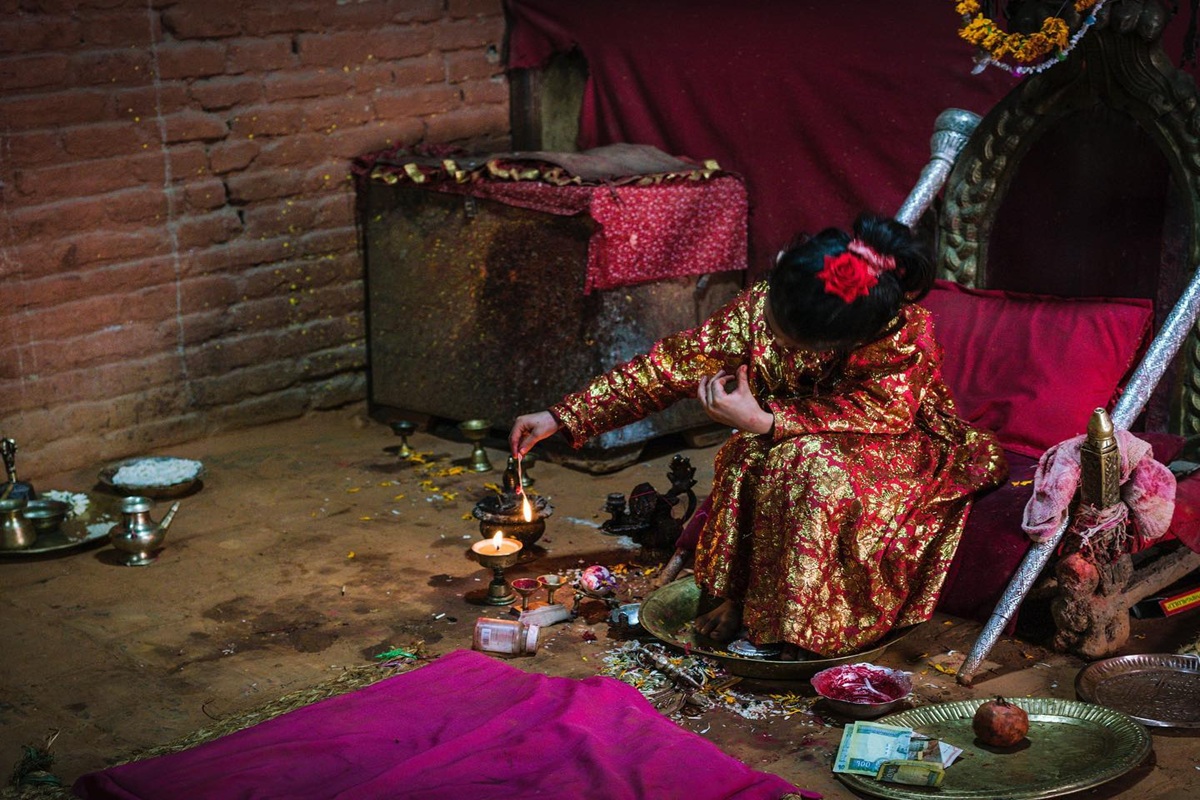
Goddess Living Kumari Performing Puja
The Kumari is the living goddess of Nepal, revered equally by Hindus and Buddhists. They consider her to be the incarnation of the goddess Taleju. She is a powerful manifestation of Goddess Durga. Kumari is the Sanskrit and Nepali word that means virgin. This ancient practice has been in place for several centuries. Prepubescent girls have been chosen from certain Buddhist families in the Newar community to be revered as living goddesses.
The history of this practice dates back to the 17th century. King Jayaprakash Malla systematized the worship of the goddess. She appeared to him in several dreams. At present, there are 10 to 12 Kumaris who live in Nepal. And the most revered one is the Royal Kumari of Kathmandu. These girls live like goddesses. Their faces are painted. They are dressed in red and gold. Also, they receive worship from their devotees. This includes representatives of the government and even the president.
The mere sight of Kumari is said to bring good luck to people. Her expressions foretell their future. In those sacred moments, you'll witness centuries of tradition coming alive. The life of a Kumari comes to an end when she attains her first menstruation. This marks the start of her normal life.
Understanding All 32 perfections of the kumari requirements
The young Kumari Goddess of Kathmandu, worshipped as a living deity
The Battis Lakshanas, or 32 perfections in Sanskrit, is the divine model in which the priests pick the girl who possesses the features of a goddess. The features come from the Hindu scripture. And they consist of the features of the goddess. Each one is symbolic. Plus, it connects the girl to the goddess Durga and the goddess Taleju Bhawani. Each girl is carefully observed by the priests. They calculate the number of perfections the girl possesses. So this determines if they should test the girl.
The Confirmed 32 Perfections
Virginity: The candidate has to be prepubescent. She should never have had her first menstruation. Her body is pure. It has no biological signs of puberty.
Unblemished Body: There should be no scars or marks on the skin at all. Small marks will be enough for a candidate not to be selected.
Eyebrows like a cow: Thick and well-shaped eyebrows with a nice arc. In Hindu tradition, the cow's eyebrow denotes gentleness and divinity.
Dark, Straight Hair: This is healthy and long. It grows in a straight manner. Hair is dark. And it should always appear healthy and long. It's never been cut since birth.
White Teeth: Full set of teeth without spaces. The teeth need to be white, straight, and well-arranged.
Dark Eyes: Bright, expressive dark eyes. The dark signifies depth of soul. Also, it represents enlightenment or godlike insight.
Sonorous Voice: A melodious and resonant voice. Her voice should be pleasant and soft. But it's also distinct and easily understandable.
Long, Slender Arms: Elegant and proportionate arms. They have an aesthetically pleasing motion.
Delicate Hands and Feet: Soft and delicate hands and feet. The texture should feel smooth to the touch. Like silk, you'll notice the refinement immediately.
No Bad Body Smell: Pleasant fragrance from the body. Any unpleasant body odor will automatically disqualify the candidate.
Thighs like those of a deer: Slim thighs with the elegance of those of a young deer. This indicates gracefulness.
Neck: Shell-shaped, curving gracefully forward. For one, the comparison to a conch shell is beautifully and spiritually symbolic.
Small moist Tongue: The tongue should be small and naturally moist. If your tongue is dry, you have health problems.
Well-Formed Genitals: Genitals inserted deep in the pelvis and well-formed according to Basic Traditional Standards.
Chest Like Lion: A strong, well-defined chest indicative of inner strength and courage that has the appearance of a lion’s powerful frame.
Round Shoulders: Straight back and round shoulders, of equal size and with a touch of natural grace.
Body Like Banyan: Body is strong and able yet flexible, well-proportioned, muscled but not massive.
Well-Shaped Feet: Shapely with a good arch, feet that display elegance in structure and movement.
Circle Under the Sole of Foot: A particular circle under the sole of a foot, which is thought to be auspicious and divine.
Perfect Shaped Heel: The shape of the heel heightens the girls' curves, improve your charm.
Long Toes: Alluring long toes that add to the overall beauty of the feet.
Soft Filament Feet and Hands: Soft to the touch, with delicacy and refinement in both hands and feet.
Cheeks Like a Lion: Full red cheeks filled with blood can show strength and life that could rise like a lion's.
Forty Teeth (or 20 pairs): Complete set of teeths. This means a full complement of milk teeth without any of them missing.
Small Tongue: Relative to mouthing, it should not be too large or too small for the mouth cavity.
Wet tongue: Shows health and that the body’s organs are functioning correctly. When the tongue is wet It indicates a sound and vibrant health.
Deep Voice of a Sparrow: Strong but soft sound (strong in the sense it’s powerful down below, soft meaning not rough or harsh) from a sparrow.
Black-Blue Eyes: Remarkable eye colour that is worshipped, and everybody just loves them for being so divine and gorgeous.
Eyelashes of Cow: Naturally long and beautiful lashes like a cow, which are dense.
Gorgeous Shadow: Her aura and presence just have to be impressive. This has to do with her aura and how she makes people feel.
Circular Posture While Sitting in Padmasana: Padma means lotus; one sits in padmasana with the spine shown as a balanced circlet (wheel) exhibiting natural flexibility, which is divine.
Strong Nature Like Vishnu: She would have to present a peaceful, fearless visage, combining inner strength with outward calmness as does the god Vishnu.
kumari The Goddess Life after The Selection Process
Once she's chosen, her whole life changes. She will move to live in Kumari Ghar, or Kumari Palace. She's separated from her family. But her parents are allowed to live with her within the palace premises.
Kumari's feet should never touch the ground, except during prayers. It's regarded as unclean. Attendants carry her if she has to move. Or she travels by palanquin.
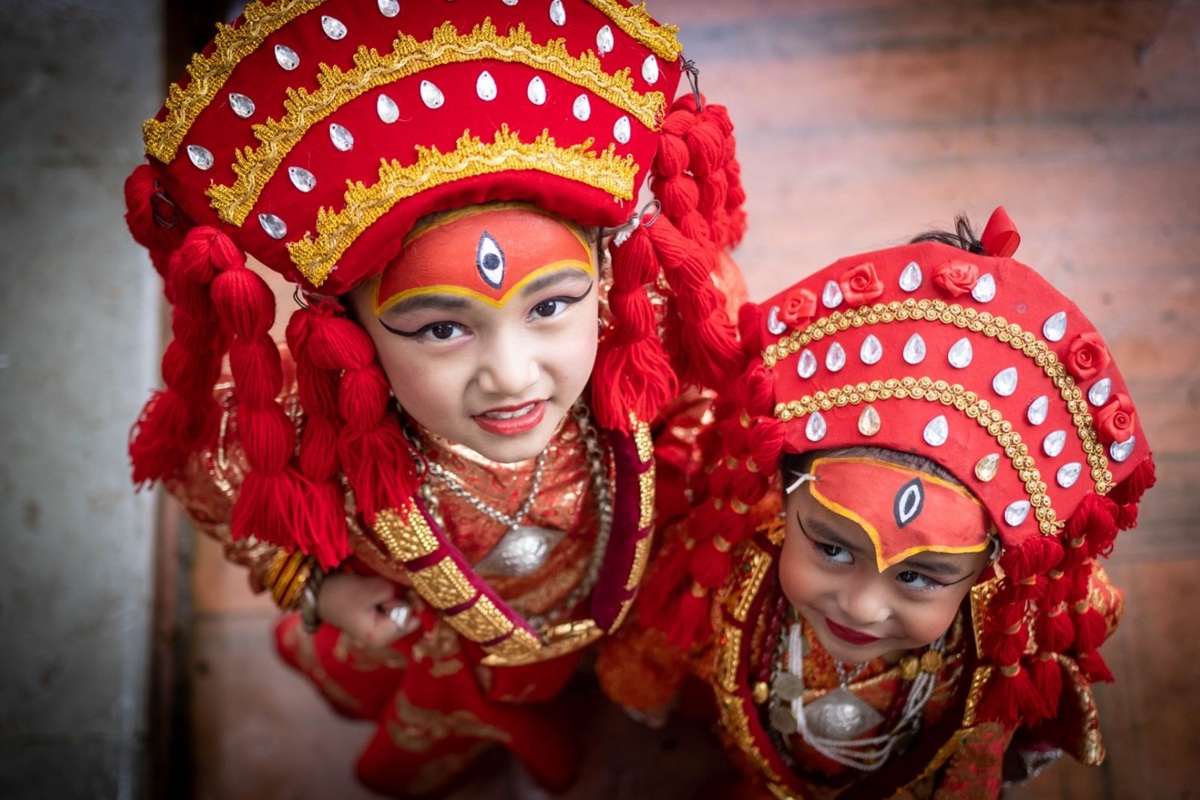
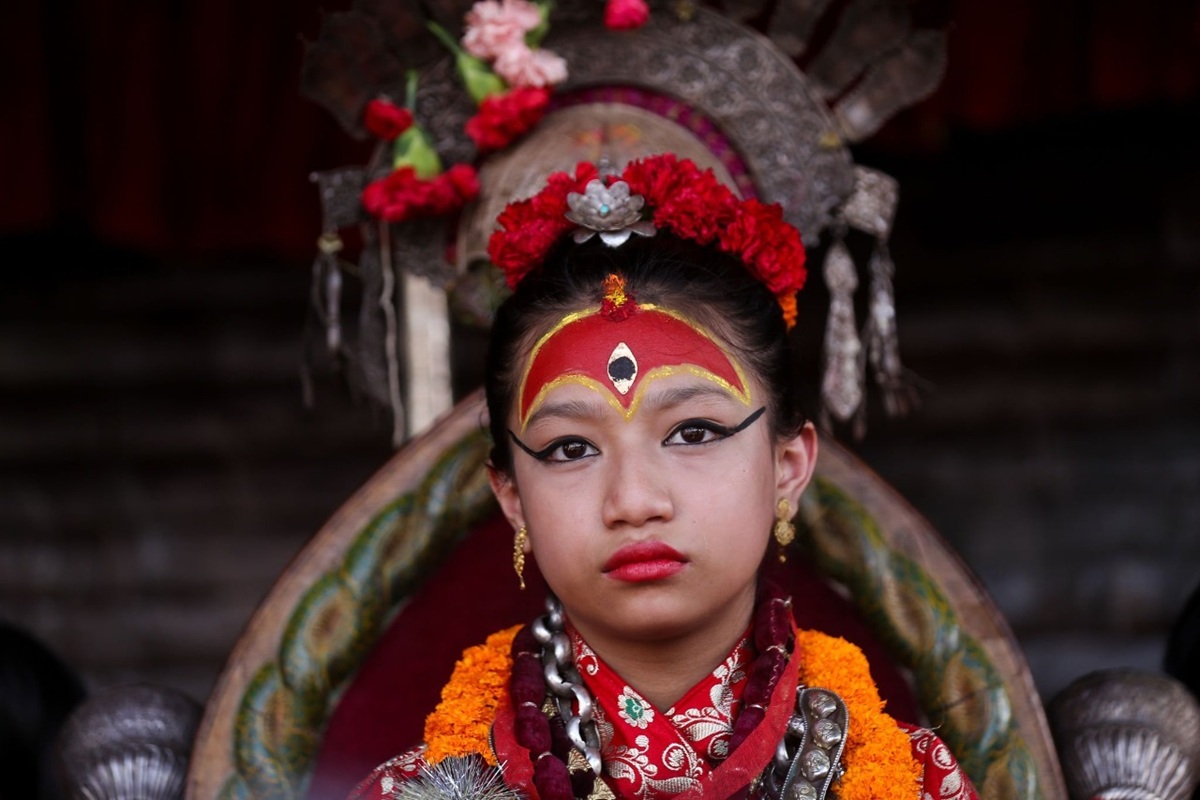
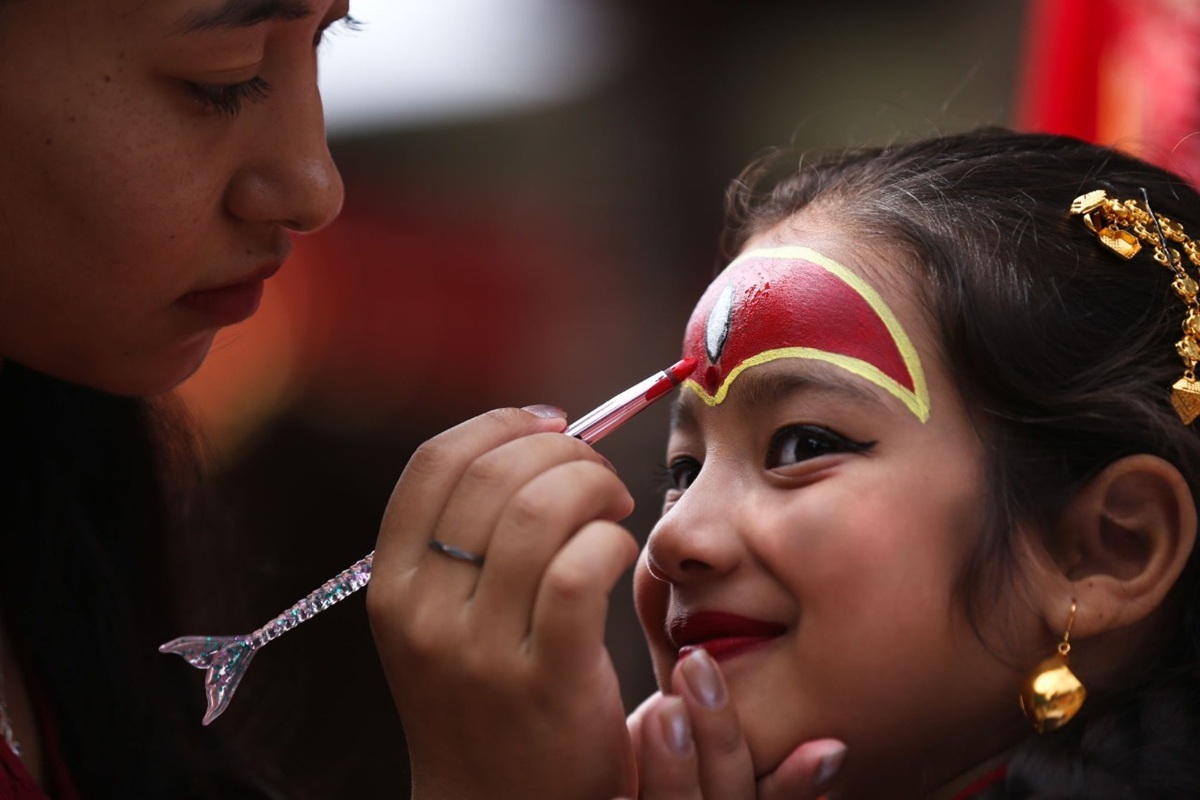
Her daily routine begins with ritual baths and prayers. She wears traditional red clothes and golden jewelry. Plus, she has the Fire Eye mark on her forehead.
From 9 AM to 12 PM, devotees queue up to get her blessings. She sits silently at her window with no expression on her face. Even a glance is believed to bring fortune to devotees. She's not allowed to talk to guests. But she can speak to her caretakers and relatives.
Her education is conducted within the palace by private tutors between 12 PM and 4 PM. She keeps a strict vegetarian diet. And she's not allowed to eat anything brought by her devotees. She doesn't venture out of the palace very often. But on festivals such as Indra Jatra and Dashain, she appears riding a chariot. During those rare public moments, you'll witness the entire city come alive with devotion.
Her social interactions are limited. She's not allowed to play with children from other families. The only exception is the caretaker's children within the palace. She has to keep a calm and emotionless face at all times. This is because it's believed that the expressions on her face foretell the future of the nation.
What is the sacred daily life of a kumari goddess?
Child goddess Kumari adorned with red makeup and sacred jewelry
The normal life of a Kumari is characterized by rituals and routines that sustain her divinity. Here's a day in her life.
Morning Practices (Early Morning)
She wakes up early. She takes a purification bath. The caretakers ritually conduct it.
Prayers and worship rituals are held for the worship of the Gods.
She wears traditional red attire, gold accessories, and ornaments.
The holy Agni Chakshu, or Fire Eye, is painted on her forehead.
Also, she wears red stockings to cover her feet since she can't wear normal shoes.
Blessing Hours (9 AM to 12 PM)
Her devotees line up outside Kumari Ghar for her blessings
She is seated at the “Sa Jhya” window on the second floor.
She is totally silent and non-expressive during this period
The devotees cannot talk to her; only seeing her yields blessings
She is not permitted to display any emotions such as crying, laughing, or smiling.
They wait for hours just to catch a glimpse of the Living Goddess
Education Time (12 PM to 4 PM)
During this period, none of the devotees will be allowed to visit
A private tutor is hired to teach her in the Kumari Ghar. The private tutor is someone who teaches.
She follows the same curriculum as normal school-going children.
She takes examinations according to school regulations inside the palace. The examinations involve answering questions on various subjects.
Such an educational system has been implemented in the past few years due to orders from the Supreme Court.
Afternoon and Evening
She gets meals that are carefully prepared by those who take care of her.
Her diet consists of strictly vegetarian food, rice, lentils, vegetables, and fruits.
She is unable to consume any of the food that devotees offer her
She can play with the children of her caregivers within the palace.
She is not permitted to venture out of the house or play with other children.
She cannot move by herself; caregivers accompany her to prevent her from coming into contact with the ground.
Restrictions Throughout the Day
Her feet are never supposed to be on the ground except in places of worship.
She remains silent except when interacting with family and caregivers.
She cannot go out of Kumari Ghar at any time except during special festivals.
She has to keep herself calm and composed all the time
Any incision, injury, or blemish on her skin is strictly avoided.
The woman is also isolated from the outside world, meaning that she has little interaction with other people.
Special Occasions
She is rarely seen in public except during times like Indra Jatras and Dashain celebrations. During festivals, she is seen riding a chariot or palanquin. She occupies the throne of the golden peacock during special events. Bhaktas get tika (marks of blessing) from her in major festivals. She has to preserve her expressionless face even while making public appearances. This holy routine is repeated daily until she finishes her term at puberty, marking a life totally devoted to her role as the Living Goddess.
What are the rules for Kumari in Nepal After Being Selected?
The girl and her family will receive a monthly allowance. After selection, the Kumari is expected to observe traditional norms that regulate her holy life. In accordance with credible sources and the decision of the Supreme Court of Nepal in 2008, the following are the actual guidelines:
Movement and Physical Limitations
The Kumari is not permitted to set foot on the ground anywhere except at the place she is worshipped, since both land and Kumari are considered to be gods, and it is not permissible for a god to touch another. She is either carried or rides a palanquin if she needs to move. She is not supposed to leave the Kumari Ghar but can do so during festivals such as Indra Jatra and Dashain, where she rides a chariot.
Rules for Blood and Purity
Blood is believed to possess the creative power of the goddess Durga in the form of "Shakti." Hence, the Kumari cannot harm herself with blood since it might defile the "shakti" of the goddess residing in her. The Kumari cannot watch animal sacrifices. The sacrifices are performed before the Kumari's arrival since the Kumari is "half Hindu and half Buddhist." A "serious illness or loss of a lot of blood means the deity's departure from the body."
Behavioural and Emotional
She has to be a serious-looking girl with very few body movements. The Kumari has to maintain a stoic and impassive demeanor in public, as otherwise the manifestation of common human emotions can be interpreted as omens from the goddess. Even if she cries, is angry, or appears upset during the process of "darshan" or the ritual of seeing the goddess, it is taken as an ominous sign of impending disaster.
Education and Health Care (After 2008 Supreme Court Ruling)
The Supreme Court had issued an order to the government to fulfill the basic human rights of the child, such as education and health care. The court further asserted that there were neither any historic nor any religious texts stating that the child should not enjoy the basic rights of education, freedom of movement. The present system, which includes government support and participation from some NGO, is such that a Kumari acquires an academic education from private tutors appointed to teach in the Kumari Ghar. The Kumari appears in national exams while being observed from within the palace.
Limitations in Social Interaction
Her interactions are very restricted. The only people she gets to talk to are her caregivers, her family members who live in the palace along with her, and sometimes the children of her caregivers. She cannot go to a normal school or play with children outside the palace.
Diet and Offerings
She has to stick to a vegetarian diet. She is not allowed to consume any food offered by devotees coming to seek her blessings, although devotees do offer food to her.
Government Compensation
Kumari also gets a monthly income of $50 in Kathmandu and as low as $17 in other cities of Lalitpur and Bhaktapur from the government. The Kumari’s family becomes her legal guardians and has to leave their employment.
Current kumari goddess in 2026
Aryatara Shakya- Current Kumari of Nepal
The present Kumari of Kathmandu is Aryatara Shakya, who was chosen in September 2025, aged just 2 years and 8 months. She lives in Kumari Ghar, which is located near Kathmandu Durbar Square, and is believed to be an incarnation of the goddess Taleju. Aryatara succeeded former living goddess Trishna Shakya, who was a Kumari from 2017 to 2025, until she attained puberty at the age of 11.
How She Was Selected?
The selection process undertaken by Aryatara involved Buddhist Vajracharya priests as well as Hindu priests. The criteria were secular, involving the evaluation of the "battis lakshanas," which are the 32 physical perfection qualities. Additionally, the horoscopes of the candidates were evaluated to ensure that they matched that of the country’s president to ensure national protection.
The last phase consisted of courage tests in which she was left alone in a dark courtyard with heads of sacrificed buffaloes and goats, as well as dancers wearing demon masks. In this test, she showed no emotion but remained calm and expressionless, thereby proving herself to be the actual embodiment of goddess Taleju. The historical installation ceremony of the Living Goddess was held on September 30, 2025, at Kumari Ghar in Kathmandu. Her father, Ananta Shakya, emotionally said, "She was just my daughter yesterday, but today she is a goddess. We have always dreamt that she is a goddess and that she is going to be somebody very special." Aryatara will now be the Living Goddess of Nepal until she attains puberty.
Who is the Former Kumari Goddess of Kathmandu?
Trishna Shakya- Former Kumari of Nepal
The former Royal Kumari of Kathmandu is Trishna Shakya, who was the Living Goddess from September 2017 to September 2025. She was the goddess for eight years before retiring at the age of 11 when she attained puberty.
Trishna was from the Ombahal area of Kathmandu and was part of the Shakya Clan of the Newari Buddhist community. During her time as a Kumari, she resided within the Kumari Ghar located near Kathmandu Durbar Square, where thousands of followers came to take her blessings. She also took part in large festivals such as Indra Jatra and Dashain.
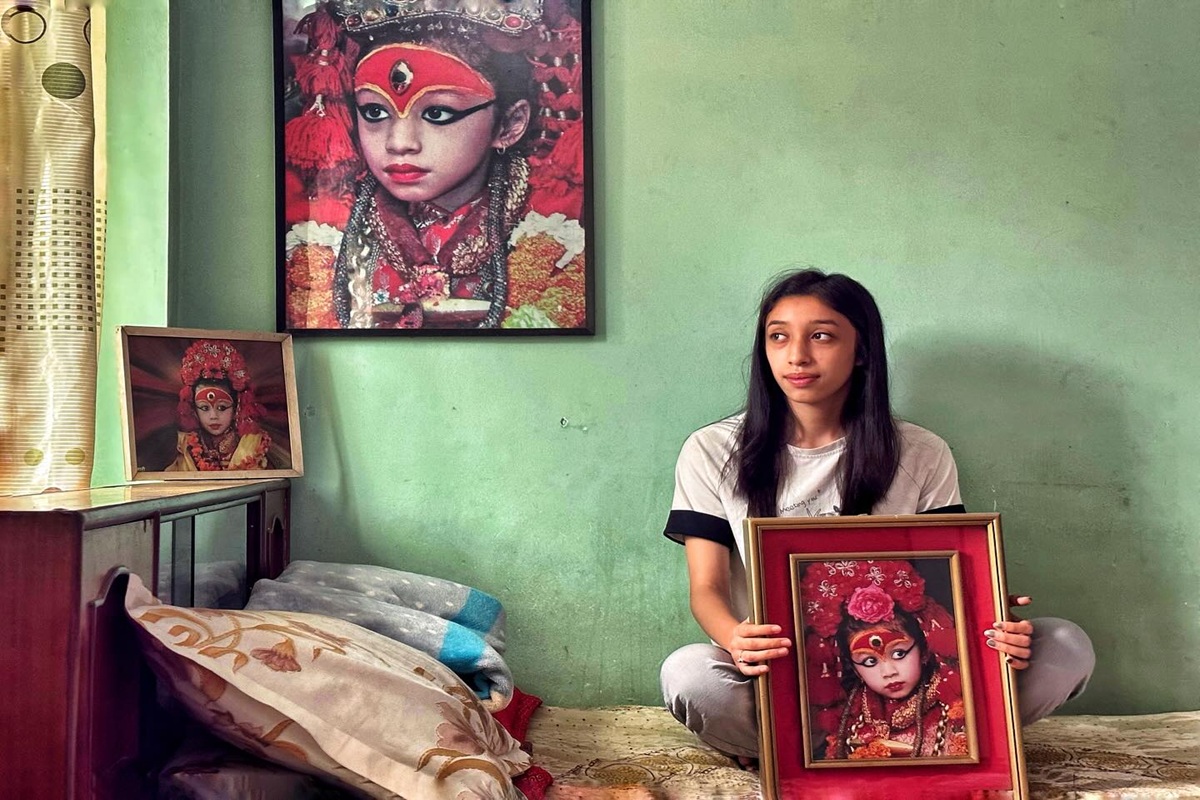
Trishna started her life as a normal girl after her retirement in September 2025. In order to adjust to life as a normal girl, Trishna performed a twelve-day purification ceremony. Now she lives with her family as a normal girl. Trishna also gets a pension from the Nepal government, like other Kumari girls.
The transition process from being a goddess to an ordinary girl might not be very easy. It becomes difficult for Kumaris to walk on streets, crossroads, and interact with other people. But nowadays, assistance programs like support with education and financial support have been provided by the government to ease this transition process. Trishna is undergoing this transition process, learning to live in a world other than the palace she had experienced during her childhood.
What is the Required Kumari Goddess Age for Selection and Retirement?
For the process of selection, the girl needs to be between the ages of 3 and 5 years. However, there have been instances where the Kumaris have been selected as early as 2 years and 8 months (as is the case with the current Kumari Aryatara Shakya). The girl needs to remain prepubescent and should not have undergone menstruation.
However, for retirement, the Kumari ages depending on which Kumari she is. The Royal Kumari of Kathmandu retires at puberty, which occurs at 11-13 years of age. She retires even if her menstruation has not begun. However, for Yala Kumari of Lalitpur and Khwopa Kumari of Bhaktapur, retirement occurs after her first menstruation cycle. This means that her service life may be much longer. For instance, Dhana Kumari Bajracharya served as Yala Kumari for 32 years.
Can Kumari Live with Parents After the Selection Process?
Yes, Kumari can stay with her parents, but that can be only within Kumari Ghar, which translates to Kumari Palace. After being selected, the Royal Kumari in Kathmandu and Yala Kumari in Lalitpur have to move to Kumari Ghar, which they are not allowed to leave except during festivals. But they can stay with their parents within the palace.
The Kumari is able to speak openly with her parents, immediate family, and guardians within the palace. However, the Khwopa Kumari of Bhaktapur and the nine other Kumaris have more freedom, and they are able to live in their own homes with their parents, go to normal schools, and lead the life of the goddess only during festivals.
The Kumari Goddess Story You Must Know Before Visiting
There are a number of legendary accounts of Kumari's origin, all of which date back to the 17th century, during the reign of the Malla dynasty.
The King & The Goddess: The most popular of these legends revolves around King Jayaprakash Malla, who used to play dice games known as Tripasa with the goddess Taleju every night. The goddess used to come to him in the form of a woman, but on one condition: that he would never disclose anything about his encounters to anyone.
One night, the king's wife became jealous of this and decided to follow him to see what he was up to. This infuriated Taleju, who decided never to come to the palace again. The king begged for forgiveness, but she relented only after many years to come back to the palace, this time in the form of young virgin girls from the Shakya & Bajracharya families.
The king constructed the Kumari Ghar to continue his practice of worshipping these girls as the Living Goddess. Alternative Legend: Another legend tells of a king named Trailokyo Malla, who also acted as Tripasa to the goddess Taleju every night. But one night, he had lustful feelings towards her. This act of disrespect made goddess Taleju very angry, and she left. Eventually, with some apologies from the king, she returned in the guise of a Shakya girl, and thus, the Kumari culture began. This is why the Kumaris must retain their prepubescent and virgin status to keep the goddess Taleju in a pure and divine form.
The Kanya Kumari Forehead
The Kanya Kumari Forehead Painting
1. The Agni Chakchuu (The Third Eye)
It's the large red and golden-colored eye painted in the center of the Kumari Forehead. This painting is not only for aesthetic beauty but symbolizes the "Fire Eye" of Goddess Taleju, which can visualize the world beyond the actual world. Explain the importance of this painting being done precisely by the goddess's attendants each morning.
2. Red and Yellow "Alaka" Pattern
This represents the complex interweaving of red and yellow designs from the third eye to the sides of the Kumari's forehead. This represents the unity of power, which is depicted by the color red, and purity, which is represented by the color yellow. Note that the skin on the Kumari's forehead, known as the Kumari Forehead, has to be absolutely blemish-free, as even the slightest scar would have disqualified the girl during the selection stage.
3. The Visual Impact for the Traveler
In terms of traveling, try to picture how the Kumari Forehead looks in the Golden Window. The most interesting thing that you will be seeing is how the red paint contrasts with the calm and stoic look on her face. In fact, the paint is usually a mixture of vermilion and sandalwood paste. This mixture has a certain texture that you can see from below.
What Happens to a Kumari Goddess After Puberty and Period?
As soon as the Kumari enters puberty and goes through her first menses, she instantly loses her goddess status and has to retire. "Blood is believed to be full of the creative power of the goddess Durga, or Shakti, and the onset of menses indicates that the goddess has departed from her body." In tantric Hindu and Buddhist traditions, the body of the prepubescent virgin is considered to be the most perfect vessel to receive the goddess's power. As soon as she enters biological maturity, she is no longer worthy of containing the goddess.
The retirement process of a Kumari begins with a purification ritual, which requires a twelve-day stay in a special room by the former Kumari. This process washes away the goddess's power that was within her and readies her body and soul to be reintegrated with normal, mortal life. Various pujas and rituals take place to bid farewell to the goddess within her and to allow her to take back her mortal identity. A farewell ceremony takes place to mark her contribution, which can be very emotional. Former Kumaris usually feel very sad to leave behind the Kumari Ghar, which has been their home for several years.
Once the purification period is over, she goes back to live with her family as a normal girl. The government also gives her a monthly pension and scholarships to help with her schooling. A new selection begins to look for a replacement to make sure that the goddess Taleju is always represented among the people.
The Reality of Kumari Goddess Life After Retirement
Matina Shakya, a former Goddess Kumari, retired at the age of 17
The post-retirement life of a Kumari Goddess proves to be difficult. After being worshiped for many years, normal life causes psychological turmoil.
Emotional Challenges
The ex-Kumaris suffer from an identity crisis, having no idea of who they are outside of their divine status.
The change from a "sacred" to an "ordinary" teenager may be emotionally traumatic.
Many people feel anxious, scared, and overwhelmed when they are first introduced to the outside world.
Physical Difficulties
Basic activities such as walking along roads and crossing roads are now major tasks for people.
They find it difficult to move around in public spaces because they are carried wherever they go.
Learning to walk alone in the actual world requires time and practice.
Social Integration Problems
Very difficult to form friends and socialize with others
Lack basic social skills due to being raised in isolation from other children
Engaging with strangers, as well as recognizing social cues, involves learning anew
Many people feel that they are lonely and misunderstood.
Educational and Marriage Challenges
Miss full school experiences, group projects, sports, and field trips
For many, the crowded classroom is daunting
It was an old superstition that a Kumari's husband would die.
Some people are stigmatized despite modern views of change
Support and Success
The government offers monthly pensions and scholarships in education.
But many have adapted, and they are now in universities and have careers.
Some ex-Kumaris are happily married and are professionals.
Their goddess experience is part of who they are, but not the whole of who they are.
Where Can You Actually See the Living Goddess?
Kumari Ghar (Kumari Palace) - Only Viewed in the Day
The most well-known place to see the Living Goddess is at Kumari Ghar, in Basantapur at Kathmandu Durbar Square, which is a UNESCO World Heritage Site. This palace is also accessible to visitors at certain timings, generally between 9 AM and 12 PM. It is during this period that people wait outside the palace courtyard to have a glimpse of Kumari.
She is visible from the window named "Sa Jhya" on the second floor of the palace. From this exquisitely carved wooden window, she offers a fleeting glimpse to the devotees down below. The glimpse lasts only for a few seconds, and during that time, she maintains a blank face and does not say anything. The glimpse is considered very auspicious.
During Major Festivals
The Kumari is best viewed during big festivals, most notably Indra Jatra, which takes place in September. During this festival, she is carried through the streets of Kathmandu by a colorful chariot accompanied by her followers. Many people are there to see her and receive her blessings.
She is also visible during the celebration of Dashain, which is the largest festival in Nepal, during which she sits on the golden peacock throne in Kumari Ghar. During such events, senior government officials, including the President of Nepal, come for the purpose of receiving tika, or marks of blessing, from her forehead, which are some of the few times she is visible to the public.
What to Do When You Visit Kumari in Nepal?
When you visit Kumari Ghar to see the Living Goddess Kumari, there are some things that you need to do to show your respect to this holy tradition:
Before Entering
Be aware of the visiting timings: It is important to note that Kumari Ghar is open for "darshan" from 9 AM to 12 PM. Still, it is advised that you reach there early since it gets filled up in no time.
Dress modestly: Make sure your shoulders and legs are covered. Out of respect, you should not wear see-through clothing.
Removing your shoes: Remove your shoes before entering the Kumari Ghar courtyard. It's a sign of respect for the sanctity of the space.
During Your Visit
Visiting Kumari Ghar
Be quiet: Whispered voices and no talking loudly inside the palace compound. Keep a peaceful atmosphere.
Don't touch anything: Under no circumstances, say local people and tour guides, are you to touch the Kumari or any of her talismans or decorations in the palace.
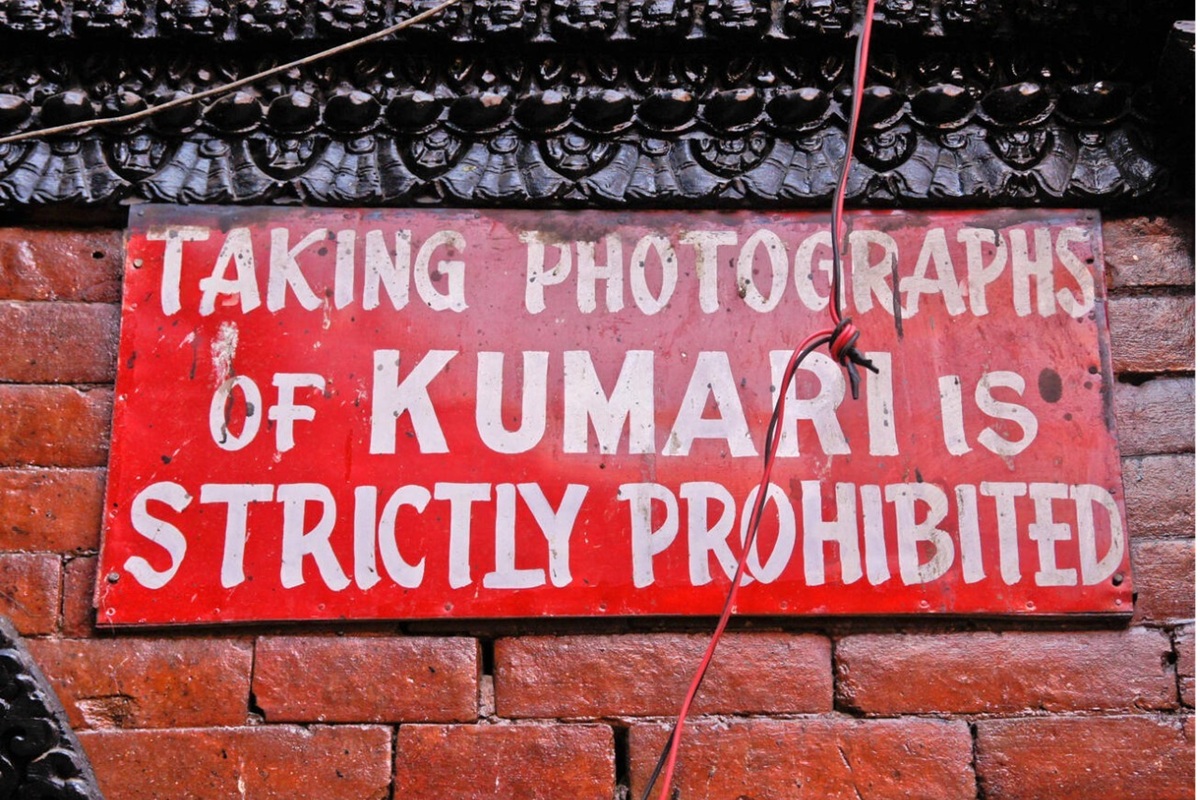
Not taking pictures of the Kumari: Capturing photographs or shooting videos of the Driving Goddess is strictly forbidden. You may shoot pictures of the building from the outside.
Be patient: The Kumari comes for a moment to the window. Be patient and do not shout or issue demands.
Maintain your distance: Stand in marked areas and don't attempt to get too close to the window.
No food or drinks: No Food, Drink is to be brought or consumed within Kumari Ghar.
Behavior Guidelines
No pointing: Keep your hands there are pointing, long arm and pointing at the Kumari or out in a disrespectful gesture toward her window.
No loud reactions: Stay calm and quiet when the Kumari arrives. Do not shout, cheer, or make sudden movements.
Obey caretaker's instructions: Heed warnings and follow the instructions of palace caretakers and guards.
Don't bring in trash: Maintain the sanctity of the space. Dispose of all rubbish externally to the property.
Don't jump the queue: Shame on you if you can't wait in line like everyone else.
What Not to Do?
Never, ever reach out for physical contact: Do not try to touch the Kumari's feet, hands or clothes at all, even if they appear draped in cloths and ornaments when you see them during festivals.
Do not give gifts directly: When followers present offerings, these should be offered to attendants, and never directly to the Kumari.
Stop staring: Watch her with respect, not to be a stalker, looking at her for hours as she passes by.
No Questions: No, you cannot talk to Kumari or ask anything during darshan.
Rohit Subedi
Hailing from the scenic expanse of Chitwan in Parsa, nestled adjacent to the enchanting Chitwan National Park, Mr. Rohit Subedi graces Adventure Altitude Treks as a seasoned Senior Accountant. Since his induction in 2018, immediately following the attainment of his master's degree, Rohit's journey has been marked by excellence. Elevating his role, our company entrusted him with the mantle of Tour Coordinator, specializing in crafting unparalleled journeys across Nepal, Tibet, and Bhutan.
 based on 11 reviews