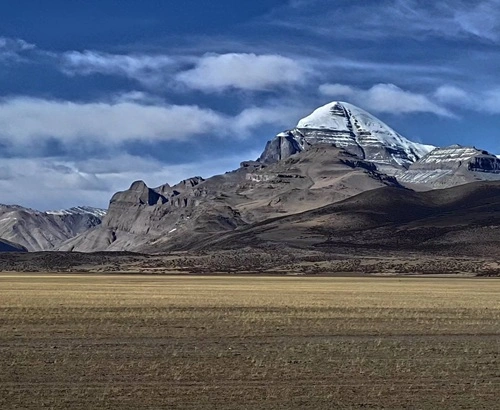
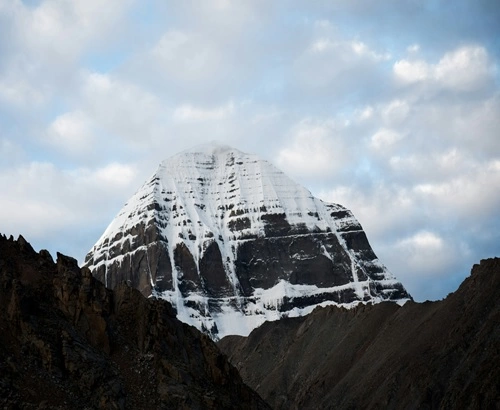
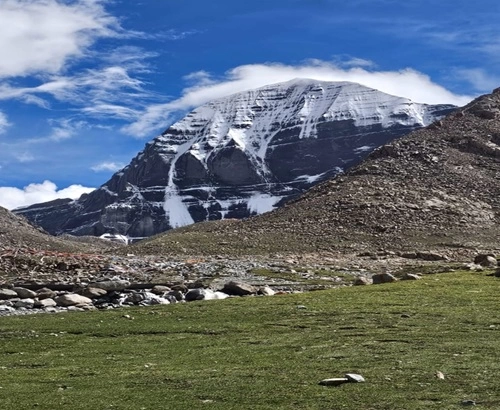
What Are Kailash Mansarovar Yatra Visa Requirements in 2026?
A Chinese visa is required to conduct the Kailash Mansarovar Yatra in 2026, for all foreign nationals (both Indian and other passport holders), as it falls under the Tibet Autonomous Region (TAR ) of China, where Mount Kailash and Lake Mansarovar are situated. Even if entering overland from Nepal, the Chinese authorities demand proper visa paperwork before they will let pilgrims enter Tibet.
As opposed to a regular tourist visa for other places in China, the Chinese visa requirement for Kailash Mansarovar Yatra is a special group or organized entry visa. It is often processed through a certified tour company. Solo visas are not acceptable for this Pilgrimage. A participant has to be in a group visa that is processed as a batch by the tour operator, generally at the Chinese Embassy or Visa Office in Kathmandu (for most nationalities), or in their home country.
The travel operator typically handles visa processing, and passengers need to send passports, photos and other documents in advance (often several weeks before departure).
This is a different group visa, not the tourist L Visa. It usually comes as a paper with every member of the group listed, and not as a stamp in your passport. Even if a tourist already has a visa to China, this won’t apply for the Kailash Yatra, the Tibet entry group visa will delete or cancel an existing visa.
The travel operator typically handles visa processing, and passengers need to send passports, photos and other documents in advance (often several weeks before departure).
Requirement | Details |
Chinese visa type | China Group Visa for entry to Tibet |
Who issues it | Chinese Embassy (usually in Kathmandu for Nepal entry) |
Individual application allowed? | No, must be applied in group through a licensed tour operator |
Validity for Kailash | Visa valid for the Yatra travel dates only |
Regular Chinese visa use | Not accepted for Kailash entry — must have the group visa |
Passport requirements | Valid for at least 6 months from date of travel |
Who applies | Licensed travel operator arranges visa on your behalf |
Processing location | Chinese Embassy in Kathmandu (for most foreigners) or home country depending on route |
Required documents | Passport, photos, visa application form, tour booking proof |
Chinese Group Tourist Visa for Kailash Mansarovar By Nationality
Kailash mansarovar yatra visa from usa and canada
If you are visiting Kailash Manasarovar Yatra from the USA or Canada, then take the Chinese Group Tourist Visa for entering Tibet (China) since this yatra falls in Chinese territory. This yatra is not something you can enter Tibet with on a regular individual visa, it requires a special group visa that a registered tour operator in Kathmandu, Nepal, quite often organises.
Two Main Visa Methods
Standard Group Visa via Nepal
Many of the pilgrims from the USA and Canada visit Kathmandu, Nepal, a few days prior to their trip. Your trip is provided with a Chinese Group Visa in Kathmandu when your tour operator has handled your passport and photos, then submit them to the same to Chinese Embassy. This is a paper visa issued to the whole group (your passport is not stamped) and generally takes between 3–5 working days.
Chinese Tourist L-Visa Before Travel
Or, you could get a Chinese Tourist L-Visa from a Chinese Embassy or Consulate in your home country before you leave. Having this visa allows you not to spend 4 days in Nepal waiting for a group visa application, you arrive, submit the documents and leave earlier, which makes the whole operation easier and faster. This second option is handy for people from countries, such as the USA and Canada, that do not have visa-on-arrival access.
Kailash mansarovar yatra visa From India
For the trip to Kailash, Indian citizens don't have to apply for a standard individual Chinese visa. Travelers must hold a Chinese Group Tourist Visa (commonly known as a paper China visa or Chinese Tibet group visa) issued specifically for pilgrim groups to perform the holy kora in Kailash. You cannot apply for this visa directly as it can only be granted through an accredited tour operator.
This tour visa will be applied for you by your registered tour company with whom you have booked the Tour package.
Tour companies will process the entire application, including submitting it to the Chinese Embassy in New Delhi for Indian citizens.
How the Process Works?
- The tour operator's staff will instruct you when and where to send your passport and photos (either digitally or in person) well ahead of time.
- Your operator processes the Tibet Travel Permit and Group Visa to the Chinese Embassy. This is how you can be permitted to enter Tibet for the purpose of pilgrimage.
Indian pilgrims generally do not apply on their own. The visa and travel permits are obtained together by a registered tour operator dealing with Kailash Yatra arrangements. Tour companies will take your passport and process the Chinese group travel visa through the Chinese Embassy, which will require 4–5 working days to be complete. Even if you have a Chinese visa already, it must be replaced with the group visa for this trip.
Kailash Yatra Visa From Russia
If you are traveling from Russia to undertake the Kailash Mansarovar Yatra, then you should learn about the Chinese visa regulations initially. For the vast majority of Russian pilgrims traveling to Tibet (China), they need a Chinese visa and a Tibet Travel Permit before entering.
Visa-Free Status for Russians
As part of a Chinese visa-free policy, Russian nationals with regular passports will be allowed to visit China without visas for short-term visits (of up to 30 days) and purposes including tourism, business activities, family/relatives meetings, studies or transit under a trial program (valid from 15 September 2025 to 14 September 2026).
This means that if your Russian passport qualifies for the visa-free entry, you don’t have to spend four days in Kathmandu waiting for a group visa. You can also fly to Kathmandu today and leave tomorrow when your Tibet Travel Permit is issued.
Group Visa and Tibet Permit, etc
But entry to Tibet still requires the Tibet Travel Permit, a special permit unlike a regular China visa. This gets issued by a registered tour operator. They will process, deal with the Chinese authorities and provide you with all necessary documents for your trip (regardless of whether you choose visa-free entry or to apply for a China Group Visa in Kathmandu, in case the visa-free option is not available for you).
Kailash Yatra Visa From European Union Citizens
If you are an European Union citizen planning your Kailash Mansarovar Yatra, then it is beneficial for you to know about the present visa regulations of China. Under the Chinese government's visa-free entry policy, the majority of EU passport holders will be able to visit China without obtaining a visa in advance for up to 30 days (television crew members may be restricted), provided that they meet certain conditions at certain ports, as well as have onward air tickets to a third country.
The list includes countries such as France, Germany, Italy, Spain, the Netherlands, Belgium, Austria, Hungary, Ireland, Poland, Portugal, Greece, Slovakia, Slovenia, Estonia, Latvia, Malta, and others. This visa exemption for entry is available to most qualifying citizens until December 31, 2026.
Visa-Free Entry & Kailash Travel
If you are eligible for this China visa-free visit on an EU passport, you won't need to get a Chinese visa before travel or wait 4 days in Kathmandu for a group Visa. You can plan to arrive in Kathmandu the day before departure, and leave the next day after getting your Tibet Travel Permit.
Group Visa & Tibet Permit Process
For travel from Nepal to Tibet, you still need to get the Tibet Travel Permit, which the registered tour operator gets for you.
If you already have an existing Chinese visa, all you will require is the Tibet Travel Permit through your operator.
You don't have a Chinese visa (and are not qualified for visa-exemption), your guide will apply for a China Group Visa in Kathmandu before entering Tibet.
In both situations, your travel agent arranges everything in a well-mannered manner so that your Kailash yatra documents are prepared for takeoff.
Chinese Visa Requirement from UK
Visa-Free Status for UK Citizens
Unlike some European countries, UK passport holders are not covered by China's current 30-day visa-free entry list under the expanded unilateral policy. This would prevent you from entering China via the visa-free tour or general travel program for up to 30 days.
UK travelers could, however, take advantage of China's 240-hour (10-day) transit visa exemption policy if they're on a genuine transit with confirmed onward tickets, but that doesn't replace what would otherwise be required as a standard visa to enter Tibet.
Chinese Visa Options
As the UK is not on the visa-free list for general entry:
- You will need a Chinese visa (typically a group tourist visa) before entering Tibet from Nepal.
- Everything is taken care of for you by your registered tour agent, and all necessary papers are waiting in Kathmandu.
- Even if you already have a current Chinese visa, you will require the Tibet travel permit, which the agency will arrange for you.
- You'll need to return your Nepal visa upon exit in that case, or if you're without a proper Visa, the operator will process your China Group Visa in Kathmandu prior to departure.
Either way, your travel agency will arrange it all for you and make sure you have the right papers to make it to Kailash Mansarovar.
Chinese L-Visa (Tourist Visa) Option
The Chinese L-Visa is officially a tourist visa type and recommended for people traveling to China as tourists, including many pilgrimages. A valid passport, a completed visa application form and a photo are required, as well as an itinerary or proof of travel plans.
Those with an arriving L-Visa, on the other hand, will not have to stay in Kathmandu for at least five days to get organized a group visa, you can show up one day and leave the next when your Tibet Travel Permit is prepared, which speeds up considerably the bureaucratic procedures required to enter Tibet.
Kailash Mansarovar Yatra Visa for South American Travelers (Brazil & Beyond)
As a Brazil or a South American country, who will travel for the Kailash Mansarovar Yatra, you need to follow Chinese visa laws while entering Tibet from Nepal. All foreigners, including South Americans, need a special permit to undertake the pilgrimage as Mount Kailash is in the Tibet Autonomous Region of China. In other words, you require a Chinese visa in addition to the Tibet Travel Permit.
Visa-Free Entry for Some South American Countries
China will grant visa-free access to citizens of Brazil, Argentina, Chile, Peru and Uruguay for a tourism, business and transit 30-day stays without a China visa (starting from June 1st,2025). So if your passport is eligible under this program, then you no longer have to obtain a visa for China before and spend four days in Kathmandu with the group waiting for your group’s visas, arrive in Kathmandu one day, get the permit for Tibet the next day, and leave Nepal for Kailash the same day.
Access to Tibet, however, still requires a Tibet Travel Permit, which tourists cannot secure by themselves, the registered tour agency you hire will process your application with nothing more than your passport and other information.
If you don’t meet the requirements for visa-free entry (eg, not being a citizen of one of the countries in the visa-free list), then you will be required to have a Chinese Group Visa in Kathmandu, something that this agent will process at the Chinese Embassy on your behalf before entering Tibet.
Chinese L-Visa (Tourist Visa) Option
If you like, or if you’re not covered by the visa-free program, apply for a Chinese Tourist L-Visa at a Chinese consulate/embassy in your home country before travel. This L-Visa serves as a regular tourist visa and enables us to enter China proper; pre-obtaining it before ever entering into Kathmandu will save you days of waiting for the group visa process.
In either scenario, your official travel agency takes care of everything, from the Group Visa (if required), Tibet Travel Permit and liaison with Chinese Authorities, so you don’t leave home without any Kailash trip documentation.
Kailash Mansarovar Yatra Visa for North American Travelers
If you are from North America such as Mexico, Guatemala, Honduras, El Salvador, Costa Rica, Panama, Nicaragua, Belize, as well as Cuba and including The Dominican Republic, Haiti & Jamaica or Trinidad/Tobago, for example to visit Mount Kailash in Tibet Autonomous Region you must comply with China's visa regulations.
All non-Chinese visitors to Tibet need a Chinese Group Visa and Tibet Travel Permit when entering Tibet from Nepal. These are not ordinary tourist visas, and it’s a group visa that your registered tour operator will coordinate, you can’t apply for these yourself.
China Visa & Tibet Travel Permit
For overland travel between Tibet and Nepal, one will need a group visa (not an individual visa) obtained from the Chinese Embassy in Kathmandu, Nepal, if entering Tibet by flying from Kathmandu. If you already have a visa for China, that does not take the place of the Group Visa required for pilgrimage, and it might be nullified once you have been issued the Group Visa.
The Tibet Travel Permit is required for travel to this restricted area. Both documents are taken care of by your tour operator, and all necessary paperwork is prepared for you to make the trip smoother.
Visa‑Free and L‑Visa Notes
The vast majority of North American passports are not included in China’s temporary visa waiver agreement, and you must thus go through the Group Visa process.
In case a passport of yours could allow visa‑free entry, you would not have to wait for 4 days in Kathmandu, the day you come, and the next day (when your Tibet Travel Permit gets issued), you can leave.
Your registered travel agent arranges everything in full swing for you to receive all the paperwork required for your Kailash Mansarovar Yatra without any trouble.
What is a Chinese Group Tourist Visa?
Chinese Group Tourist Visa is a special Kailash Visa issued for pilgrimage to Tibet Autonomous Region from Nepal for the Yatra. As Mount Kailash and Lake Mansarovar are in Tibet (China), all foreign visitors need to have a Chinese visa and a permit for traveling in Tibet before entering its territory.
If you are arriving in Tibet overland from Nepal (Kathmandu), the central place people fly to when coming for pilgrimage, then it is not possible to use an ordinary individual Chinese visa acquired in your home country. Instead, you will need a ‘Group Visa’ from the Chinese embassy in Nepal, Kathmandu.
How It Works?
- There is no visa stamped into your passport; you receive it on a separate piece of paper with the names of all group members, and for the duration of the tour.
- Even if you have a valid China visa in your passport, this will not be in effect for the new route, and it will be cancelled or treated as invalid when the Group Visa has been issued.
Why It Exists?
The Chinese Group Visa is necessary as for-entry-Tibet travelers are bound to travel in a group. Single-person visas are not issued for entry from Nepal to Tibet, only through the group visa system with an approved tour company.
Tour Operator’s Role
Your travel company, a registered tour operator, does all the paperwork for your whole Group Visa service: it starts from picking up your documents and passport copy and does the application with the help of the Nepalese visa Office. In Kathmandu, you will have to spend several days (it can take up to 3 – 5 working days) awaiting your visa application to be processed.
Updated 2026 China Visa-Free Policy for Select Countries
Citizens of some countries can visit China without a visa for tourism, business, visiting family members or friends, or short sightseeing(transit) for 30 days. This is for ordinary passport holders. The visa-free rules also apply to tourists, minors and those who enter the country through air, land or sea. Eligible travelers will not need to apply in advance through Chinese embassies or consulates.
But, they do have to hold a passport and supporting documents such as flight or hotel bookings, and match the purpose of why one is visiting visa-free. Overstaying over 30 days requires a Visa or extension of stay. There is no limit to the number of entries if each visit adheres to immigration regulations.
Updated 2026 China Visa-Free Policy (Official)
According to the information reported on November 10, 2025, by the Ministry of Foreign Affairs of the People's Republic of China, foreign citizens from certain countries who hold ordinary passports may visit China without a visa for business trips, traveling, visiting family members and friends or transit. The duration of stay (including date of arrival and departure) is restricted to 30 days, which starts from 00:00 on the next day of arrival.
Region | Countries | Duration of Stay | Notes |
Europe (34 countries) | Andorra, Austria, Belgium, Bulgaria, Croatia, Cyprus, Denmark, Estonia, Finland, France, Germany, Greece, Hungary, Iceland, Ireland, Italy, Latvia, Liechtenstein, Luxembourg, Malta, Monaco, Montenegro, Netherlands, North Macedonia, Norway, Poland, Portugal, Romania, Russia, Slovakia, Slovenia, Spain, Sweden, Switzerland | 30 days | Ordinary passport holders only |
Oceania (2 countries) | Australia, New Zealand | 30 days | Ordinary passport holders only |
Asia (7 countries) | Bahrain, Brunei, Japan, Kuwait, Oman, Saudi Arabia, South Korea | 30 days | Ordinary passport holders only |
South America (5 countries) | Argentina, Brazil, Chile, Peru, Uruguay | 30 days | Ordinary passport holders only |
How the Visa‑Free Policy Work?
- For citizens of the eligible countries, they may enter China without a visa for just 30 days, and all the purposes listed here do not require an advance application.
- The 30-day period begins the day after you enter Tibet and counts continuously for 30 days.
- You need to have a valid passport for your stay.
- Visa‑free entry applies to visits for tourism, business, family/friends, exchange, or transit purposes only.
Note: This 30‑day visa‑free entry is distinct from the separate 240‑hour (10‑day) transit visa-free policy, which has its own eligibility criteria and restrictions.
How Visa-Free Access Simplifies the Kailash Yatra from Nepal
As a citizen of an eligible country, getting China’s visa‑free entry (30 days) is the key for you to start your Kailash Mansarovar Yatra from Nepal more smoothly and quickly. Ordinarily, you need a Chinese Group visa to enter Tibet from Kathmandu, and this can take up several working days of processing by the Chinese Embassy in Nepal. During this time, you need to hand over your passport via your tour agency.
Arrival Day + Next Day Departure Example
Normally, you will have to reach Kathmandu at least 4 days before your departure date for the group Chinese visa applying and processing. For visa‑free entry, as long as you hold an eligible passport, you don't have to apply for a Chinese visa in Kathmandu. Instead, you can:
Arrive in Kathmandu on Day 1
Finish your round-up of the Tibet Travel Permit with the registered tour agency.
Depart for Tibet on Day 2
This shortens the waiting period in Kathmandu by 10-20 days, and frees you up to concentrate on getting yourself ready for your pilgrimage instead of fretting about your visa paperwork.
Convenience for Pilgrims and Groups
Either way, visa-free means less paperwork to manage, less pre‑trip waiting time, and less post-Nepal downtime before you start your trip. It’s convenient for traveling as a group, since the entire group can travel at once without having to wait several more days for visa application approval. The Tibet Travel Permit and visa process is taken care of by us.
Who Still Needs a Visa Upon Arrival in Nepal?
Even with China’s 30-day visa-free policy for certain countries, many nationalities cannot enter China without a visa. Citizens from countries not on that list (like those from USA, Canada, UK, and most African countries or many other Asian and Middle Eastern ones, even if not officially named as part of the 30-day group) need a Chinese visa to enter Tibet for Kailash Mansarovar Yatra. These travelers cannot use the visa-free policy to skip their visa needs and must apply for the proper visa. This is especially important if you are traveling to Tibet from Kathmandu, Nepal, as this usually requires a Chinese Group Visa issued by registered tour operators.
Those not in the visa-free group must arrive in Kathmandu before the Yatra starts to give us (Adventure Altitude Treks) time to process everything and avoid delays in submitting passports to the Chinese Embassy in Nepal. This includes a 4–5 day wait in Kathmandu before departure while the embassy handles the Group Visa needed to cross the Nepal- Tibet border.
China’s visa-free access applies only to certain countries and purposes (like travel, business, or transit). If your nationality is not on the visa-free list, you must apply through Kathmandu and wait for approval before starting your Kailash Mansarovar Yatra.
Waiting in nepal 4 -5 days before Departure For Chinese Group Tourist Visa
China’s visa-free policy also enables some nationalities to travel to China without acquiring visas, and going for a “free visa trip” to Kailash Mansarovar does not necessarily mean you do not need proper documents if you are approaching Tibet via Nepal. As one of the most accessible gateway cities, starting your Kailash Yatra adventure via Nepal also allows you to explore other countries, including India and China, should you choose to extend your adventure and explore all three! But before that, there are some basic requirements that you must know about.
Why You May Have to Wait in Kathmandu?
Those pilgrims whose passports are not allotted under visa-free entry into China are required to obtain a Group Tourist Visa from Kathmandu before entry into Tibet.
This is applied as a group, through a licensed tour operator like us, by submitting the original passport to the Chinese Embassy in Kathmandu. As it takes time to obtain the same from an embassy, you are supposed to arrive in Nepal at least 4-5 days before the actual intended departure.
Within these 4-5 days, you cannot proceed towards Tibet as your passport will be processed for other necessary work. However, these are days of opportunity as you are able to witness the rich culture and heritage of Kathmandu, Nepal, and witness the best of both worlds before the start of your religious journey.
During this waiting period, we will also be submitting the required documents for the Tibet Travel Permit. This is needed despite the visa-free entry into the city of China.
Example Pre‑Departure Itinerary
Here are the ways the first few days can go for pilgrims.
Day 1: Arrival at Kathmandu
Day 2: Kathmandu sightseeing
Day 3: More sightseeing (e.g., Swayambhunath Stupa, Patan Durbar Square, Bhaktapur)
Day 4: Prepare for visa submission; drive toward border (e.g., Kathmandu to Dhunche/Syabrubesi/Timure)
Only once your group visa and Tibetan permits are finalized can you proceed into the Tibet regions (Kerung, Saga, or Mansarovar, etc.) on later days.
30% Advance Payment Requirement for All Nationalities
A mandatory norm that you can’t ignore is the advance clearing of 30% booking amount for arranging your Kailash Mansarovar Yatra. This standard will equally be applied to all pilgrims regardless of their country.
This contribution is fundamental for several practical reasons. Mainly, it enables us to go ahead with a meaningful permit application as far as the Tibet Tourism Bureau is concerned. They need the evidence of a booked and paid tour in advance to obtain the crucial Tibet Travel Permit (TTP) as well as the Chinese Group Visa.
The advance fees are direct payments to several government offices as deposits and non-refundable payments for the processing of your permits/visa. In addition, it secures down your lodging, transportation and guide services in Tibet, which all need to be booked long before the journey even gets underway.
As for documents, at this stage you will usually just be asked to send in a clear copy of your passport. When the 30% payment and passport copy are made, you leave everything else in our hands.
Chinese Tourist L-Visa Option to Avoid 4-5 Days Waiting Period During kailash Yatra
The Chinese Tourist L-Visa is a standard, individual tourist visa, which is issued by all Chinese embassies around the globe. Regarding traveling to Kailash, applying for this visa in your own country before embarking for Nepal is the most effective approach in this regard, as this visa straight away rules out the final 4 to 5 days in Kathmandu for visa processing, which would be considered necessary for the Chinese Group Visa Application in alternative cases.
Cost of Chinese Tourist L Visa
The prices differ depending on the nationality and the application place. Still, in general, it includes an embassy fee, a Service Fee of the Visa Center.
For example, in Nepal, L visas might well have low embassy fees (but will come to perhaps NPR 6,000-8,000 total once service charges are added on), but US citizens will pay much higher ones - reflecting visa reciprocity. Budget $100-$200+ USD for standard processing applying in pricer countries, plus service fees, or even just service fees if embassy charges are waived.
Who Should Use This Option?
This is strongly suggested for those of you who come from a country that does not have a visa-on-arrival policy to China, including the United States, the UK, Canada and Australia etc. It is a key to a simple process.
Step-by-Step Process:
- Apply from home: Apply for a Chinese Tourist L-Visa at the Chinese Embassy or Consulate in your country of residence prior to your travel. State tourism as your purpose.
- Submit to Your Operator: Send your us clean and clear copy of this visa, along with your passport.
- Expedited Permit Processing: With this paperwork, we will assist you to get their Tibet Travel Permit (TTP) in advance. Since the Chinese entry documentation is already complete, only the TTP needs processing.
- Travel to Nepal and Tibet: You can fly into Kathmandu and head for Tibet the following day avoiding the waiting period.
Five More Permits are Needed for a Mount Kailash Tour From Nepal Besides Chinese Visa
1. Nepal Visa
You must have a Nepal visa issued through the Department of Immigration, Government of Nepal, before the starting of your Kailash Mansarovar journey. This Nepal visa would be checked upon arrival at Tribhuvan International Airport (Kathmandu) or other Nepal immigration points from Rasuwagadhi/Hilsa land borders of Nepal. This Nepal visa facilitates a stay in the country until the preparation of the Kailash documents.
2. Tibet Travel Permit-TTP (Compulsory Tibet Entry Permit)
So far, the most crucial document for entering Tibet is the Tibet Travel Permit issued by the Tibet Tourism Bureau. In fact, without this travel permit, tourists are not allowed to enter Tibet by train or plane or cross the border. The permit is checked at the following places: at the border between Nepal and Tibet (Kyakura or Kerung, Hilsa), at any airport or train station in Tibet, or at other border control stations along your route.
3. Alien's Travel Permit (ATP) (PSB Permit for Restricted Areas)
In Restricted Areas outside of Lhasa, including Ngari Prefecture with Mt. Kailash and Lake Mansarovar, an Alien's Travel Permit, or "PSB permit," will be checked at internal Border Control Points for Saga, Darchen, Mansarovar, and West Tibet. Without it, entry will be denied.
4. Military Area Entry Permit (Sensitive Border/Restricted Zone Permit)
A Military Area Entry Permit is required in Mount Kailash and Ngari because it is close to the borders of Nepal and India. Security/military checks are conducted along all routes within Ngari, as well as passes into Mount Kailash and Lake Mansarovar. Restricted controls are also in place at these internal border crossings.
5. Foreign Affairs Permit (Foreign Affairs Office Clearance)
Foreign visitors to sensitive border areas like Ngari and western Tibet need a Foreign Affairs Permit from the Foreign Affairs Office in Lhasa, beyond the Military Permit. It is checked at restricted checkpoints enforcing military and travel controls. National security and foreign oversight require it near borders.
Documents Needed to Apply for the Kailash Visa & Permits
Chinese Group Visa (for Tibet Entry)
- Passport copy (clear scan of information page)
- Passport‑size photographs (as specified by the Chinese Embassy)
Your original passport must be submitted in Kathmandu through your registered tour operator for the Group Visa application. This is the only visa accepted for entrance into Tibet from Nepal.
Tibet Travel Permit (TTP)
To apply, you must submit:
- Valid passport copy
- China VISA / Group VISA details
Your tour operator will give these documents to the Tibet Tourism Bureau. You will not be allowed to board the flights/trains or cross the boundary to Tibet without TTP.
Alien’s Travel Permit (ATP)
For restricted areas such as Ngari (Mt. Kailash & Lake Mansarovar), the following PSB permit is required:
- A passport and a Tibet Travel Permit are needed for the application, arranged by your guide.
Military Permit (Border/Military Area Permit)
For sensitive border regions, including Ngari Prefecture, this is issued by the Military Affairs Office in Lhasa.
- A passport and a Tibet Travel Permit are required and handled by your tour operator.
Foreign Affairs/Border Permit
This additional permit authorizes travel in politically sensitive zones.
- Passport and existing Tibet documents are required, and your travel agency submits them to the relevant Foreign Affairs Office in Tibet
Consultant
Mountain Kailash is a religious site that attracts devotees and travelers from all over the world. In fact, a trip to this remote region and high mountains requires more than a visa to travel to China. One needs to possess a Tibet Travel Permit, an Alien’s Travel Permit, a Foreign Affairs Permit, Military Permit to make traveling to this sacred place and Lake Mansarovar smooth.
However, there’s no need for concern. We have offices in Kathmandu and Lhasa, which take care of all your paperwork. Make full use of our hassle-free Mount Kailash tour packages, while we handle all the formalities for you. So, let us know what your travel plan is, and we can help you arrange your personalized trip to Mount Kailash.
FAQS on Kailash Mansarovar Visa
Do I Need a Separate Visa if I Already Have a Chinese Visa?
If you already have a legitimate group Chinese visa, there is no need to obtain the Tibet Group Visa but if you only have individual chinese visa you still to convert that into a group visa. This allows you to enter Tibet legally for the Kailash Mansarovar Yatra.
What happens during the 4–5 day wait in Nepal before the Kailash Yatra?
- Step 1: Prepare Documentation (Before Arrival in Nepal)
- Step 2: Submit Passport Copies for Tibet Travel Permit
- Step 3: Arrival in Kathmandu and Submission of Original Passport
- Step 4: Chinese Group Visa Processing
- Step 5. Passport Collection and Yatra Commencement
Can I Enter Tibet Without a Tour Operator?
No, all foreigners must come to Tibet through an accredited tour agency. In the restricted areas, travel on your own is not allowed, for example, Ngari Prefecture, which houses Kailash Mountain. Visa requirements are all handled by your tour operators.
How Much Does the Complete Visa & Permit Package Cost?
The price will depend on your nationality, travel duration, and travel package. Usually, these permits will be incorporated by travel agencies into your travel package, which includes Chinese Group Visa, Tibet Travel Permit, Alien’s Travel Permit, Military, and Foreign Affairs Permits.
What if My Passport Expires While Applying for the Permit?
Your passport has to remain valid throughout your Kailash Yatra. Passport expiry during processing times would mean that your permits would not be issued. You have to apply for renewal of passport renewal before applying for visas as well as permits.

 based on 5 reviews