Group Joining Kailash Mansrovar Tour 10 - 14 Days

Group Joining Kailash Mansrovar Tour 10 Days Cost 2026, 2027
  • Duration 15 Days
  • Trip Grade Moderate
  • Max. Altitude 5,648 m at Dolma La Pass
  • Trip Start Kathmandu
  • Trip End Kathmandu
  • Trip Area Sacred Kailash Area in Tibet
  • Nature of Trip Pilgrimage, Kora Trek and Overland Trip
  • Major Activities Kailash Kora, Mount Kailash and Lake Mansarovar Visit
  • Best Season May to mid-October

Introduction to Group Joining Kailash Mansarovar Tour 2026 and 2027

The Kailash Mansarovar Tour, one of the most holy pilgrimages in the world, draws countless thousands of pilgrims annually into the secluded Tibetan highlands. Central to this once-in-a-lifetime journey of faith is the holy Mount Kailash, believed to be the home of the gods in Hindu mythology; Lord Shiva and his consort, Parvati. Just beside Kailash is the pristine Lake Mansarovar - a high altitude freshwater lake thought to wash away the sins of previous lives and purify one's soul.

Our 14 Day Group Joining Kailash Mansarovar Tour for 2026 and 2027 is the quintessential pilgrimage experience for those looking to undergo a pilgrimage like no other, in comfort, safety, and with knowledgeable leadership. Starting in the beautiful Kathmandu, the pilgrimage heads towards the Tibetan highlands over the Himalayan border. Pilgrims will visit various holy monasteries, ancient hamlets, high altitude passes, awe-inspiring natural beauty, as well as, of course, the divine shores of the holy Lake Mansarovar and holy Mount Kailash.

The pilgrimage also comprises a vital 'Kailash Parikrama', also known as 'Kora'. This is an arduous yet highly beneficial 52km circumference pilgrimage walk around the holy Mount Kailash, which takes the pilgrims over spectacular gorges and over the holy Dolma La high altitude mountain pass, which offers countless spiritual benefits. It is said that undertaking the Kailash Parikrama grants spiritual enlightenment and purifies karma.

This sacred 10 Days Kailash journey was reopened only recently, and these 2026 and 2027 group tours are important as it is once again possible to pass into Tibet and to embark on this holy trek. These group tours come with well-experienced tour guides, and arrangements have been made for proper acclimatisation and comfortable stays for an expedition that is both safe and life-altering into the core of the Himalayas and to the holy Mount Kailash.

Kailash Mansarovar Group Trip Highlights

  • A divine pilgrimage to Mount Kailash, known as the divine home of Lord Shiva and the holiest mountain for Hindus, Buddhists, Jains, and Bon followers.
  • A holy visit to the sacred Lake Mansarovar, one of the highest freshwater lakes, in which a dip will wash away the sins.
  • A complete sacred Mount Kailash Parikrama, a spiritual trek of 52kms; a spiritual journey around Mount Kailash that removes lifetime karma.
  • Crossing Dolma La Pass (5,630m)-the highest point of the Kailash trek, which is very spiritual and also challenging to cross.
  • Sacred visit to the ancient Tibetan Monasteries such as Dirapuk Monastery and Zuthulphuk Monastery, which have various meditation caves and holy legends behind them.
  • Visit holy temples of Kathmandu like Pashupatinath Temple and Boudhanath Stupa before commencing the pilgrimage.
  • Visual overland voyage across the supreme Himalayas from Nepal to Tibet via Kerung Pass, exhibiting beautiful mountain
  • scenery.
  • Driving through the wide open land of the Tibetan Plateau- "The roof of the world" exhibiting awe-inspiring Himalayas and the nomadic culture of Tibet.
  • Admiring varied beautiful sceneries such as the holy valleys, Raskshastal Lake, diverse mountain passes, Tibetan villages, etc.• Perform sacred pooja and meditation at the holy surface of Lake Mansarovar against the amazing sight of Mt. Kailash.
  • This holy journey would bring in a heaven-bound spiritual voyage along with adventure, culture, and the beauty of the Himalayas in one's life.

Spiritual Significance of Mount Kailash and Lake Mansarovar

Mount Kailash, The Sacred Axis of the Universe

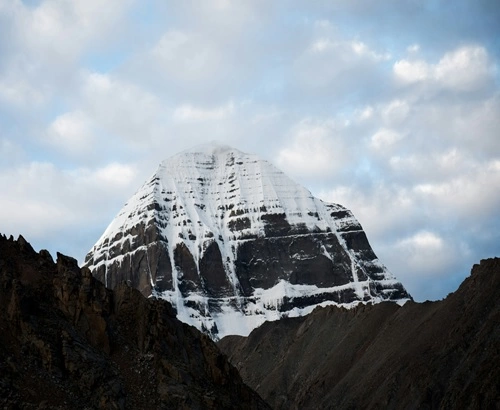
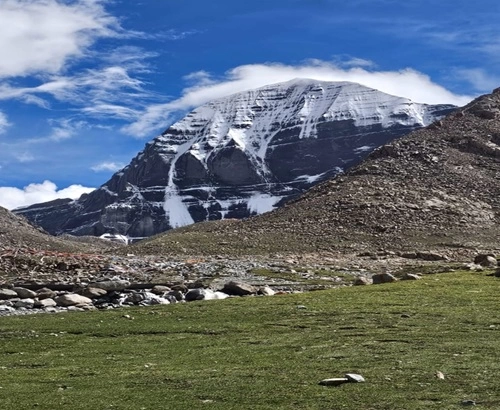
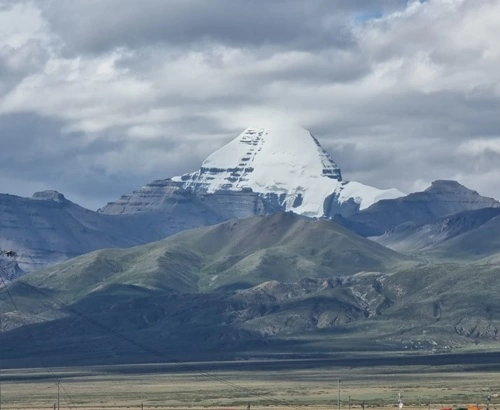
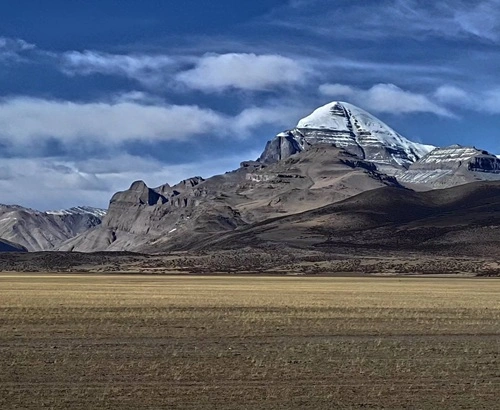
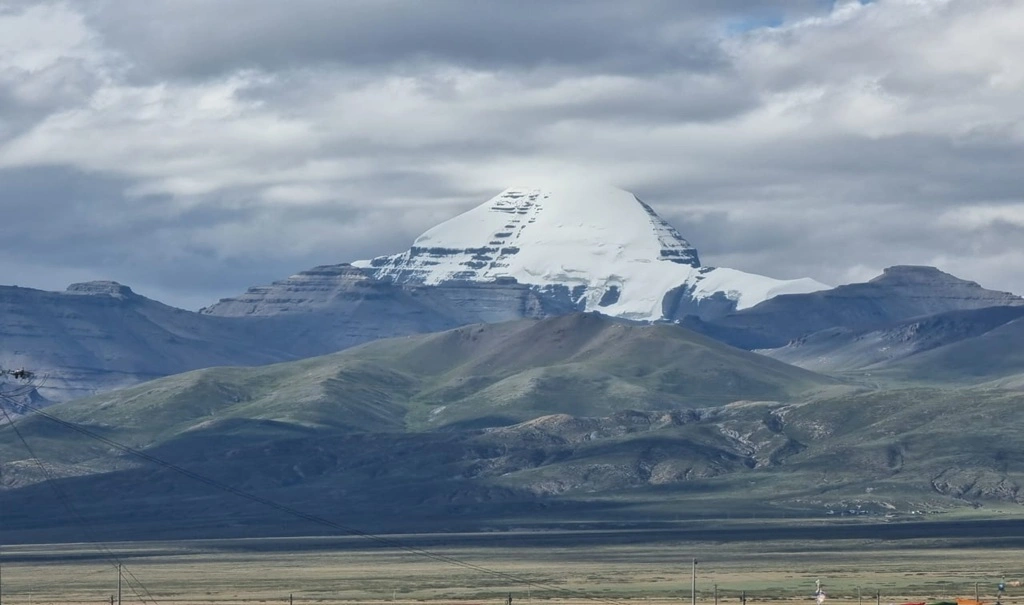
One of the holiest mountains on Earth is the mystical Mount Kailash. At 6,638 meters, the sacred mountain resides in the distant Trans-Himalayan regions of Tibet. What is particularly unique about Mount Kailash is that four separate faiths all consider this a holy place: Hinduism, Buddhism, Jainism, and the Bon religion. Buddhists see this mountain as Mount Meru, the 'centre of the universe', Jains consider it to be the place where their first Tirthankara reached moksha, and Hindu's believe it to be the residence of the Hindu gods Shiva and Parvati.

In this place, Lord Shiva remains in his divine meditation and cosmic contemplation of his own dissolution as well as liberation from ego. At the same time, Bon devotees believe Mount Kailash to be a spiritual 'soul mountain' of huge energetic significance. All pilgrims take the Kailash Parikrama (or Kora), which circumambulates the sacred mountain to purify a pilgrim's karma and help them attain spiritual enlightenment.

Lake Mansarovar, The Lake of Divine Purification

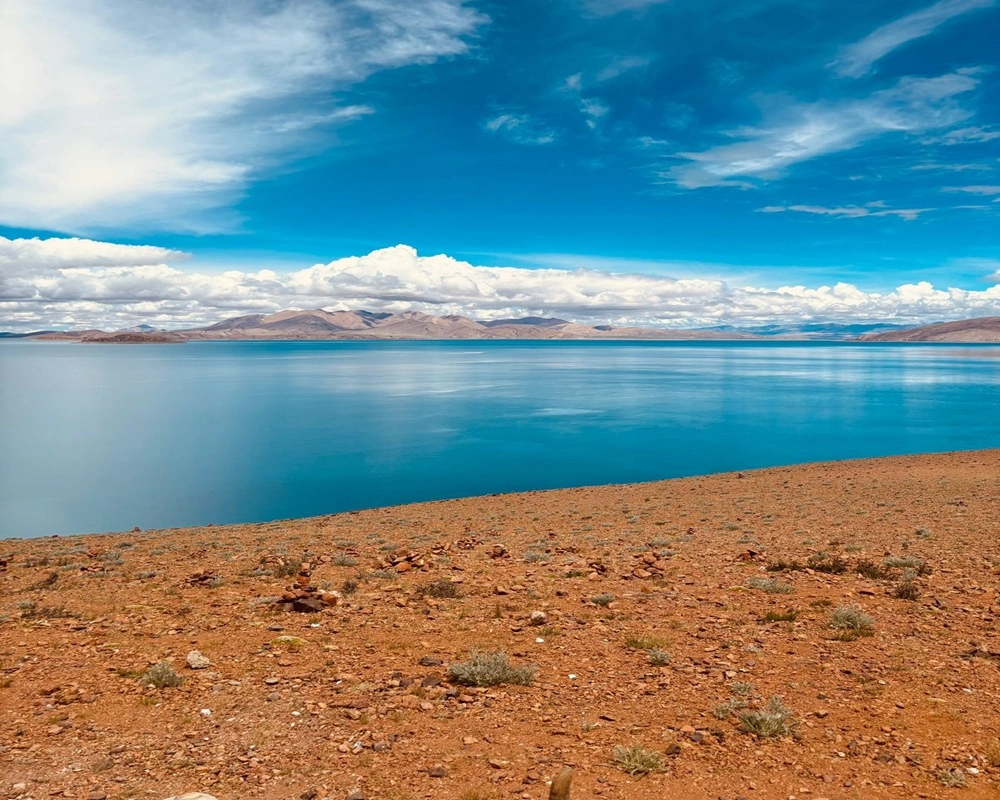
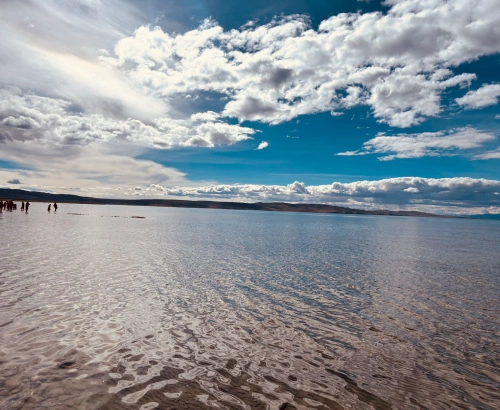
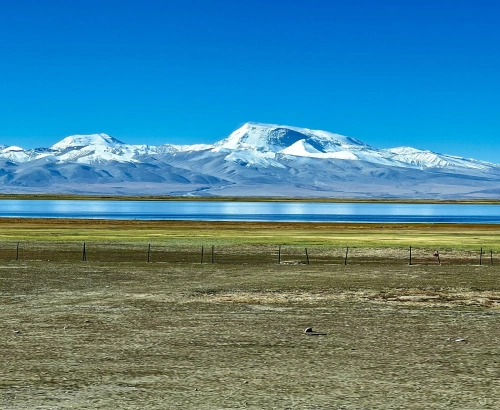
Just 35km south of Mount Kailash, Mansarovar is a stunningly beautiful high-altitude lake, and one of the world's highest freshwater bodies, situated at nearly 4,588m above sea level. According to Hindu mythology, it was born from the mind of the god Brahma by divine thought and is considered to be a symbol of sacred, pure consciousness and divine creative energy. One of the holiest pilgrimage sites in the world, it holds a lot of spiritual significance for many different religions.

For Hindus, it is holy to take a dip in the sacred lake in order to wash away all their sins and bring oneself one step closer to the god's eternal bliss of moksha (liberation); while in Buddhism, Mansarovar is believed to hold connections with attaining enlightenment, positive karma, and it is also a site of great religious importance to the Jains and Buddhists. It is a place where the incredibly clear waters reflect the breathtaking view of the peak of Mount Kailash and form an altogether spiritual panorama, representing all the divine importance that this amazing cleansing and meditative site has to offer.

Why Choose Co Traveler 14 Day Kailash Mansarovar Tour via Nepal (2026 - 2027)

This is one of the most convenient tours for the year 2026 and 2027 to visit the holy Kailash Mansarovar, which will also provide the best experience of your Kailash Tour. One of the most ideal tours for the year 2026 and 2027 from a comfort, acclimation, and spirituality aspect. This tour commences from Kathmandu as it provides the best facilities for permit handling and access to Tibet, along with an organized overland journey from the Kerung border, which has better logistics and access than any other place of entry in Tibet, and this overland journey also allows you to acclimatize properly to the gain in the altitude, so you are much less exposed to Acute Mountain Sickness.

This specific tour is designed for the pilgrim season of 2026 and 2027 on the basis of the good road access in the two specific years, and there will be plenty of scheduled departures conducted by numerous tour operators. The tour would include overland travel through the beautiful Himalayan terrains, monasteries, and holy destinations like Manasarovar and Kailash. Some of the interesting towns in Tibet visited are Saga and Darchen.

The advantages of taking this route through Nepal are equally significant: you get a knowledgeable local guide; we have the provisions of vegetarian food and a support system in emergencies and essential rest/acclimatization points for travels above 4,500 m altitude. More importantly, we would get to perform the holy Kailash Parikrama (Kora) with an organized, safe group. For pilgrims undertaking the journey in 2026 and 2027, this is the most reliable, spiritual, and organized way to get to one of the holiest places.

Route Overview: Kathmandu to Mount Kailash via Kerung 

The Kathmandu to Mount Kailash via Kerung route is by far the most popular and best organised land route for the 14 Day Kailash Mansarovar Tour 2026-2027, because it gradually builds elevation into the Tibetan Plateau, providing ample time for acclimatisation and ease of transit. You will start in Kathmandu (1400m) to brief, obtain your permits, and drive north up the scenic Trishuli River Valley to Syabrubesi and to the Rasuwagadhi border. Once you have cleared immigration on the Chinese side, you will have arrived in Tibet at Kerung (Gyirong, approx.2800m), a critical point for acclimatization set amid majestic Himalayan mountains.

Further from Kerung the journey reaches Saga (4500m) across high altitude mountains over holy rivers, Tibetan villages and wide plateau. From Saga, it goes further up to Lake Mansarovar (4590m), where it is the holiest place for all pilgrims who take holy dip and view the first glance of Mt Kailash and finally reaches to the last point of the Holy Kailash Parikrama (Kora) which is Darchen. The route itinerary is planned for 2026-2027 due to availability of motorable and dependable roads and due to availability of a plan of adequate acclimatization to enable pilgrims a safe and pious trip to Mt Kailash from Nepal.

Open Enrollment Kailash Tour With Sacred Kailash Parikrama (Kora) - The Spiritual Trek Around Mount Kailash

The Kailash Parikrama (Kora), a circumambulation of Mount Kailash (6,638m), is about 52km to 56km in length, taking typically 3 trekking stages over 2-3 days depending on fitness levels and weather conditions. Performed at extreme altitudes of 4,600m to 5,650m (Dolma La Pass), the Kailash Kora is arguably one of the holiest of all pilgrimages in Hinduism, Buddhism, Jainism, and the Bon tradition. Completion of the Kora, across each religion, has been seen as wiping away bad Karma, breaking the cycle of rebirth (Moksha/Nirvana), and enlightenment.

Kailash Kora Stage 1: Yamdwar to Dirapuk Sector 

Pilgrims set off from Yamdwar (Gateway of Lord Shiva/Yama), near Darchen. They journey along the Lha Chu River valley with gentle ascents and flat terrain. Important spiritual sites on the way include the area surrounding Chuku Monastery, prayer flag valleys, and the caves frequented by Tibetan monks for meditation. They end their first trekking stage at Dirapuk Monastery (4,860m), directly facing the northern face of Mount Kailash, regarded as the most auspicious 'darshan'. Hindus perceive Shiva's energy to be most potent here, while Buddhists link it with a Chakrasamvara manifestation, and Bon practitioners see it as the spiritual axis of existence.

Kailash Kora Stage 2: Dirapuk to Dolma La Pass to Zuthulphuk Sector

The most demanding and holiest part of the pilgrimage is Stage 2 of the Kora. They are faced with a steep climb up to the Dolma La Pass (5,630m), the highest point on the entire pilgrimage circuit. The trail passes the holy site of Shiva Tsal (a symbolic death-rebirth place) and countless prayer flags. Just below this site sits Gauri Kund (Lake of Compassion), which is considered to be the sacred bathing place of Goddess Parvati.

The pilgrims then descend through the rugged glacial valleys and along the basin of the Lham Chu River up to Zuthulphuk Monastery (4,670m), where they will see the caves used by Milarepa for his deep meditation. Stage 2 marks the death of the ego, karmic purification, and spiritual rebirth in all the traditions.

Kailash Kora Stage 3: Zuthulphuk to Completion Point 

This final stage of the Kailash Kora is a gradual downhill descent through the valley to Chongdo, where they will rejoin transport to return to Darchen. They consider this stage as completing the Purna Kora, or the holy cycle, bringing them liberation in the spiritual sense. Hindus consider that they achieve Moksha, while Buddhists believe they reach Nirvana, Jain followers achieve Kevala Jnana (omniscience), and the Bon see that they achieve spiritual unison with cosmic energies. 

Cultural and Religious Importance of the Shared Mount Kailash Mansarovar Tour Pilgrimage

The Kailash Mansarovar Tour is no mere journey in the flesh; it is actually a holy, symbolic pilgrimage highly revered in a variety of religions around the world, such as Hinduism, Buddhism, Jainism, and Bon.  Set high in the remote Tibetan Himalayas, Mount Kailash and Lake Mansarovar are seen as one of the holiest of all pilgrimage sites in the world and are often referred to as the 'axis of spiritual power', as it is thought to form the link between heaven and earth.

Hindu Religious Importance

  • Lord Shiva and Parvati are believed to be permanently situated in Mount Kailash.
  • Taking a holy dip in Mansarovar is considered to wash away sins from multiple lifetimes, as the lake was born from the meditation of Brahma.
  • If one completes the Kailash Parikrama (Kora), then one would be closer to Moksha ( liberation)
  • The pilgrimage is also mentioned in Hindu scriptures, the Skanda Purana, for example.

Buddhist Cultural Importance

  • Mount Kailash is believed to be the cosmic Meru, or the axis of the universe.
  • Mount Kailash is also related to enlightenment, and awaken of Buddha-like beings.
  • The Kora around Mount Kailash can help one shed the bad karma and eventually lead to nirvana.
  • There are the Dirapuk Monastery and the Zuthulphuk Monastery at the foot of the sacred Mount Kailash that showcase the religious spirit of Tibetan Buddhism.
  • The pilgrims often chant mantras and meditate during the kora pilgrimage.

Jain Religious Importance

  • The first tirthankara, Rishabhdev, attained his moksha on Mount Kailash.
  • This journey is a kind of abstention from materialism and achieving freedom for the human soul.
  • A difficult pilgrimage to Kailash is similar to a self-disciplinary practice for personal cultivation, for only through the suffering one can achieve nirvana.
  • Completing a holy kora is equal to gaining keval jnana, which means the absolute knowledge in Jainism.

Bon Tradition Importance

  • For the Bon people, the ancient native religion of Tibet, Kailash is the soul mountain.
  • It is said to be the locus of all the spiritual power and balance of the world.
  • Pilgrimages to Kailash are circumambulated counterclockwise, unlike their Hindu counterparts.
  • It also holds much power for healing and meditation rituals.

Shared Cultural & Universal Significance

  • Thousands and millions of pilgrims from all across the world visit Kailash each year, regardless of their religion, together in a single space of time to make the spiritual pilgrimage.
  • This is indicative of a universal message of transcendency and peace transcending all the differences in religion.
  • It is considered a kind of spiritual journey in the same manner as a pilgrimage to a physical location.
  • It has remained the abode of the holy and has never been ascended.

Who Can Join This 14 days Cost Share Kailash Mansarovar Journey from Nepal?

Pilgrims looking for salvation( Hindu, Buddhist, Jain and Bon devotees): The group tour is well-suited for any devotee interested in taking the sacred pilgrimage to Mount Kailash and Mansarovar Lake to seek spiritual purification and to find moksha. This includes the devoted Hindus who worship lord Shiva, Buddhists who search for inner peace and enlightenment, Jains who strive for the soul's liberation, and Bon followers who long to feel the sacredness of this sacred land.

Physically healthy travelers who can endure trekking at high altitude: The highest altitude reached during the trip is 5650 meters, so it is recommended to join this tour only if you have reasonable physical stamina to trek for about 5-10 hours every day during trekking days. Special efforts are required for Kailash parikrama (Kora) for that, too, considering the higher altitude.

Adventure enthusiasts and cultural explorers: Those interested in high altitude adventure, the untouched beauty of the Himalayan region, the unique Tibetan culture, its ancient monasteries, and a long road trip can go for this tour.

Age range (estimate) and broad criteria

  • You should be between 18 and 70 years of age and medically fit for high altitude trekking. (Conditions of health to be stable and sound).
  • Group traveler wishing for a guided, safe pilgrimage expedition
  • This tour is very appropriate for those who are seeking a guided tour where all the permits, logistics, food, and security are professionally handled for the 2026-2028 pilgrimage.

Transparent Cost for Kailash Mansarovar Tour Group Joining Tour (2026 / 2027 / 2028)

With costs starting from an incredible $1899 only per person, the transparent and cheapest Kailash Mansarovar Tour group joining will give you one of the cheapest and most organized pilgrimage experiences in 2026, 2027, and 2028 over land by the Nepal route. This well-structured payment schedule will take advantage of the group size for pilgrims travelling in groups at drastically lower prices without compromising the service, quality, and spirituality of the yatra.

This holy yatra will take you through the pilgrimage route of Kathmandu, Kerung, Saga, Mansarovar Lake (4590m), and Mt Kailash (6638m) by providing a complete package including permits, transportation, accommodation, food, and professional guides.

1. Pax (Solo Traveler Package)

  • USD 2249 per person
  • Best for solo pilgrims.
  • A fixed departure date is assigned to you.
  • It includes standard services provided in normal group tours.
  • Full Kailash Mansarovar itinerary supported.
  • The solo package price is the highest as the logistics of a solo stay, and shared transport do not fare well, in the end, for the pilgrim, as the single room requires more expenses, and one pilgrim has to bear it.

2. Pax (Couple / Twin Sharing Package)

  • USD 2199 per person
  • Suitable for a couple or a group of 2.
  • A slight discount on the solo package cost.
  • Rooms are shared by two, so efficient as far as costing is concerned.
  • Same itinerary, guides, and permits are provided.
  • Twin sharing results in less operational cost per person.

3.5 Pax Small Group Package

  • USD 2049 per person
  • Ideal for a family/friends group.
  • Medium discounted prices.
  • Good for coordination during trekking in some sections.
  • Shared transportation for the Nepal-Tibet portion.
  • It is one of the popular choices for groups from 2026 to 2028.
  • 6-10 Pax Standard Group Package

USD 1999 per person

  • The best choice for a medium-sized pilgrimage group.
  • Economical because the costs of logistics are distributed amongst the members.
  • Good guide-to-pilgrim ratio.
  • Priority is given in scheduling departure dates.
  • Very cost-effective for religious groups.

11-20 Pax Large Group Discount Package

  • USD 1949 per person
  • Steep group discount.
  • Extremely cost-effective for temple groups and associations.
  • Fixed departure guaranteed.
  • The transport and accommodation costs are lower.
  • Larger groups generally lead to less overhead for operations.

21-30 Pax Bulk Group Package

  • USD 1899 per person
  • The cheapest package available.
  • The maximum discount is available on this package.
  • Perfect for pilgrimage groups, associations, and clubs.
  • It is fully managed with all support services and coordination.
  • The cost advantage for the masses visiting Kailash is optimum here.

Important Cost Transparency Note (2026 - 2028)

  • These prices include the cost to join the Overland route from Nepal (Kerung Border).
  • All arrangements include transport, permits, guide support, accommodation, and group coordination service.
  • The final costs can vary depending on the seasonality (2026, 2027, 2028), Tibet Permit regulation, and available space.
  • Individual cost is lower in the larger groups due to operational efficiency.
  • Average price for the Kailash Mansarovar Tour is being found as $2000-4000 in the current market, varying according to the size of the group and services, and for departures starting from 2026 to 2028. 

What is The Difference Between Private Tour vs Group Joining Kailash Tour? 

Private Tour

Group Joining Tour

A private tour is a completely customized tour. Customers can choose virtually anything about their trip, including the date of departure, choice of hotels, type of transportation, and speed of their trip.

Group joining tour means individual or small groups will be merged with the existing pilgrim group to complete one full trip. Pilgrims are given a scheduled 14-day itinerary from Kathmandu to Kailash Mansarovar.

By traveling in a fully private environment, you'll have a much higher level of comfort and ability to acclimatize; a much higher level of individualized concern and attentiveness from your guides and staff; and, most importantly, a safer level of travel at high altitudes (above 4,500m) that carry certain risks (especially at Manasarovar Lake and Dolma Pass). 

Group join tour is an inexpensive way to tour, where the costs of transportation, hotels, permits, and guides are shared among members of a large group, which lowers the overall cost.

A private tour is ideal for families, senior citizens, and luxury travellers who wish to travel at their own preferred pace and in a completely private manner while on their way to the Kailash Parikrama. 

Ideal for those traveling with a limited budget or individually, and those wishing to form a pilgrimage with new friends and have a social yet planned pilgrimage.

Private tours are much more expensive than group tours, but the level of service provided is significantly greater, and coordination and support between the China and Nepal sides is comprehensive.

Group cost is lower since it is divided by 1-30 travelers, which is the most economic Kailash Tour option.

Adventure Altitude Treks: Expert Nepali Guides, Safe High-Altitude Expeditions & Hassle-Free Permit Handling

This Group joining the Kailash Mansarovar Tour for 2026, 2027, and 2028 with Adventure Altitude Treks is a complete organize and safe pilgrimage tour from Nepal to the Holy Mount Kailash and Lake Mansarovar. Our Group will start from Kathmandu and travel via the planned overland route from Rasuwagadhi-Kerung and secure comfortable entry for all pilgrims, proper acclimatization, and complete logistic services.

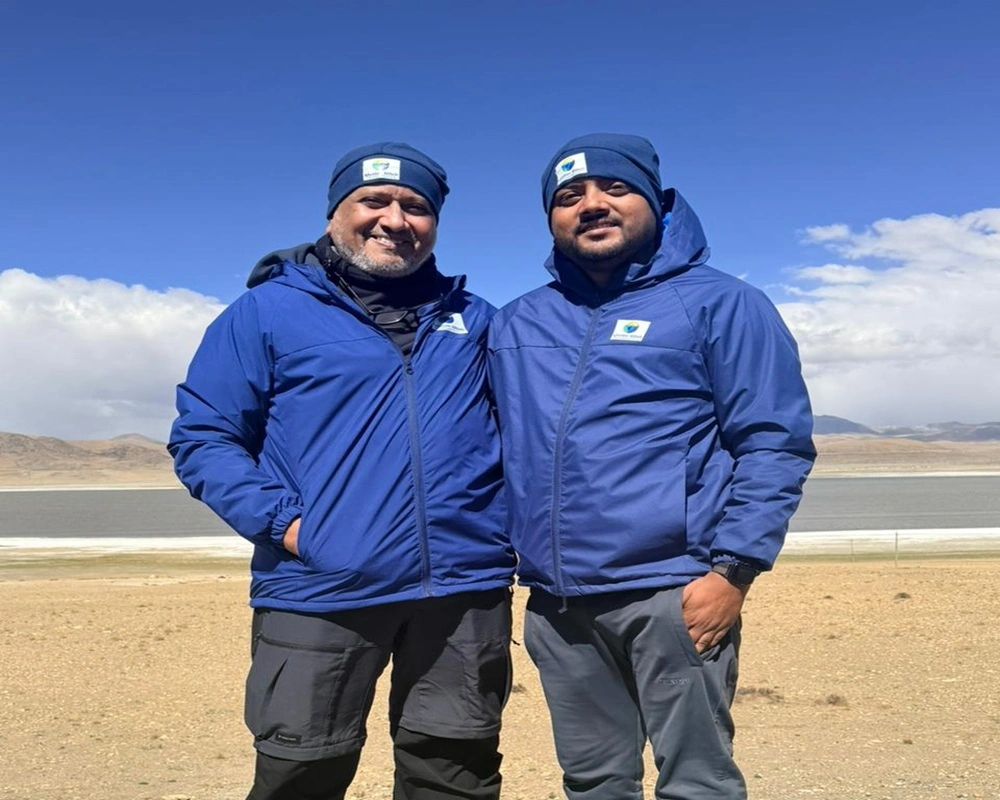
With professional Nepali guides and high altitude trekking experts all Group is monitored during the whole trip and ensures the health, safety and comfort of all the members. All of the staff members are trained for the AMS(Altitude Mountain Sickness) and provide oxygen support, safety, and emergency control in the very remote areas of Tibet, making it more safe to travel even above 5,600 meters.

We take care of easy permit processing-Tibet Travel Permit, and Chinese Group Visa, and all other documents will be prepared in Kathmandu before you depart. It will make the starting of the pilgrimage stress-free. For the 2026-2028 departure, Adventure Altitude Treks commits to pure vegetarian meals, planned itinerary, coordinating with the group, whole day ground support to offer you the safe and life-changing Kailash Mansarovar Tour experience.
Itinerary
Expand AllCollapse All

Pure Veg Group Joining Kailash Mansarovar Tour 14 Days from Nepal Itinerary and Cost

Our experienced Kailash travel experts have perfectly customized this Group Joining Kailash Mansarovar Tour 14 Days from Nepal with a Pure Veg Itinerary as a well-managed, spiritual, and comfortable pilgrimage. We provide pure vegetarian food throughout the journey and make all necessary arrangements for food for the pilgrims. The Package includes Accommodation, Transport, Permits, Guide, and Pure Vegetarian meals throughout as per the itinerary. The Package costs from USD 1,899 per person. Please contact us for booking, other information, and group particulars. You can also choose the custom Kailash Mansarovar itinerary according to your convenience, budget and wishes.

    The sacred journey begins as you land at Kathmandu International Airport, our representative meets pilgrims there and escorts them to the hotel in the busiest area of Kathmandu. After checking in and relaxing with tea, you will be briefed about the upcoming Kailash Mansarovar Tour, altitude preparation, tips for trekking in Tibet, and obtaining permits for travel in Tibet.

    You may enjoy your afternoon free and visit nearby temples or the hyper busy bazaar of prayer beads, trekking, and other souvenirs. Dinner will be provided in the hotel itself, which provides Vegetarian Nepali and Indian cuisine appropriate for pilgrims. Many pilgrims visit the Pashupatinath temple on the Bagmati River to take blessings of Lord Shiva prior to their journey. You stay overnight in Kathmandu.

      Start your morning with breakfast at the hotel and then leave for a religious sightseeing trip around Kathmandu Valley. Visit the most sacred of all the Hindu temples, the Pashupatinath Temple (a sacred temple of Hindu), where Lord Shiva dwells. There, you will see the pilgrims performing rituals on the Bagmati River.

      Then the group heads to the amazing and enormous Buddhist monument, Boudhanath Stupa, which is surrounded by Tibetan monasteries, prayer wheels, and meditation centers. Enjoy the Nepali cuisine at the local restaurant for lunch. In the afternoon, visit Budhanilkantha Temple, another famous temple known for the large statue of sleeping Vishnu set in a holy pond.

      In the evening, it is reserved for the necessary preparations of your trip, the purchase of gears and checking permits. Have dinner and an overnight stay in the hotel in Kathmandu.

        After the breakfast the whole group moved deep into the cultural history of Kathmandu valley. The day starts with visiting the top of the hill, which contains a stupa named Swayambhunath, from where the entire city of Kathmandu can be seen with 360 view. People walk up, spin the prayer wheel, and enjoy the view of the Himalayas.

        After which, we move on to visit Patan Durbar Square, which is a medieval palace complex with Krishna Mandir, golden temples, and traditional Newari architecture. Lunch will be in Patan City. In the afternoon, visit Bhaktapur Durbar Square, which is the most preserved medieval city of Nepal; it has a famous Nyatapola temple, 55-Window palace, and artisan pottery squares.

        Walking through the small, narrow brick lane gives you a sense of the past tradition. Dinner will be in the hotel with the briefing session about the drive towards Tibet.

          We will start early in the morning, after breakfast, and embark on a picturesque drive from Kathmandu heading north towards the Nepal-Tibet border. This highway will lead you along the Trishuli River valley and pass through charming villages, terrace farms, waterfalls, and lush green hills.

          En Route we will pass through villages such as Dhunche, which is the entry point to Langtang National Park. You'll have a chance to see monasteries and Tamang villages in the lap of the Himalayas. Enjoy your lunch at a mountain lodge, and will continue driving through the hilly roads that soon convert to the highland Himalayas until we reach Syabrubesi/Timure, which is near the border.

          Pilgrims will feel the refreshing mountain air along with a spectacular view of remote snow-capped mountains. You will have dinner at the guesthouse with a simple vegetarian meal. Overnight stay to prepare for the immigration procedure the next morning.

            Following breakfast, the travelers will be driven to the Rasuwagadhi border for the departure formalities in Nepal. They will be crossing a bridge into Tibet. In China, the pilgrims will meet their Tibetan guide and get into a comfortable vehicle that will then begin the drive towards Kerung County. You drive through beautiful views, across wonderful Himalayan valleys, with waterfalls and through typical Tibetan villages with their prayer flags.

            Lunch will be taken at the guesthouse in the town of Kerung. The rest of the afternoon is for acclamation to the increased altitude, which changes drastically from Nepal to Tibet. You can take a stroll through the town, perhaps visit some local monastery, have a close look at the Tibetan lifestyle, observe prayer wheels and mani walls, etc. The dinner will comprise hot soup, rice, and vegetables, which are beneficial at high altitudes. An overnight stay will be in Kerung, allowing the body to acclimatize prior to the entry into the Tibetan plateau.

              Following breakfast, you enjoy a long drive across the high Tibetan plateau to Saga. Today, the plan is to cross the colourful, prayer-flag-strewn Lalung La Pass with expansive views of the Himalayas beyond. During today's trip, we travel over to the stunning, turquoise coloured Paigu Tso Lake with distant views of the world's highest mountain, Shishapangma.

              We enjoy a picnic lunch on the roadside as we stop off at numerous viewpoints along today's route. Later on, we follow the route through the valley of the sacred Brahmaputra River, known as Yarlung Tsangpo in Tibet.

              You can catch distant views of nomadic Tibetan communities and yak herding in the open plateau, and of the remote, secluded monasteries. You reach Saga this evening, where you are able to dine at the local hotel, and are able to rest in Saga overnight.

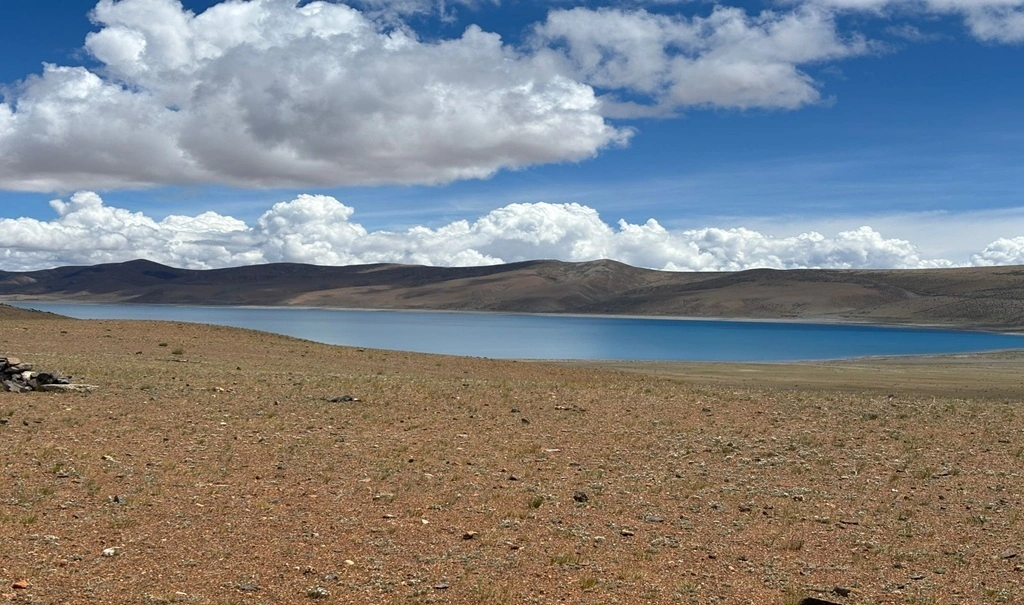
                An early breakfast this morning sees you begin the next part of the journey as you travel further west into the sacred region of Lake Mansarovar. You will drive across more sparse plains, valleys, and through the majestic mountain ranges again. Today, you drive past the dark blue waters of the fascinating Rakshastal Lake, whose depths are linked to an ancient Hindu legend.

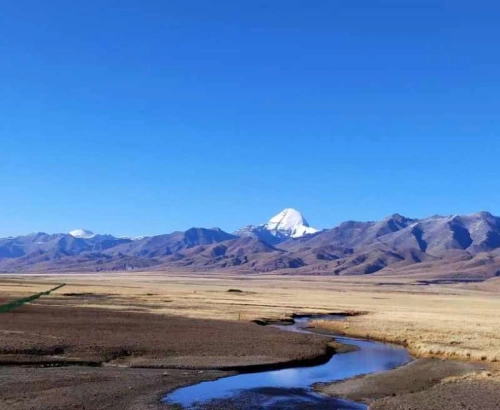
                You eat lunch en route in a conveniently located, roadside eatery approaching the sacred area of the lake. You then have your first breathtaking view of the great Mount Kailash, sitting high above the plateau, before arriving at the shore of Lake Mansarovar.

                Here, you are able to visit the Chiu Monastery, perched high upon a cliff above the lake, and you are able to pray, meditate, and perform religious practices beside the shore of the lake. You have dinner this evening at a guest house by the lake, where you can witness Mount Kailash's reflection in the lake during sunset.

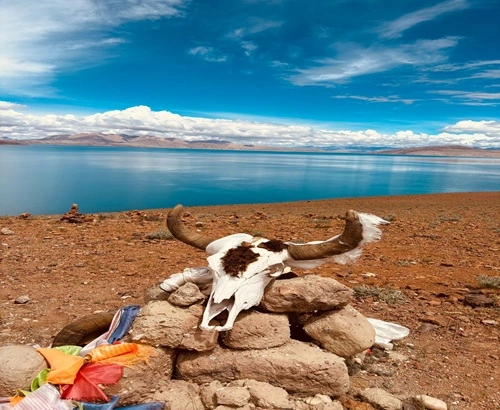
                  On the following day, we start the day early with a walk to view the gorgeous sunrise on the sacred Lake Mansarovar, followed by a holy dip and puja at the sacred lake. Bathing in Lake Mansarovar, the most sacred lake in Tibet, washes away sins and past bad Karma.

                  Post breakfast, pilgrims offer a silent meditation while gazing at the awe-inspiring Mount Kailash and Mount Gurla Mandhata. Lunch is then taken, followed by a drive to the gateway town of Darchen, base for the Mount Kailash Kora. Along the way, we pass nomadic yak herders and sacred Tibetan prayer sites.

                  Upon arriving in Darchen, pilgrims check into a guest house and finalize the trek preparation. Dinner and an overnight stay in Darchen followed by the last trekking instructions.

                    Following a hearty breakfast, pilgrims embark on a short drive to Tarboche and Yamdwar a symbolic gateway of the holy Mount Kailash Parikrama to offer prayers.

                    It is then a beautiful day's trek along the Lha Chu Valley, framed by stunning cliff walls and bedecked with colorful prayer flags dancing in the wind. Lunches are simple packed meals along the route of the trekking. Throughout the trek, we can encounter nomadic tents, yaks on the pasture, and tiny meditation caves used by monks.

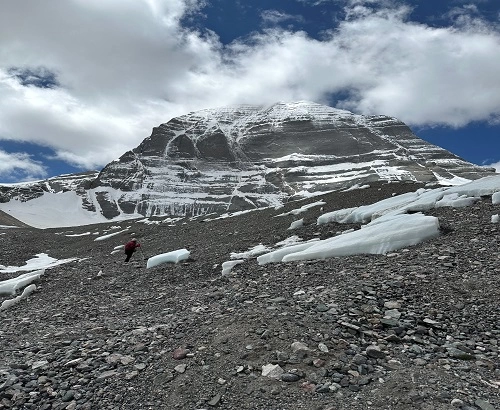
                    The stunning North face of the holy Mount Kailash appears increasingly dominant as we draw closer to Dirapuk Monastery. It is an extremely sacred place providing a breathtakingly close view of the divine mountain. Dinner and overnight at a basic guest house in the Dirapuk monastery vicinity.

                      The most challenging day of the kora is also a profoundly sacred and rewarding experience for pilgrims. Today will start before sunrise after a simple breakfast. The first leg of the day is an arduous climb to Dolma La Pass (approx 5,630 m), the highest point of the journey.

                      The area is sacred, dedicated to the goddess Tara, and filled with prayer flags and offerings. Below Dolma La lies Gauri Kund, the bathing pool of the goddess Parvati. Packed food will be consumed during a mid-day lunch break as travelers trek on. The trek continues into the rocky and glacial areas below, where pilgrims descend along the Lham Chu River.

                      Late afternoon will see the arrival at Zuthulphuk monastery, renowned for its caves, which were used for meditation by the famous Tibetan saint, Milarepa. Guests will stay overnight in a guesthouse at Zuthulphuk and eat dinner there.

                        This morning, after breakfast, pilgrims will continue along the gentle valley trail of the final section of the Kailash Kora to the vehicles, which will pick the group up near Chongdo. These will drive the pilgrims back to Darchen before continuing along the route towards Saga. Lunch will be enjoyed on board the coach across the vast and beautiful Tibetan plateau.

                        It is easy to admire the sweeping grasslands and distant views of the high Himalayas, and visit small nomadic tent settlements along the journey. The return journey will include sections along the banks of the mighty Brahmaputra River and will present a wealth of photographic opportunities and breathtaking vistas.

                        It will take several hours of travel before reaching the town of Saga, and guests can rest and relax after their incredibly arduous but amazing kora, eating their evening meal in the hotel and enjoying a hearty meal accompanied by comforting hot soup and vegetarian dishes. They will spend the night at their Saga hotel.

                          In the morning, breakfast is enjoyed before leaving Saga for the return journey to Kerung on the border of Nepal. The road winds back across the spectacular road with prayer flags along the road and fantastic Himalayan mountain range scenery. You will again be traveling through the pristine alpine lakes and the small Buddhist towns with many spinning prayer wheels and mani stones on the roadside.

                          A delicious lunch will be served at the roadside restaurant en route to Kerung. As the journey continues, the dry plateau turns into the green valley toward Kerung. On arrival, a hotel check-in at a quality hotel and a relaxing evening will follow many days at the extreme height. Dinner at the hotel followed by an overnight stay in Kerung.

                            After breakfast, completing immigration formal at the Kerung-Rasuwagadhi border, you enter Nepal. Then, you will be driven along the spectacular Himalayan highway to Kathmandu. The road goes through the Trishuli river valley, passing the small mountain towns, lush forests, streams, falls, and terraced farming fields. Lunch will be served at the local roadside restaurant en route to Kathmandu.

                            You may stop at some viewpoint temples while traveling toward Kathmandu, where you can capture the beauty of the scenery. Arrive in Kathmandu in the evening; check into the hotel, then you may relax in the room or explore around Thamel for souvenir shopping. Finally, a farewell dinner will be arranged in the evening, celebrating the successful completion of the holy Kailash Mansarovar journey. Overnight in Kathmandu.

                              Have breakfast at your hotel in Kathmandu on the last day, and as per your flight time, you have options to stroll through the markets of Thamel and souvenir shops in the surroundings, or visit a nearby temple for the final time before you depart from Nepal. Many devotees go to Pashupatinath Temple in Kathmandu for their last prayers as a mark of appreciation for finishing their Kailash Mansarovar Tour.

                              The group will accompany you to Tribhuvan International Airport for your flight back home. After the Tour, people go home remembering the majestic Mount Kailash, the holy Mansarovar lake, and the spiritual satisfaction of having been on a pilgrimage that frees the soul from all burdens. Followers believe that doing Kailash Parikrama and Mansarovar Darshan removes sins from the devotees.

                              Not satisfied with this regular itinerary?

                              Are you interested on planning custom trip? Feel free to contact us.

                              Cost Details
                              What's Included
                              • All transportation and sightseeing are provided in connection with the tour itinerary referred to.
                              • All Teahouse/hotel accommodations for the tour, including breakfast, lunch, and dinner.
                              • Tibet visa, entrance permission, and Kailash Parikarma admission fee.
                              • Best available hotel or guesthouse, including two nights of parikarma.
                              • An English-speaking Chinese guide.
                              • Throughout the tour, a super luxury bus or van will be used.
                              • Pickup and drop-off from Kathmandu to Kerung via jeep.
                              • First aid kits, maps, and so on
                              • Parikarma of the Holy Lake Manasarovar
                              • We give a duffel bag; down Jackets should be returned after the tour.
                              • Nepali SIM Card With 10 GB Data Plan.
                              • Water purification tablets.
                              What's Excluded
                              • Airfares to Kathmandu and back
                              • Urgent visa fees
                              • Nepal visa expenses for NRI/foreigners
                              • Travel/medical insurance
                              • Cost of evacuation in the event of an emergency.
                              • Personal expenses include phone calls, shopping, washing, cold/hard beverages, tipping, etc.
                              • Any additional services, such as extra vehicles, hotel stays, or tourist trips not listed in the schedule.
                              • Single room supplement in Kathmandu.
                              • Horse and porter fees if hired for kora or parikrama (should be paid directly to the horse herder or porter).
                              • Extra expense in the case of a landslide, etc. for hiring additional vehicles or porterage
                              • Hotel charges in Kathmandu for early return from Tibet or further stays in Kathmandu.
                              • Additional cost due to natural
                              Useful Info

                              Best Time to Join Kailash Mansarovar Tour 2026 - 2027

                              The Kailash Mansarovar Yatra is primarily a seasonal pilgrimage, as Himalayan and Tibetan weather conditions remain extreme. The pilgrimage is typically allowed only for a short duration each year, during which the mountain passes that permit travel at high altitudes (above 4,500m-5,650m) remain open and accessible. Here is a year-wise season breakdown for 2026 and 2027 that will help you plan, experience safely, and have the best pilgrimage.

                              2026 Best Season for Kailash Mansarovar Tour 

                              May 2026 Start of Early season (Spring opening)

                              The pilgrimage opens with the melting of the snow across the Tibetan plateau. Even though the weather is still cold, it becomes relatively stable, and the trekking routes from Kerung to Saga and then to Mansarovar Lake begin to open up. It is the perfect time to join the Tour for those who seek the sanctity of having fewer crowds and pristine, clear mountain views.

                              June 2026 Peak Pilgrimage Season

                              This is one of the favorite months for conducting the Kailash Tour as the temperature is relatively stable and conditions are favorable for treks or Kora (Parikrama) around Mt Kailash. The majority of the group departures for the Tour take place in the month of June.

                              July 2026 Moderate season with monsoon influence

                              Although the region is still largely unaffected by the monsoon, there might be some indirect effects that may cause the weather to change. The pilgrimage services are all available without any interruption, the religious significance of Mansarovar Lake remains unchanged and as alive as it was in earlier times.

                              August 2026 End of the Main Season

                              This month is reckoned to be the final month of the peak pilgrimage season, due to unpredictable changes in the climate. Still, a lot of travelers and wise people believe this is the best month for seeking peace within.

                              2027 Best Season for Kailash Mansarovar Tour 

                              May 2027 - New Opening Season

                              Pilgrimage season begins from May as the border opens up and the roads to Mansarovar become better with access through the Kerung-Saga corridor. Snow conditions are melting to begin the trekking experience.

                              June 2027- Ideal month for Kailash Tour 2027

                              The best month to take and complete your Kailash Tour 2027 is with favorable climatic conditions, safety in trek, and the highest number of tours departed. This month is ideal to complete 52 kilometers of Kora around Mount Kailash.

                              July 2027- Middle Season for Kailash Tour 2027

                              Moderate month of tours, which gives you less crowdedness than in June, and you can still get good availability. The weather is still good for traveling in these high-altitude regions. Good for acclimatization at various checkpoints.

                              August 2027 - The last month to embark on this pilgrimage 2027

                              Last month of this entire holy trip. Though the number of tours is reduced this month, the ambiance around Mt. Kailash and Lake Mansarovar are highly peaceful and spiritual.

                              Altitude and Acclimatization During the Kailash Tour 

                              The Kailash Mansarovar Tour 2026-2027 is a pilgrimage at a very high altitude. The height progressively increases from 1,400 m in Kathmandu to 5,650m at Dolma La Pass, and therefore acclimatization is a key aspect of this Tour.

                              A controlled and progressive high altitude approach minimizes the risks of acute mountain sickness (AMS) and assures the completion of the auspicious Kailash Parikrama (52 km Kora). The route of the trek through Kerung-Saga-Mansarovar-Darchen ensures a gradual ascend.

                              Altitude Progression Overview (Route-Based Acclimatization Plan)

                              Route Stage

                              Location

                              Altitude

                              Acclimatization Purpose

                              Start

                              Kathmandu

                              1,400m

                              Initial briefing and body preparation

                              Border Entry

                              Kerung

                              2,800m

                              First altitude adaptation stop

                              Plateau Drive

                              Saga

                              4,500m

                              Major acclimatization before sacred region

                              Sacred Zone

                              Lake Mansarovar

                              4,590m

                              Spiritual exposure with controlled rest

                              Base Camp

                              Darchen

                              4,670m

                              Final preparation for Kailash Parikrama

                              Trek Start

                              Dirapuk

                              4,860m

                              High-altitude trekking adjustment

                              Highest Point

                              Dolma La Pass

                              5,630m

                              Extreme altitude crossing zone

                              Descent

                              Zuthulphuk

                              4,670m

                              Recovery and oxygen stabilization

                              Stage Wise Acclimatization Strategy

                              Kathmandu to Kerung Acclimatisation Zone (1400m-2800m)

                              In the first stage, we will get the body adjusted to medium altitude. Short walks, sufficient intake of fluid, and good rest are advisable. Initial altitude sickness symptoms are observed before proceeding to Tibet.

                              Kerung to Saga High Plateau Adaptation Zone (2,800m-4,500m)

                              It is the most crucial acclimatization zone. Slowly paced journey, breathing properly, and limited strenuous physical activities are mandatory to help the body get adjusted to the thin air. Experts advise that steady breathing without pushing the body will be very helpful.

                              Mansarovar and Darchen spiritual acclimatization zone(4,590m-4,670m)

                              Pilgrims stay near Mansarovar lake for relaxing and performing the religious practices, and meditation practices reduce physical activities and naturally oxygen adjustment before starting the trek

                              Kailash Kora High altitude Survival zone(4,860m-5,630m)

                               During trekking, there would be sudden drops in the oxygen level; therefore slow walk should be maintained. Proper hydration and sufficient rest are required, especially during the uphill journey to Dolma-la Pass, which is the highest altitude of the kora.

                              Key Acclimatization Rules for Kailash Tour 

                              • Don't rush (walk slow beyond 4500m)
                              • Drink 3-4 litres of water daily.
                              • Avoid overexertion for the first 2-3 days after entering Tibet.
                              • Get a boost of energy by eating low-fat vegetarian meals high in carbohydrates.
                              • Utilize the acclimatization days at Kerung and Saga adequately.
                              • Follow the instructions of your guide during the altitude shift.
                              • Retreat immediately if signs of acute AMS.

                              The region of Kailash is an extremely high-altitude area, and the oxygen content is drastically reduced above 5000m. Acclimatisation isn't a safety measure for just your life, but it is crucial for the completion of the sacred 3-day Kora of Mount Kailash, which is said to purify one of all sins and release you from the cycle of rebirth.

                              Accommodation Standards in Tibet During Kailash Tour 

                              Accommodation During the Kailash Mansarovar Group Tour

                              Kailash Mansarovar Yatra 2026-2027 group joining tour provides accommodation according to the elevation, terrain, and available means. As the tour starts from Kathmandu (1,400m) and reaches the isolated Tibetan plateau (up to 4,900m+), the hotels turn to basic guesthouses and then monastery-style rooms.

                              All the accommodations are made available on a group joining package with reasonable hygiene, safe, warm bedding suitable for high altitude.

                              Kathmandu and Nepal Section (Hotel Category Accommodation)

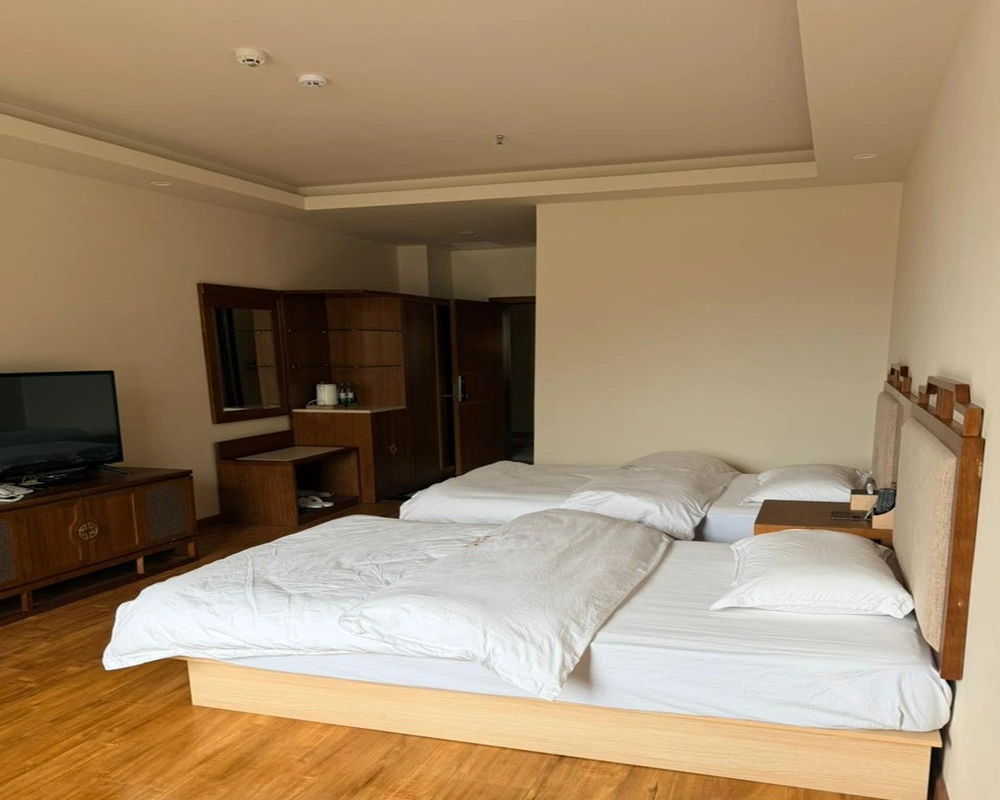
                              Pilgrims will be accommodated in standard Tourist Hotels of 3-star category (equivalent to) at Kathmandu, with in Thamel area, rooms shall be provided on Twin sharing basis or Three sharing basis as per the requirement of the group.

                              The facilities available in hotels are attached bath, hot and cold shower, Wi-Fi facility, and the provision of vegetarian meals at the Dining Hall. This part will primarily involve relaxation, briefings, and preparation.

                              Kerung Acclimatization Stay (Basic Hotel / Lodge)

                              At Kerung (2,800m), Pilgrims will be provided accommodation in simple standard Tibetan-style guest houses/lodges and will primarily be arranged for acclimatization purposes. The basic facilities shall be at the disposal of pilgrims. Due to infrastructure availability, the provision will be made on a group sharing basis only for acclimatization. There shall be a provision of enriched oxygen.

                              Saga Plateau Stay (Standard Tibetan Hotel)

                              At Saga (4,500m) Pilgrims will be staying in a standard Tibetan guest house of standard category, which is relatively more basic than Nepalese Hotels and Guest houses, but the arrangement for large group movement will be in place.

                              Rooms can be twin sharing or multi sharing in available condition, and room heating facilities will be available depending upon the season. This is one of the important places for acclimatization before Mansarovar.

                              Lake Mansarovar Region (Guesthouse / Dormitory Style Stay)

                              By Lake Mansarovar(4,590m), accommodation will be just a basic guesthouse or dormitory style. Services and facilities are quite basic in extreme altitude and extreme age taken into account. All group travelers will stay together far away from any facilities to get variety from a comfortable time rather than holy fulfillment. Hot water and a heater with warmth are quite restrictive.

                              Darchen Base Camp Stay (Basic Hotel Accommodation)

                              In Darchen (4,670m), pilgrims are lodged in function hotels or guesthouses, which have the basic elements of trips and trekkers getting ready for the Kailash Parikrama. They provide group rooms, basic sleeping arrangements, and water facilities.

                              Kailash Kora Route Stay (Dirapuk and Zuthulphuk - Guesthouses)

                              During the 3-day Kailash Parikrama trek, accommodation is the most basic:

                              Dirapuk (4,860m)

                              Plain stone guesthouses or dormitory huts, sometimes freezing, were used for accommodating pilgrims in large groups.

                              Zuthulphuk (4,670m)

                              Very simple monastery/guesthouse style tents with limited sleeping arrangements and communal shower/wash facilities for the entire group of trekkers In these conditions, the stays are just for surviving and resting at extreme altitudes.

                              Pure Vegetarian Food and Nepali Kitchen Support During Kailash Group Trip

                              At the end of the day, pilgrims put in their second night in ordinary Tibetan hotels in Saga and Kerung to recuperate following the Kora. The luxury level is a little higher as the body drops down to the lower Altitude.

                              All the food in the Group Joining Kailash Mansrovar Tour 14 Days has been planned and scheduled keeping health, hygiene, and strict vegetarianism of all pilgrims at all times during the journey. We serve meals prepared hygienically and freshly by skilled Nepalese cooks and kitchen staff. All meals are prepared keeping the demands of the high altitude travel in mind, and the authentic taste and food quality are always maintained. Pilgrims are served healthy vegetarian dishes like Dal, Rice, Chapati, seasonal vegetables, Khichdi, soup, noodles, porridge, tea, coffee, and snacks. On request Jain meal can also be provided without onion and garlic.

                              Our Nepalese guides and kitchen staff take special care of the Indian pilgrims’ appetite and serve a hygienic, hot, and freshly cooked meal every day, even in the high-altitude, remote Himalayas. The meals are arranged with a specific focus on clean, easily digestible, high-energy food so that the pilgrims can remain comfortable all the time during the Tour.

                              Right from Kathmandu to the time you return from the Mansarovar, we make the food experience as comforting as it can get and an integral part of the spiritual bliss of the journey to Kailash Mansarovar. All the meals offered during the Tour are pure vegetarian, and it adds a great deal to a healthy body and spiritual practice.

                              Difficulty level & Adventure grade of Kailash Mansarovar Trek

                              Difficulty Level of Kailash Mansarovar trek

                              The Kailash Mansarovar Trek is regarded as a moderate to strenuous high-altitude pilgrimage. While travelling through remote regions of the Himalayas with very rugged mountain paths and extreme weather at altitudes of 5600m plus, the trekking is tough.

                              Especially the Dolma La Pass with a very thin atmosphere, making trekking very strenuous with a lack of oxygen. Altitude sickness, fatigue, breathlessness, and severe cold may afflict pilgrims undertaking the Kailash Parikrama.

                              Adventure grade and Trekking Challenges

                              This holy yatra isn'ta technical climbing expedition and can be undertaken by fit people with sound judgment. Every pilgrim will be on foot for long hours crossing uneven rock-cut paths, steep paths, glacial paths, and wind-blowing Tibetan terrain.

                              Adventure grade is mostly said as moderate to strenuous since all of them are at high altitude with unpredictable Himalayan weather. Correct acclimatization, adequate slow-walking speed, hydration, and proper guides help in completing the pilgrimage without complications.

                              Who can take the Kailash Mansarovar Yatra?

                              An average fit person with an extremely strong will to visit the Holy shrine can take this yatra with necessary preparation. Light cardio, regular walking, and breathing exercises before the trip are advisable.

                              What are the Real Challenges Pilgrims Face During Group Kailash Mansarovar Yatra?

                              High Altitude and Lack of Oxygen

                              The most pressing challenge in the Kailash Mansarovar Yatra is the high altitude to which the pilgrims are subjected. They are exposed to heights above 4,500m, crossing the Dolma La Pass at an altitude of around 5,630m, where oxygen levels plummet, and many travellers suffer from headaches, dizziness, nausea, breathing trouble, and fatigue, as well as sleeping disorders-Symptoms of AMS.

                              Enduring Prolonged hours of walking on rough terrain

                              The arduous walk up is the first day of Kailash Parikrama. Long trekking hours have to be covered on uneven mountain terrains, across glacier paths, rocky routes, and steep ascent at all times, second trekking day in particular. The climb to the Dolma La is exhausting even for the seasoned trekker, as they need to ascend with low levels of oxygen.

                              Changing weather conditions and biting cold

                              Tibetan Himalayan weather tends to be extreme and variable. Strong winds, heavy snow, severe cold, unseasonal showers, and icy temperatures take a heavy toll on the pilgrimage, with the area around Mansarovar Lake and Dolma La reaching sub-zero degrees Celsius in the nights.

                              Limited amenities in remote Himalayan areas

                              The restricted and basic amenities provided in Tibet pose a challenge. Medical assistance, telephone networks, well-maintained hotel rooms, and transportation are a problem. Pilgrims will have to adapt to primitive living conditions and long driving hours. They have also been subjected to unforeseen delays due to landslides or unfavourable climatic conditions.

                              Border Crossing Process Between Nepal and Tibet Explained

                              • The Nepal-Tibet border is crossed at the Rasuwagadhi-Kerung border to access the road to Kailash Mansarovar (which is the standard entry point for pilgrims visiting Nepal for the pilgrimage). (tourism.gov.np)
                              • The passport valid for more than six months prior to entry in Tibet should be presented, and it needs to be verified by the immigration officers.
                              • A Chinese Group Visa and Tibet Travel Permit are required for all foreign pilgrims entering Mount Kailash from Nepal. A private Tibet visa is not permitted on this route.
                              • Generally, the guide takes the passport from the pilgrim days before departure to obtain a Chinese Group Visa and Travel permit from the Chinese Consulate in Kathmandu.
                              • The border crossing starts after completing Nepal Exit formalities at Rasuwagadhi, then proceeds to cross over the border into Tibet at Kerung.
                              • During arrival, Chinese immigration officials verify the visa and travel permits and check the passport, luggage, medicines, books, and electronic appliances.
                              • The immigration procedure takes several hours of visa verification, permit checking, luggage inspection, etc., and after being approved, the pilgrims are then allowed to enter Tibet to proceed towards Saga, Mansarovar, and Mt. Kailash with guides.
                              FAQs
                              • Lake Mansarovar stands at an elevation of about 4,590 m (15,060 ft), while Dolma La pass (the highest point of Kailash Parikrama) is at about 5,630 m (18,471 ft). Given the high altitude, the need for acclimatization is very crucial during this Tour.

                              • Yes, the over-60s are eligible too, but must be physically sound, and a doctor's certificate must state that the pilgrim is fit for the Tour. We know of several pilgrims over 60 who have successfully completed the Tour following appropriate preparations, acclimatization, and being in the company of the tour leader.

                              • Yes, pilgrims proceeding to Mt. Kailash through Nepal requires a Chinese Group Visa and a Tibet Travel Permit. The travel permit is processed and issued by the tour operator before proceeding to Tibet. Individuals travelling to Tibet without their authorized permits are not allowed into the region.

                              • The sacred Kailash Parikrama or Kora normally requires 3 days to finish, and it covers about 52 km of walking circuit around Mt. Kailash. The second day is considered the toughest of the entire Kora because it involves crossing the Dolma La pass.

                              • Yes, beginner-level hikers of an average fitness level can have a high success rate doing the Kailash Mansarovar Tour. Regular walks, breathing exercises, ample water intake, and acclimatization can have a high success rate in performing the Tour smoothly.

                              • Yes, most organized Kailash Mansarovar Tour tour packages provide a medical kit, oxygen cylinders, a pulse oximeter, medical support, etc. To combat altitude sickness.

                              • The pilgrims require a valid passport with a minimum of 6 months remaining validity, passport-size photos, a medical fitness certificate, travel insurance and valid Tibet & China Travel Permits, which are usually procured through the tour operator.

                              • Yes, it is possible to hire ponies, yaks and porters at Kailash Parikrama, and it will be beneficial for pilgrims who will feel uncomfortable trekking at the high altitude. Hiring of ponies and porters must be done beforehand during peak seasons.

                              • The common health problems experienced during the Kailash Mansarovar Tour consist of AMS (Acute Mountain Sickness), headaches, lightheadedness, fatigue, shortness of breath, dehydration, lack of water and freezing cold. Acclimatization is of great importance.

                              • The restricted mobile network and internet facility are available at some places, such as Kerung and Saga, but not at the Lake Mansarovar and nearby regions, due to the altitude.

                              What Our Clients Say...
                              • M
                                Michael AndersonFranceMarch 11, 2026
                                rating star

                                Unforgettable lifetime spiritual expedition in Kailash Region

                                The trip to Kailash Mansarovar could not have been better organized than what Adventure Altitude Treks had provided me. The Tour pilgrimage to Mount Kailash and Lake Mansarovar was truly a hard one, but extremely fulfilling at the same time, with a profound sense of spirituality. All my services from Nepal to Tibet were exceptionally organized. The continuous care and support shown by the team during the trek and while acclimatizing at various locations of the journey had made an outstanding difference.

                                TripAdvisor
                              • E
                                Emily CarterDominicaJune 11, 2025
                                rating star

                                Guides were attentive and had excellent high-altitude trekking experience

                                The Kailash Mansarovar Tour organized by Adventure Altitude Treks resulted in an absolutely safe journey. The Nepalese guides were experts at high-altitude trekking and always instructed us with details on how to proceed, managed oxygen levels as needed and took care of everyone's health and stamina. The food supplied by them was tasty and very hygienic. They provided an all-round spiritual trekking experience, which was a dream come true.

                                Facebook
                              Add-ons Trips
                              You may also like

                              Ask a Question

                              Need Help? We're at your service
                              Trip Planner (Rohit)+977 9845449032
                              Operation Manager (Raju)+61 423 765 587
                              Send Us a Message[email protected]