Kathmandu to Everest Base Camp Helicopter Tour 5 Hour

Kathmandu to Everest Base Camp Helicopter Tour 5 Hour 2026, 2027, 2028 Cost
  • Duration 1 Days
  • Trip Grade Easy
  • Max. Altitude 5,545 m (18,192 ft) at Kala Patthar Viewpoint
  • Trip Start Kathmandu
  • Trip End Kathmandu
  • Trip Area Mount Everest (The Tallest Mountain)
  • Nature of Trip Helicopter Tour
  • Major Activities Scenic helicopter flight, Lukla refueling stop, Everest Base Camp flyover, Kala Patthar landing, Himalayan mountain views
  • Best Season Spring and Autumn

About Kathmandu to Everest Base Camp Helicopter Tour 

The Kathmandu to Everest Base Camp Helicopter Tour is the best luxury Everest Himalaya Adventure Tour for people who desire to experience the world's highest peaks in luxury, glamour, and the most efficient way in one day. This VIP Everest Base Camp Heli tour takes you closer to the mountain with stunning sightseeing from the air and exclusive landing points for your once-in-a-lifetime experience in Nepal.

You don't have to walk for weeks; you'll be in helicopters right into the heart of the Himalayas and directly facing Everest Base Camp within a few hours on this Everest heli tour. State-of-the-art helicopters offer convenient window seats for each passenger, allowing everyone uninterrupted views of the Himalayan panoramas, magnificent icefalls, winding rivers and remote valleys that unfold below.

From the moment you take off on your Kathmandu to Everest Base Camp Helicopter Tour, an experienced mountain helicopter pilot serves as your guide throughout the tour, highlighting each prominent mountain, icy glacier, Sherpa village and secret valley along your way.

Flying over the incredible Khumbu Glacier, mountainous terrain and untouched wilderness, the helicopter to Everest Base Camp provides you with a whole different perspective than one from the ground. With each turn comes a brand new postcard-quality view. The Everest Base Camp tour by helicopter is sure to satisfy shutterbugs, couples, families and anyone on the hunt for a truly luxury experience.

Our Kathmandu to Everest Base Camp Helicopter Tour has been well structured with safety and thrilling adventure in mind. Our highly trained professional helicopter pilots have years of flying experience in the high altitudes of the Himalayas, and they have extensive knowledge of the terrain, culture and mountain history of the Everest region. Whether you call it Mt Everest Base Camp helicopter tour, Everest Base Camp helicopter ride, or just base camp helicopter tour, it is sure that no one would love to miss this tour.

And the best way to have a bird's-eye view of Mount Everest is by flying in the Everest Base Camp helicopter tours. This is indeed a grand and luxurious way of witnessing Everest Base Camp, from the luxurious helicopter ride to Everest Base Camp itself to the unparalleled views of Everest; the entire Kathmandu to Everest Base Camp Helicopter Tour is designed to create cherished memories for a lifetime.

Helicopter Tour of Everest World's Tallest Mountain

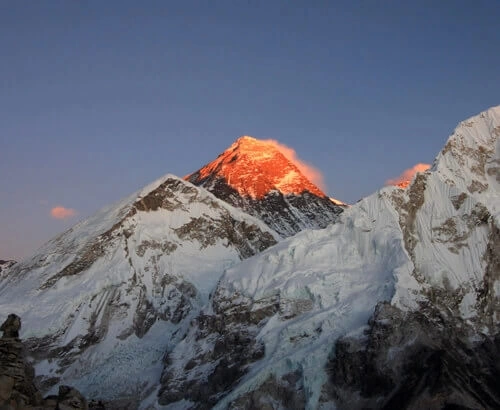
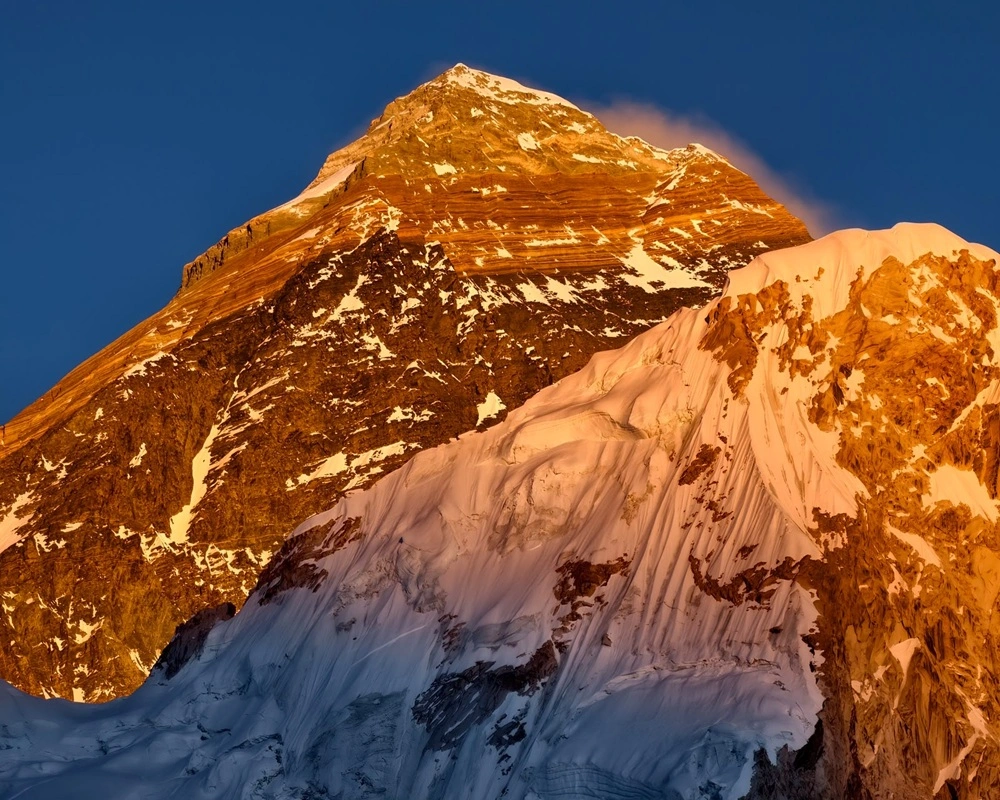
A tour via Everest heli flight is not merely a simple scenic flight; rather, it is an extremely unusual option to explore the world's largest mountain: Mount Everest. Located at an altitude of 8,848.86 meters (29,031.7 ft), the awe-inspiring summit is respected worldwide, with Everest also known universally as the "Roof of the World." These words alone describe its stature- the uppermost section of the world, as well as the greatest attainable climbing feat on the planet.

reputation, has attracted innumerable daring climbs, well-loved books, renowned documentaries, and several blockbuster movie productions such as Everest (2015), making a mt Everest helicopter tour and Everest heli tour among the most sought-after ways to witness its grandeur firsthand. With Adventure Altitude Treks, the most majestic wonder of the world and world highest mountain are now possible to discover helicopter in Everest. Instead of several weeks long trekking you can witness this beauty of the Himalayas in just one day.

During the mt Everest helicopter tour, you will be able to visit alongside snow-white colossal mountains, ravines and glaciers that descend from them in order to admire the majestic Everest peak at its best. Flying helicopter to Everest peak offers a rare vantage point few travelers ever get to experience. This Everest helicopter tour takes you soaring past ridgelines that would otherwise take weeks to reach on foot.

Getting mt Everest by helicopter means covering in minutes what trekkers take days to walk, all while taking in an unmatched Everest sightseeing flight over the valley below. For travelers drawn to the wider range, a broader himalayan helicopter tour can also be arranged, extending the journey beyond Everest alone. This helicopter tour of mount Everest is not just about reaching the world's tallest peak but also about experiencing a luxury journey unlike any other in the region.

Everest Base Camp Helicopter Tour Highlights

At 5,545 m, Kala Patthar helicopter landings mark Everest's most famous viewing point, one of the highest landing points on the earth, giving you unhindered views of Mount Everest. At Everest Base Camp, the Mount Everest summit is not visible to that extent, which kalapathar helicopter flights do provide.

Kala Patthar is the ultimate site for sightseeing and photography tours, and a mount Everest helicopter landing here is often the highlight of the trip. Whether a short landing or a scenic flight will depend on flight & weather conditions and flight operations.

Highlights

  • Panoramic view of Mount Everest

  • 360° Himalayan mountain scenery

  • 5- 10 minutes at high altitude (when landing is possible)

  • Bucket-list photography opportunity

Breakfast at Hotel Everest View

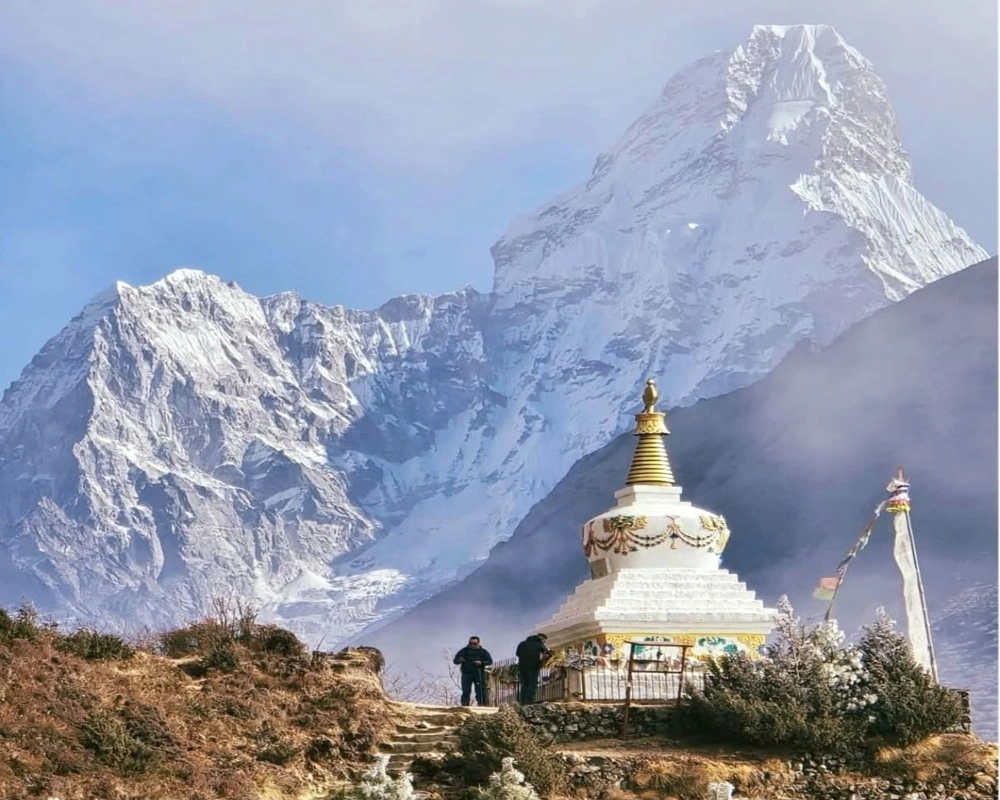
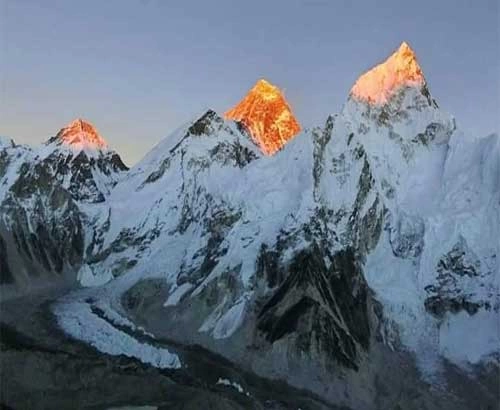
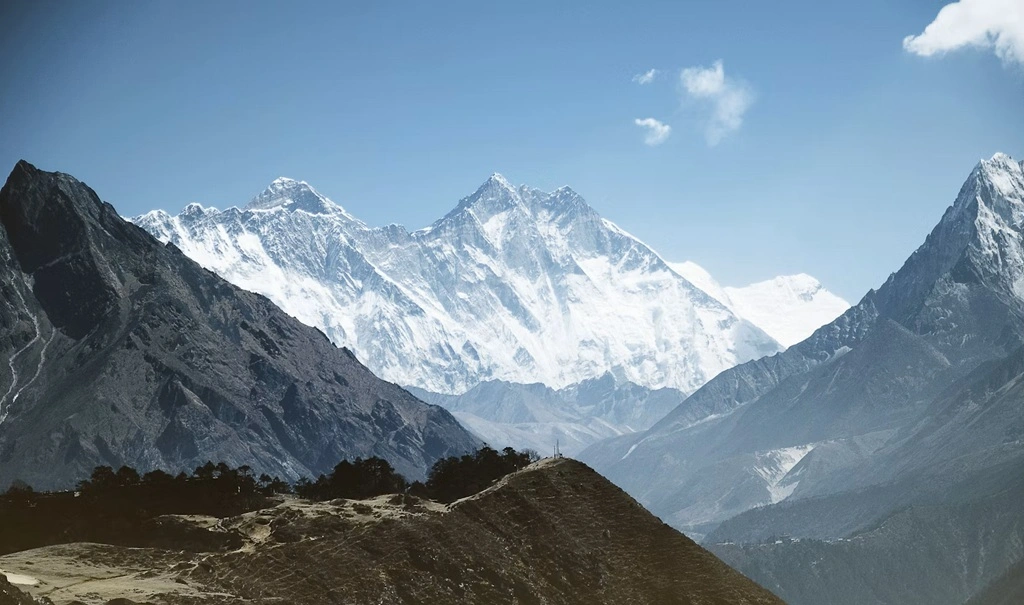
You'll savor breakfast at the famous Hotel Everest View (3,880 m), one of the world’s highest and most luxurious hotels, the ultimate base for soaking up majestic sights of Everest, Ama Dablam, Lhotse and Nuptse, as you sit peacefully on its terraces.

Why travelers love it

  • Breakfast with uninterrupted Everest views

  • Comfortable high-altitude rest stop

  • Luxury hospitality in the Himalayas

  • Excellent photo opportunities

Spectacular Everest & Himalayan Views

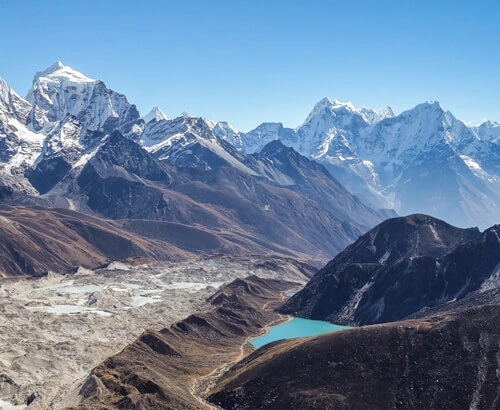
From takeoff through to landing, you will experience some of the world's tallest mountains from a stunning aerial viewpoint on this Everest heli tour. As you fly in a helicopter over Everest, you will gain close-up access to towering summits, icy glaciers, valleys, and the quaint, remote Sherpa settlements that you can never fully grasp from the ground, making it an unforgettable helicopter ride to himalayas.

Mountains visible during the flight

  • Mount Everest (8,848.86 m)

  • Lhotse

  • Nuptse

  • Ama Dablam

  • Pumori

  • Cho Oyu

  • Makalu (weather permitting)

Scenic Flight to Lukla

Your adventure takes off on a thrilling helicopter flight Everest-bound journey from Kathmandu to Lukla, home of one of the most popular mountain airports on the planet. Prepare for sensational views of rice terraces, rivers, forests, and mountains, leading you to the starting point of the legendary Everest region. A quick fuel stop takes place as the heli Everest prepares to go deeper into the Himalayas. 

What you'll see

  • Kathmandu Valley from the air

  • Himalayan foothills

  • Traditional mountain villages

  • Lukla Airport

  • Dudh Koshi River Valley

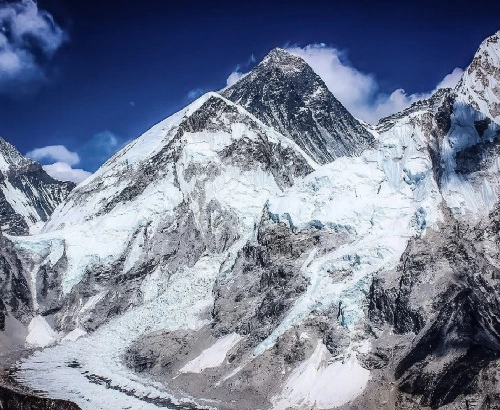
Fly Over the Khumbu Glacier & Icefall

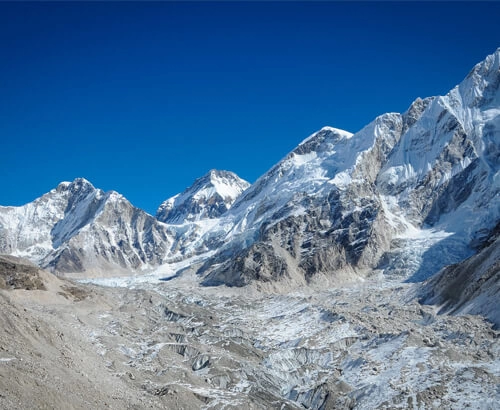
The view during the tour one cannot forget for the lifetime - flying over Khumbu Glacier and the famous Khumbu Icefall on a helicopter tour himalayas; an astonishing wonder of Everest. You will be surprised to see the icy formations, deep crevasse as well as the expedition routes by Everest climbing aspirants from the helicopter during this Everest heli trek.

Highlights

  • Aerial view of the Khumbu Glacier

  • Close-up look at the Khumbu Icefall

  • Views of Everest expedition routes

  • Exceptional photography opportunities

Kala Patthar Flyover

If landing at Kala Patthar is not possible due to operational requirements or weather, you will instead be taken for a stunning low-altitude flyover above the Everest Base Camp with unsurpassed views of Mount Everest and the other towering peaks of the Himalayas, still delivering the signature Everest base camp helicopter tour with landing experience whenever conditions allow, alongside sweeping helicopter over mount Everest views throughout. 

Flyover highlights

  • Panoramic views of Everest Base Camp

  • Close aerial perspective of Mount Everest

  • Safe alternative during challenging weather

  • Incredible window-seat photography

Taking Helicopter To Everest Peak in 2026 and 2027

The Everest Base Camp Helicopter Tour isn't your average 'mountain flight' or looking at Everest from the windows of an airplane; this is getting IN a helicopter on Everest and flying AT the top of Everest Peak, which is also the highest peak on Earth.

For 2026 & 2027, we will be operating pure Everest Helicopter flights to Everest Peak, with this Everest summit helicopter journey ranking among our most requested experiences. Departures are out of Kathmandu and rise through the Himalayan skies right up to the roof of the world, Everest Peak at 8,849 metres (29,032ft). No base camp stops. Just a direct helicopter to Mount Everest, also known as Mt Everest by helicopter, to the top of the world, flying helicopter on top of Everest for those who want it all in a single trip. We will make certain you are informed about each of the facets of your trip before you even begin. You will certainly be familiarized with the adhering to information:

Everest (8,849 meters/29,032 feet) is Earth’s summit.

Everest is not alone. The Everest region is surrounded by some of the tallest mountains on the planet:

  • Lhotse: 8,516 meters, the world's 4th highest mountain

  • Makalu: 8,485 meters, the world's 5th highest mountain

  • Cho Oyu: 8,188 meters, the world's 6th highest mountain

  • Kangchenjunga: 8,586 meters, the world's 3rd highest mountain

You will be aware of the flight path, the altitude, the flying duration, and specifically where you will end up on your heli trek for Everest, whether that means a helicopter to top of mount Everest or a closer regional flyover.

You will understand what it's like to be there at the summit, the temperature, the scenery, the feelings of Mount Everest's from a helicopter during your helicopter tours to Mount Everest, including what a helicopter flight to top of Everest actually feels like at altitude.

Mr Rohit himself briefs all the passengers before setting off for a helicopter ride, and for those planning ahead, our Everest helicopter tour package options are also explained in full during this briefing.

Guaranteed Two Way Helicopter Ride To Everest 

Our guaranteed two way ride to EBC takes you through Everest Region and returns to Kathmandu, a once in a lifetime adventure trip from the capital city to the rooftop of the world and back, offering a true helicopter ride to mt Everest experience from start to finish. Whether you don't have time, wish for a luxury ride, or desire to see magnificent vistas with the most comfort, then the EBC helicopter tour is the perfect choice.

Why Choose Our Two Way Ride to Everest Base Camp?

  • Guaranteed daily departures. We stick to the schedule.

  • A comfortable round-trip journey to Everest Base Camp, without spending days trekking, making this helicopter ride to Everest base camp ideal for time-limited travelers.

  • Experience fantastic sights from above: Lukla, Namche Bazaar, Khumbu glacier and the Mount Everest summit.

  • Safe, experienced, and professional mountain pilots who are qualified for these high-altitude flights across every helicopter to base camp route we operate.

  • The latest generation of helicopter to ensure your safety and comfort.

  • Perfect for all adventurous families, romantic couples, passionate photographers or even luxurious travelers, each on their own Everest base camp helicopter ride.

What's Included

  • Return helicopter base camp Everest transfer to Kathmandu from the domestic airport.

  • Knowledgeable, certified and licensed helicopter pilot and crew.

  • Transfer from hotel to the domestic airport (depending on package).

  • Briefing prior to departure.

  • Government tax & associated Airport charges (depending on package).

Book Your Guaranteed Two Way Ride to Everest Base Camp

Our two-way Everest base camp flight tour caters to those wanting to see the majestic Everest at its finest, without the rigors of a multiple-day trek. Reserve your seat and take flight on one of Nepal's most breathtaking flying adventures with guaranteed departure, excellent customer care and mind-blowing Himalayan views, the complete flight to base camp Everest package for those who want it all.

Everest Base Camp Helicopter Landing Rules (2026 September, October and November Update) 

The helicopter operations in the Everest region adhere to all air safety and aviation protocols. Everest base camp helicopter landing, just like a kala patthar helicopter landing, depends upon; weight of the helicopter, passenger capacity, visibility of the landing site, weather conditions and pilot's discretion concerning overall safety conditions.

It is, however, not uncommon for itineraries to change with new operational directives. When such circumstances do not permit landings at Base Camp or Kala Patthar, we use alternative landing sites and perform scenic flyovers, sometimes adjusting the helicopter landing on mt Everest route entirely depending on conditions.

Why Are Helicopter Landings Restricted?

Flying above 5000m altitude is among the most difficult and risky operations in the world; helicopter to Everest base camp service operations in the Everest region follow some special operating procedures and are governed by the Nepal Civil Aviation Authority. This protocol aims to secure and ensure the safety of travelers and protect the delicate ecosystems of the Himalayas.

2026 Everest Helicopter Landing Regulations

Regulation

Current Status

Landing at Everest Base Camp

Subject to operational approval and safety conditions

Landing at Kala Patthar

Depends on current operational guidelines, aircraft weight, and pilot assessment

Pilot's Decision

Final authority on all landing operations

Weather Clearance

Mandatory before every flight

Weight Restrictions

Strictly enforced above 4,500 meters

Passenger Shuttle Flights

May be required for larger groups

Emergency & Rescue Flights

Always receive operational priority

Everest Base Camp Helicopter Landing Rules With High-Altitude Weight Restrictions

Helicopters require the air density to be greater, and at altitudes greater than 4,500 m, air density decreases. Consequently, the helicopter starts to lose lift, and to ensure safe flight operations, certain rules will be imposed.

  • Passenger weight restrictions apply above 4500 m above sea level.

  • Large groups may be split into separate shuttle flights, especially for those booking a camp helicopter experience.

  • Seating plan is subject to change prior to flight

  • Extra luggage will most probably be left behind in Kathmandu or Lukla.

These procedures are standard safety practices for high-altitude helicopter operations, whether you're heading up for a full camp in a helicopter adventure or a shorter flight.

Weather Determines Every Landing

There can be rapid changes to weather patterns in the Everest region even if it is sunny in Kathmandu.

Your pilot continuously monitors:

  • Wind speed

  • Cloud cover

  • Visibility

  • Snowfall

  • Air pressure

  • Landing surface conditions

If any condition is not up to safe standards, your chosen mt Everest helicopter landing site may be substituted for another, or substituted for a picturesque flight instead.

The Pilot Has the Final Authority

All Everest Helicopter flight trips are under the command of a pilot and operated under the regulation of the Civil Aviation Authority of Nepal (CAAN).

The pilot can alter the flight routes due to the following circumstances:

  • Poor visibility

  • Strong mountain winds

  • Passenger weight distribution

  • Air traffic

  • Operational restrictions

  • Emergency rescue missions

The pilot makes these decisions for the safety and security of all passengers, whether performing a helicopter landing on mount Everest or an alternate flyover.

Why Some Tours Use Shuttle Flights

You might question why sometimes helicopters do not fly to the Everest Base Camp and why they stop in Pheriche before the trip to the mountain continues.

There is the following reason behind stopping there:

  • Minimize the burden on aircraft during landing and takeoff in high-altitude zones.

  • Enhance helicopter performance at the height.

  • To fulfill CAAN regulations and procedures.

  • Increase the safety of the trip while performing operations at height.

This is common in many combined Everest base camp helicopter trek itineraries, and is equally standard on a shorter Everest base camp heli trek.

Environmental Protection Measures

Operations in the Everest region, protected by Sagarmatha National Park and declared a World Heritage Site, have been regulated to help minimize environmental damage, whilst still enabling safe access for tourism, expeditions, and rescues.

Operating guidelines strive to ensure that the following are upheld:

  • Unnecessary landings are avoided as much as possible

  • Congestion at sites is eased as much as possible

  • Sensitive alpine environments are not damaged;

  • Rescue is given priority when needed, even for passengers on an Everest base camp trek helicopter route.

What Happens If Landing Isn't Possible?

In case weather or safety conditions do not permit us for planned landing, you might have one of the following substitutes:

  • A short scenic low-level fly-over above the EBC

  • Landing at Hotel Everest View to enjoy mountain scenery.

  • Amended itinerary according to current operational circumstances, sometimes shifting an Everest base camp trek with helicopter plan to a flyover instead.

The alternative arrangements are offered to provide an unforgettable and safe experience to passengers.

Important Information Before You Fly

Points to remember before booking an Everest Base Camp Helicopter Tour:

  • Landing points might change for safety or operational reasons, including sites used on a wider himalayan helicopter tour.

  • The Himalayan weather is extremely variable.

  • You have to respect weight limits for passengers.

  • Shuttle flights are often operated on shared tours, much like a shared helicopter ride himalayas experience.

Follow all instructions given by your ground crew and pilot. Operate through licensed service providers who are compliant with CAAN.

Everest Helicopter Landing: Technical Expertise and Safety Protocols

Landing an Everest Base camp helicopter is not for just anybody; this feat needs a specially trained qualified pilot and well engineered best mountain aircraft of the world for such a task. While several mount Everest helicopter ride seeker and lovers wish for helicopter Everest landing to be precise on the base camp; they may not even know that helicopter should be at a stipulated high-altitude point such as Everest region landmark Kala Patthar to consider high-level safety assurance and confidence, particularly on a private Everest base camp helicopter tour.

Our mount Everest landing team prepares a mountain logic base adjusted flight route plan and designs your Mt Everest Helicopter landing around following four cardinal pillars of Trust.

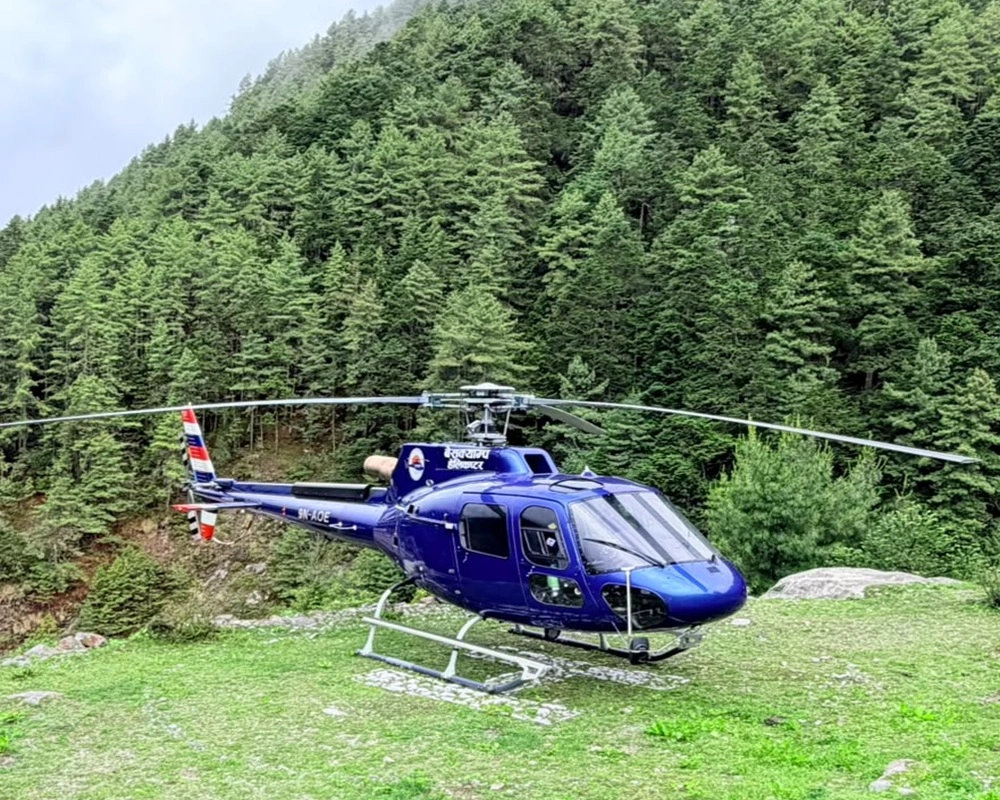
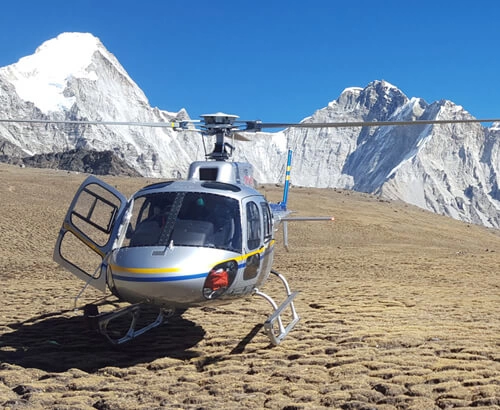
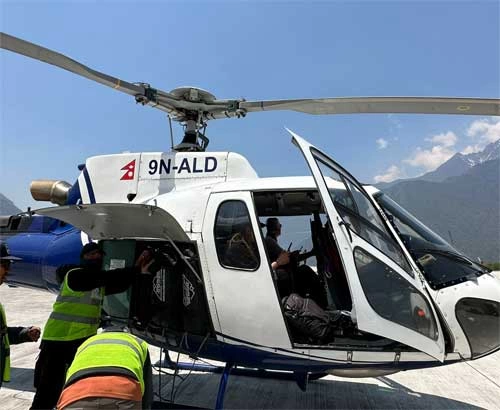
  • Certified High-Altitude Performance: We only fly with the Airbus H125 (AS350 B3e), which is known to have the highest power-to-weight ratio for high altitude and thin air, which is necessary for an Everest helicopter tour with landing.

  • Safety-First Landing Sites: Unlike other tour operators, we do not claim a helicopter landing on Mount Everest right on the summit or in unstable, icy areas. We chose Kala Patthar (5,545m), which is the most suitable and the safest point for the Everest Helicopter Landing. This point offers breathtaking panoramic 360 views of the entire Khumbu region, ideal for those seeking an Everest base camp helicopter with landing experience.

  • Weather-Driven Decision Making: Our decisions on flying and performing a helicopter landing on Mt. Everest depend on weather conditions in real time, and our pilots have the ultimate discretion to cancel the trip at any point in the interest of safety, especially for any Everest base camp helicopter tour with landing flight requiring precise conditions.

Why the Kathmandu to Everest Helicopter Flight is a 5-Hour Experience

A Mount Everest helicopter tour from Kathmandu is considered 5 hours because it depends on several logistical stops and safety procedures for flying at high altitude rather than just travel time, making it one of the most efficient ways to experience an Everest heli tour with breakfast included.

Although the time from the capital to high altitude mountain region is less than this 5-hour tour, this Mount Everest helicopter tour from Kathmandu also comprises an important stopover at Lukla for refueling of the helicopter, as well as a scenic stopover at Kala Patthar for sightseeing and finally, an important breakfast at the Hotel Everest View, giving travelers time at the Everest view hotel helicopter stop to relax before heading back.

Each leg of this Mount Everest helicopter tour from Kathmandu, Nepal is set up to give you the most time on the ground within the Khumbu region, yet allow the pilot to gauge on-the-spot changes in weather; a total of five hours of this tour are, in fact, allocated for sightseeing, reflecting real feedback shared on Everest base camp helicopter tour tripadvisor reviews from past guests.

This gives adequate time to experience the world's highest peaks and also, importantly for high altitude acclimatisation, to not hurry.

Everest Base Camp Helicopter Tour Tickets

The Everest base camp helicopter tour package, including current Everest base camp helicopter tour price and Everest base camp helicopter tour cost details, can be booked securely, swiftly and in a stress-free manner. From solo travellers to family groups and those travelling in groups, you have options between purchasing individual helicopter seats and renting out a complete helicopter as per your timing and budget.

You'll be instantly confirmed on booking with the e-tickets, and all necessary pre-departure information, including any cost of helicopter ride to Everest base camp breakdown, will be sent to you. Alternatively, you may need to give an advance deposit of booking fee just for making a reservation of seat, and the balance booking amount, reflecting the full cost of helicopter to Everest base camp, is paid just about flight time prior to departure.

How to Book Everest Helicopter Tour Tickets Online?

The booking process is simple as follows:

  • Pick a departure date that best suits your convenience.

  • Chose one whether to book private or helicopter of group (sharing the helicopter with other tourists).

  • Please enter your information details such as your first name and last name, date of Birth and nationality details etc to book Your ticket.

  • Let us know your exact weight for Aircraft planning.

  • You will Need To make the Booking advance amount through a reliable Payment system, with the full Everest helicopter ride cost confirmed at this stage.

  • You get to have e-mail/whatapp and other communication for confirmation of your travel after payment completion.

  • You Will have to attend the pre-departure briefing before the flight.

Shared vs. Private Everest Base Camp Helicopter Tour Tickets

Shared Everest Base Camp Helicopter Tour Tickets

The Shared Everest touring pack tickets are a good option for solo travelers, couples & groups of small size who want to do an Everest trip, including an Everest base camp helicopter flight, on a budget.

  • Cost-effective Everest Base Camp Helicopter tour ticket with sharing seat.

  • The helicopter is shareable by up to 4 to 5 travelers, considering weight capacity.

  • Daily departure during trekking seasons, part of our regular Everest base camp helicopter tour services.

  • Ideal for solo, couples, and budget trekkers.

  • Same flight path, mountain views and sightseeing, including any scheduled Everest base camp helicopter landing tour, as the private tour.

  • You will meet some friends of travelers from around the world.

Private Everest Base Camp Helicopter Tour Tickets

These private Everest base camp helicopter tour cost packages provide a luxurious, intimate Everest base camp helicopter flight landing tour tailored for family or friends, avid photographers, and discerning luxury travelers.

  • Private helicopter exclusively yours for you and your group.

  • Departure time is flexible (pending availability, weather & operational hours).

  • Added privacy and exclusive comfort during the flight.

  • Perfect for families, honeymoon couples, special guests, or corporate functions, with an Everest base camp helicopter tour with landing flight cost clearly outlined before booking.

  • Additional flexibility to take photos and make stops where feasible during the flight, with an Everest base camp helicopter tour photos package available for guests who want a keepsake of the journey, and an Everest base camp helicopter tour with landing cost breakdown provided for full transparency. 

Mount Everest Helicopter Tour Ticket With Instant Booking Confirmation

You can make a booking for your Everest Helicopter tour by completing a few simple steps, and you'll get the instant booking confirmation after the booking has been processed successfully. Once your booking is confirmed, you will get the digital e-ticket containing all necessary information of travel, and you can then proceed to your pre-flight formalities with ease, having already reviewed the Everest base camp helicopter tour package details in advance.

Usually, all of the Everest Helicopter tour operators send the booking confirmation to your email address and WhatsApp by using all of the needed deposit or full payment, as per their booking policy, with the Everest helicopter tour package terms clearly stated beforehand.

Your Mount Everest Helicopter Tour Ticket Includes:

  • Post booking, an instant booking confirmation will be sent to you.

  • Your flight will feature Mobile friendly E Ticket (Digital Mount Everest Helicopter Tour ticket)

  • Details about the reporting time and date of departure

  • Detailed travel plan of your flight Local Airport pick up (If opted for in your package)

  • In-flight briefing and travel instructions

  • Customer care information for queries before your flight

  • Your Booking ID/Reference Number for swift access at the check-in, along with confirmation of your Everest helicopter tour program schedule.

Digital E-Ticket for a Hassle-Free Journey

Your Mount Everest Helicopter Tour ticket is in digital format; thus, no physical ticket will be printed. Keep it on your smartphone or tablet, and present your e-ticket to our ground staff while checking in with your passport or necessary ID for your international Mount Everest Helicopter Tour.

It's always a good idea to keep a hard copy just for yourself while on international trips, particularly useful if booking through an Everest base camp helicopter tour services provider abroad.

Secure Your Mount Everest Helicopter Tour Ticket in Advance

We suggest you book the Mount Everest Helicopter Tour tickets in advance. This is the peak spring and autumn seasons; hence, seats are quickly filled, and people miss out on a fantastic experience.

Early bookings give you a chance to secure your preferred day and time and let you prepare for your journey of a lifetime, especially for guests specifically searching for a trusted heli Everest pvt ltd operator, or those comparing this Everest base camp helicopter tour 2026/2027 style booking process across seasons.

Everest Helicopter Tour Cost and Price (2026)

Everest Helicopter tour prices range between USD 1,100 per person in larger group tours and go up to USD 1,250 per person for solo tours. The total Everest helicopter price would depend on factors like the number of travelers, choice of helicopter (shared or private), time of season, and operational logistics.

Most packages include a flight from and to the listed departure point, an experienced pilot, permit fees and airport charges, but generally don’t include personal expenses or travel insurance.

1 Passenger - US$1,250

The price for the tour for 1 person is USD $1250 per person. This is the most suitable option for individual travelers who want to travel with the group on scheduled group departures or for those who are looking for a private seat if any are available.

$1,180 Mount Everest helicopter tour price Price Includes:

  • Everest helicopter flight

  • Professional mountain pilot

  • Airport taxes

  • Government taxes (where applicable)

  • Flight coordination

  • Safety briefing

What's the Cost Per Hour?

This 4- to 5-hour-long Mount Everest helicopter trip, worth US$ 1250, provides an incomparable experience in the Himalayas. Everest helicopter tours will range from around $ 250 to $ 312.5 per person per hour, according to the actual tour length and schedule. The fee will include the professional helicopter pilots flying over Mount Everest, flight, airport, and other higher altitude-relevant requirements.

Helicopter Used for This Tour

For your Everest Helicopter Tour, you will be flying in one of the high-performance helicopters used to operate high mountain flights. Based on flight availability & operational needs, you may fly in either:

  • Airbus AS350 B3e (H125)

  • Airbus H125

  • Bell 407

All helicopters are maintained according to Nepal's civil aviation regulations and are operated by experienced commercial mountain pilots.

Safety Features Included

Passenger safety is the highest priority on every Everest helicopter tour. Standard safety features include:

  • Licensed and experienced mountain pilot

  • Emergency oxygen cylinder onboard

  • First-aid kit

  • Continuous weather monitoring before and during the flight

  • Mandatory pre-flight safety briefing

  • Helicopters maintained to Civil Aviation Authority of Nepal (CAAN) standards

Is This Price Available Year-Round?

Yes, the Everest helicopter tour price is available every day, depending on the weather conditions and flight operations. However, depending on the season in Nepal, flight prices and seat availability can differ; 

  • Spring (March to May): Peak trekking season with great mountain views. 
  • Summer (June to August): The helicopter tour does not fly often due to the monsoon. 
  • Autumn (September to November): The best season with a clear sky and mountain visibility. 
  • Winter (December to February): The helicopter tour operates according to the weather. It shows snow-capped Himalayas. 

Early booking is advisable during the spring and autumn seasons.

Booking Requirements

To confirm your Everest helicopter tour booking, you'll typically need to provide:

  • A valid passport copy

  • Advance payment or booking deposit

  • Passenger weight information for flight planning

  • Full name, nationality, and contact details

  • Preferred travel date

Providing accurate information helps ensure smooth flight coordination and compliance with high-altitude safety requirements.

Payment Options

We offer secure and convenient payment methods for your Everest helicopter tour booking.

  • Credit and debit cards (Visa, Mastercard, and other major cards)

  • International bank transfer

  • Secure online payment gateway

  • Cash payment in Nepal (where applicable)

Once your payment is received, you'll receive a booking confirmation and your digital e-ticket with complete tour details.

2 Passengers - US$1,200 Per Person

The $1,200 Everest Helicopter Tour Price is ideal for couples, friends or two travelers and offers you the ultimate balance between budget and comfort. You can get the best value for money and still get to enjoy the same memorable Himalayan adventure and iconic aerial view from a professionally operated helicopter ride. Mt Everest helicopter tour price is lower for two people than for individuals, and hence this is a favorite tour for shared departure.

US$1,200 Everest Helicopter Tour Price Includes

  • Round-trip Everest helicopter flight

  • Experienced high-altitude mountain pilot

  • Domestic airport taxes and aviation charges

  • Government taxes (where applicable)

  • Flight coordination and operational support

  • Pre-flight safety briefing

  • Emergency oxygen available onboard

  • Scenic flight over the Everest region as per the itinerary

US$1,200 Everest Helicopter Tour Price Excludes

  • Nepal entry visa

  • Personal travel and medical insurance

  • Meals and beverages

  • Personal expenses and shopping

  • Tips and gratuities

  • Services not mentioned under "Price Includes"

What's the Cost Per Hour?

An average duration for this Everest helicopter tour is around 4-5 hours, which makes the Everest helicopter tour cost approximately US$240-300 per person/hr. While travelling to the Khumbu region, Lukla, viewpoints of Mt. Everest and other Himalayan peaks, the Everest helicopter tour cost presents a golden deal for an expedition of a lifetime.

Helicopter Used for This Tour

Your Everest helicopter tour will operate using either a B3 Helicopter (Bell) or an AS350 B3 helicopter (Airbus) or H130 (Airbus helicopter), whichever one is most convenient given the mission and availability of aircraft: 

  • Airbus AS350 B3e (H125)

  • Airbus H125

  • Bell 407

These helicopters are built for mountain flying and are maintained per the aviation regulations of Nepal.

Safety Features Included

Every Everest helicopter tour price includes comprehensive safety measures to ensure a secure journey.

  • Licensed and experienced mountain pilot

  • Emergency oxygen cylinder onboard

  • First-aid kit

  • Continuous weather monitoring

  • Pre-flight safety briefing

  • Aircraft maintained to aviation safety standards

Is This Price Available Year-Round?

Yes, the Everest Helicopter Tour price is accessible all year round, but it also depends on weather conditions and operational flight schedules. Spring and autumn are the peak months. Departures for summer and winter fly depending on the weather to get started. It’s best to plan in these seasons.

Booking Requirements

To confirm your Mount Everest helicopter tour price, you'll need to provide:

  • Valid passport copy

  • Advance booking deposit

  • Passenger weight information

  • Full contact details

  • Preferred travel date

Payment Options

We offer secure and flexible payment options for your Everest helicopter tour cost.

  • Credit or debit card

  • International bank transfer

  • Secure online payment gateway

  • Cash payment in Nepal (where applicable)

3 Passengers - US$1,180 Per Person

The US$1,180 Everest helicopter tour price is ideal for a party of three tourists who wish for an affordable and convenient trip. It’s a far superior deal to travelling alone or with one partner on a similar Himalayan flight trip. The 3-passenger Mount Everest helicopter tour price will suit groups of three travelling friends, relatives or tour buddies wanting to split the Mt Everest helicopter tour cost on a per-person basis.

US$1,180 Everest Helicopter Tour Price Includes

  • Round-trip Everest helicopter flight

  • Experienced high-altitude mountain pilot

  • Airport taxes and aviation charges

  • Government taxes (where applicable)

  • Flight coordination and ground support

  • Pre-flight safety briefing

  • Emergency oxygen available onboard

  • Scenic flight over the Everest region as per the itinerary

US$1,180 Everest Helicopter Tour Price Excludes

  • Nepal entry visa

  • Personal travel and medical insurance

  • Meals and beverages

  • Personal expenses and shopping

  • Tips and gratuities

  • Services not specifically mentioned under "Price Includes"

What's the Cost Per Hour?

Since your Everest helicopter tour lasts an average of 4-5 hours, your estimated Mount Everest helicopter tour cost would be US$236 - US$295 per person per hour. All things considered, given the unmatched quality of aerial vistas of Mount Everest, Khumbu Glacier, and neighboring Himalayan giants, the Mount Everest helicopter tour price you pay for an unparalleled experience is worthwhile.

Helicopter Used for This Tour

Depending on the needs of the day and the available fleet of helicopters, your Everest helicopter tour might be carried out by:

  • Airbus AS350 B3e (H125)

  • Airbus H125

  • Bell 407

These are dedicated high altitude mountain choppers which have been certified to Nepal's standards of air safety.

Safety Features Included

Every Everest helicopter tour price includes comprehensive safety measures to ensure a secure and comfortable journey.

  • Licensed and experienced mountain pilot

  • Emergency oxygen cylinder onboard

  • First-aid kit

  • Continuous weather monitoring

  • Pre-flight safety briefing

  • Aircraft maintained to approved aviation standards

Is This Price Available Year-Round?

Yes. The price for Everest helicopter tours is inclusive on an annual basis, weather permitting and when operational. Our busiest period is spring and autumn, with the clearest skies and the best mountain views available. Departures run in summer and winter when the weather conditions allow, though booking in advance is essential at peak times of year.

Booking Requirements

To confirm your Mount Everest helicopter tour price, you'll generally need:

  • Valid passport copy

  • Advance booking deposit

  • Passenger weight information

  • Full contact details

  • Preferred travel date

Payment Options

Booking your Everest helicopter tour cost is simple and secure with multiple payment methods available.

  • Credit or debit card

  • International bank transfer

  • Secure online payment gateway

  • Cash payment in Nepal (where applicable)

4 - 5 Passengers - US$1,150 Per Person

Family and friends, and groups traveling together, often choose the US$1,150 Everest helicopter tour because of its good value. When booking for more passengers, you share the cost per person. You can get access to an economical Everest helicopter tour price that is essentially just the 4 to 5 passengers price with sharing. Our Mount Everest helicopter tour cost for 4-5 people is one of our most commonly chosen trips.

US$1,150 Everest Helicopter Tour Price Includes

  • Round-trip Everest helicopter flight

  • Experienced high-altitude mountain pilot

  • Airport taxes and aviation charges

  • Government taxes (where applicable)

  • Flight coordination and operational support

  • Pre-flight safety briefing

  • Emergency oxygen available onboard

  • Scenic Everest region flight as per the itinerary

US$1,150 Everest Helicopter Tour Price Excludes

  • Nepal entry visa

  • Personal travel and medical insurance

  • Breakfast and beverages (unless included in the package)

  • Personal expenses and shopping

  • Tips and gratuities

  • Services not listed under "Price Includes"

What's the Cost Per Hour?

You will be paying approximately US$230 - US$287.50 per person per hour of tour for an Everest helicopter price, which is inclusive of the expertise of professional flight operators, certified pilots, airport fees, and some of the world’s finest helicopter tour viewing experiences.

Helicopter Used for This Tour

Depending on operational necessity and aircraft availability, your Everest helicopter trip could be on the following helicopters:

  • Airbus AS350 B3e (H125)

  • Airbus H125

  • Bell 407

These are aircraft intended for operations in the Himalayas at altitudes above 10,000 feet and are maintained according to Nepali standards of civil aviation.

Safety Features Included

Your Everest helicopter tour cost includes a range of essential safety features for a secure mountain flight.

  • Licensed and experienced mountain pilot

  • Emergency oxygen cylinder onboard

  • First-aid kit

  • Continuous weather monitoring

  • Pre-flight safety briefing

  • Aircraft maintained to aviation safety standards

Is This Price Available Year-Round?

Yes, there are various Everest helicopter tour prices, and the tours are operational year-round depending on weather and operating conditions. We recommend booking in the spring (March-May) and fall (September-November) when visibility is optimal and availability is high. The summer and winter tours are conducted when weather permits.

Booking Requirements

To confirm your Mount Everest helicopter tour price, you'll typically need:

  • Valid passport copy

  • Advance booking deposit

  • Passenger weight information

  • Full contact details

  • Preferred travel date

Payment Options

Booking your Everest helicopter tour cost is simple and secure with multiple payment methods available.

  • Credit or debit card

  • International bank transfer

  • Secure online payment gateway

  • Cash payment in Nepal (where applicable)

6 - 10 Passengers - US$1,100 Per Person

Our USD$1100 Everest helicopter tours are the most affordable cost per person for groups, making it the most budget-friendly price for large families, corporations or travel tour operators. Your Everest helicopter tours will not only experience the awesome Mount Everest helicopter tours in a price-saving package, but the cost for individual tour travelers is greatly lowered. If comparing costs for Mount Everest helicopter tours, then Everest helicopter prices are very competitive in this group package deal.

US$1,100 Everest Helicopter Tour Price Includes

  • Round-trip Everest helicopter flight

  • Experienced high-altitude mountain pilot

  • Domestic airport taxes and aviation fees

  • Government taxes (where applicable)

  • Flight coordination and operational support

  • Pre-flight safety briefing

  • Emergency oxygen available onboard

  • Scenic Everest region flight as per the itinerary

US$1,100 Everest Helicopter Tour Price Excludes

  • Nepal entry visa

  • Personal travel and medical insurance

  • Meals and beverages

  • Personal expenses and shopping

  • Tips and gratuities

  • Services not listed under "Price Includes"

What's the Cost Per Hour?

For your Everest helicopter tour of 4 to 5 hours, you can expect to pay an average of US $220 to $275 per hour, per person, for an Everest helicopter price which comprises expert flying operations, an experienced Himalayan mountain pilot, all airport fees and one of the best helicopter sightseeing trips. 

Helicopter Used for This Tour

The helicopters in which your Everest helicopter tour can be undertaken are high-performance helicopters used for flying in the Himalayas, such as: 

  • Airbus AS350 B3e (H125)

  • Airbus H125

  • Bell 407

They have been engineered for high-altitude and are operated and maintained by stringent Nepal civil aviation rules and procedures.

Safety Features Included

Every Everest helicopter tour price includes comprehensive safety measures for a secure mountain flight.

  • Licensed and experienced mountain pilot

  • Emergency oxygen cylinder onboard

  • First-aid kit

  • Continuous weather monitoring

  • Pre-flight safety briefing

  • Aircraft maintained to aviation safety standards

Is This Price Available Year-Round?

Yes. Everest helicopter tour prices can be found year-round. It depends on the weather and the approval from the authorities for operation. 

The spring season from March to May and the autumn season from September to November are considered the best seasons to view Mount Everest due to the clear skies. 

In summer, the helicopter tour to Everest can be operational during good weather days, and in winter, the Everest heli tour can be operated whenever weather conditions allow. It is highly advisable to book your tour in advance to secure your desired departure date.

Booking Requirements

To confirm your Mount Everest helicopter tour cost, you'll generally need:

  • Valid passport copy

  • Advance booking deposit

  • Passenger weight information

  • Full contact details

  • Preferred travel date

Payment Options

Booking your Everest helicopter tour cost is quick and secure with multiple payment methods available.

  • Credit or debit card

  • International bank transfer

  • Secure online payment gateway

  • Cash payment in Nepal (where applicable)

Everest Helicopter Service: Our Commitment to High-Altitude Excellence

Selecting a reputable Everest heli service is perhaps the most important choice for your mountain experience. It will determine a lot regarding your safety, route options, and the actual quality of your flight through the Khumbu.

What makes Adventure Altitude Treks Everest helicopter service unique is that we offer far more than a mere ride in the sky, but rather a perfectly engineered flight, taking real-time weather reports into account and tailoring your route according to present Himalayan weather patterns, whether you're booking a helicopter to Everest peak journey or a shorter regional flight.

By booking with our Everest helicopter service, you are not just choosing transportation; you are selecting an airline with a passion for keeping state-of-the-art helicopter fleets operational, maintaining constant pilot-to-passenger communication, and ensuring a fluid ground-to-air handover so you spend more time gazing at the mountains and less time on the tarmac, whether your route includes a helicopter to mount Everest approach or a Kala Patthar detour.

Why Our Operational Model Sets the Standard:

  • Safety-First Flight Planning: Flying on blind flight plans is for other operators, not ours. Our Everest helicopter service crew liaise with local airfields and air traffic control to ensure the optimal flight corridor in the Khumbu Valley, including for guests booking a mt Everest by helicopter route.

  • Specialized High-Altitude Fleet: All our aircraft, we use the Airbus H125 (AS350 B3e), are maintained to ensure high-altitude power performance to allow for smooth landings on mountainous sites, ideal for any helicopter in Everest operation regardless of destination.

  • End-to-End Coordination: Whether your journey starts with us at the planning stage or we welcome you from your hotel in Kathmandu, our Everest helicopter service handles all operational and logistical aspects, including permits and transportation prior to boarding the helicopter for your Everest heli tour.

  • The "Expert Pilot" Guarantee: We only fly with pilots who have over a thousand hours flying in the Himalayas, each qualified for a full helicopter tour of Everest experience. This is fundamental to our Everest helicopter service.

Everest Summit Helicopter Tour Exists or Not?

No, commercial helicopter trips to the top of Mount Everest (8848 m) are not available. You might come across articles and searches for "helicopter on top of Mount Everest," but the fact is that this is an impossible feat. Such trips are not a reality due to various extreme factors, despite frequent searches for a helicopter ride to Everest summit online.

For instance, there is not enough oxygen to run an engine in the "death zone."

Furthermore, a stable landing pad isn't available, and landing any commercial helicopter on Everest's peak is not a safe service for tourists. A single test flight in 2005 managed to land a helicopter on Everest summit, but this is an exception.

Why a "Helicopter to the Top of Mount Everest" is Not an Option

  • The Atmospheric Ceiling: Even though 8,848 meters high, the density of the air there doesn't create enough lift through its blades to stabilize the helicopter in place, ruling out any genuine helicopter ride to top of mt Everest.

  • Engine Performance Limits: Helicopters need both oxygen and dense air to burn their fuel, and once at high altitudes, the engine would be unable to produce the power that the helicopters need to stay afloat and fly in a safe condition while attempting the trip to the summit.

  • Terrain Hazards: Besides, the top of Everest is no more than a wind-sculpted "knife-edge" ridge of moving snow. There is no place where a mount Everest chopper can land on top of Everest, which would result in a deadly and irreversible crash.

Why Your "Everest Summit" Experience is Safer at 5,545 Meters

Instead of pursuing the phantom idea of a helicopter landing on the Mount Everest summit, we provide the most well-known, the most professional and the safest high-altitude trip in the Himalayas exploring mount Everest with helicopter access - the Kala Patthar Landing.

  • Unobstructed Views: Our landing is located at 5,545m, so from our landing point, you view the summit pyramid on an eye-level plane which is more spectacular than the one from the top of the precarious peak itself, offering unmatched views of mount Everest from helicopter height.

  • Safety-First Logistics: Our helicopters are operated within their performance capabilities, which allow for spectacular Himalaya views without life-threatening helicopter "summit" stunting, giving you a safe helicopter ride over mount Everest instead of a risky landing attempt.

When opting for our well-planned tour, you will obtain the Everest summit helicopter view and feel close to the highest summits of the world.

Everest Helicopter Tour Package with Real Everest Base Camp Helicopter Tour Reviews

Our Everest Helicopter Tour Package presents you with an amazing, safe, and pleasurable journey. If you are wishing for luxury day trips in the Himalayas, great mountain flying tours in Nepal, and the experience of a lifetime Everest Base Camp helicopter tour package to capture the beauty and majesty of Mount Everest with our expert pilots and meticulous arrangements for your adventure and amazing flight in the Himalayas.

Reviews of the company are full of praise for the impeccable organization, fantastic mountain scenery, well-run flight and experienced pilot. 'Once-in-a-lifetime adventure' is mentioned in many of the client experiences, and they refer to the excellent and professional flight team, coordination, views and experience.

Why Travelers Choose Our Everest Helicopter Tour Package

  • Professionally charted helicopter tour to Everest. 

  • Professional, experienced and commercially licensed mountain helicopter pilots. 

  • Top-notch high-altitude operational helicopters. 

  • Scenic flight to Everest and around. 

  • Stop at Hotel Everest View (depending on your itinerary)

  • Shared and Private tours available

  • Customized itineraries available.

  • Real-time prices with no hidden charges. 

  • Dedicated support team prior to and during your trip.

What Makes Our Everest Base Camp Helicopter Tour Package Different?

Our Everest Helicopter Tour Package

Our Everest Helicopter Tour Package presents you with an amazing, safe, and pleasurable journey. If you are wishing for luxury day trips in the Himalayas, great mountain flying tours in Nepal, and the experience of a lifetime Everest Base Camp helicopter tour package to capture the beauty and majesty of Mount Everest with our expert pilots and meticulous arrangements for your adventure and amazing flight in the Himalayas, whether you're taking an Everest helicopter ride or a full sightseeing package.

Reviews of the company are full of praise for the impeccable organization, fantastic mountain scenery, well-run flight and experienced pilot. "Once-in-a-lifetime adventure" is mentioned in many of the client experiences, and they refer to the excellent and professional flight team, coordination, views and experience, with many guests specifically booking an Everest view helicopter tour for the panoramic photo stops.

Why Travelers Choose Our Everest Helicopter Tour Package

  • Professionally charted helicopter tour to Everest, including a full mount Everest base camp helicopter tour itinerary.

  • Professional, experienced and commercially licensed mountain helicopter pilots.

  • Top-notch high-altitude operational helicopters.

  • Scenic flight to Everest and around, popular among those who simply want to fly to Everest base camp without a multi-day trek.

  • Stop at Hotel Everest View (depending on your itinerary).

  • Shared and Private tours available.

  • Customized itineraries available.

  • Real-time prices with no hidden charges, including clear Everest helicopter tour price listings.

  • Dedicated support team prior to and during your trip.

What Makes Our Everest Base Camp Helicopter Tour Package Different?

This Everest Base Camp helicopter tour is structured in such a way that you can get the most out of your visit to the Himalayas in a day, with transparent Everest base camp helicopter tour price information shared upfront. Right after leaving Kathmandu until you are back, the whole package is seamlessly organised so that you feel comfortable, safe and surrounded by mountains. Every aspect of the itinerary is meticulously arranged for your convenience, photo shoots and mountain views.

Everest Touring Pack Designed for Every Traveler

Our Everest touring pack is suitable for:

  • Solo travelers

  • Couples

  • Families

  • Friends traveling together

  • Senior travelers

  • Luxury holiday seekers

  • Photographers

  • Corporate and incentive groups

Every touring pack is built on the same principle of safety, service, and the same level of commitment to the operation, regardless if you choose a group tour, a private charter, or simply want to compare Everest heli tour price options across seasons.

Everest Helicopter Tour Program

Our Everest Helicopter Tour program has been carefully planned to be a pleasant and hassle-free affair from beginning to end.

The program generally includes:

  • Hotel pickup in Kathmandu

  • Helicopter departure from Kathmandu Airport

  • Scenic flight to the Everest region

  • Refueling stop in Lukla

  • Flight toward Everest Base Camp and Kala Patthar, the highlight of any mt Everest base camp helicopter tour

  • Stop at Hotel Everest View (subject to itinerary)

  • Return flight to Kathmandu

The exact schedule may vary depending on weather conditions and operational requirements.

Everest Base Camp Helicopter Tour Services

Our Everest Base Camp Helicopter Tour services are built to give you a full travel package before, during, and after your flight, whether you're arranging a standard helicopter tour to mount Everest or a fully private charter.

Service Details

  • Helping arrange your trekking tour

  • Safe trip confirmation

  • We work with qualified and professional local pilots

  • Trained mountain pilots

  • Group & Private Helicopter tour

  • Special customer service before the departure day and the day itself

  • Providing update of the flight status

  • Taking cares for all necessary paper, required details, necessary permits to the passenger

What Do You Have to Do?

Just trust our Everest Base Camp Helicopter tour service and enjoy your once-in-a-life-time Heli tour of Himalayas with us.

Everest Base Camp Helicopter Tour with Landing Flight & Cost

The Everest Base Camp Helicopter Tour is one of the best Himalayan adventure tours for those looking for an exceptional experience beyond just a scenic flight. Unlike many standard mountain flights, the Everest base camp helicopter tour with landing offers the ability to experience the unparalleled vistas of the Himalayan peaks through scheduled landing stopovers as part of the tour package (subject to weather, security and operating feasibility).

Everest Base Camp Helicopter Tour with Landing Experience

Our Everest Base Camp helicopter tour starts in Kathmandu and flies all the way to the heart of the Khumbu region with beautiful Sherpa settlements, glaciers, and snowy Himalayan mountains. It is possible for your Everest Base Camp helicopter with landing to refuel in Lukla, fly over the Everest Base Camp, and then land at a suitable spot such as Hotel Everest View or Kala Patthar, depending on what's feasible.
Itinerary
Expand AllCollapse All

Time

Itinerary

5:30 AM

Hotel Pickup & Transfer to Kathmandu Domestic Airport

6:15 AM

Airport Check-in, Weight Verification & Pre-Flight Briefing

7:00 AM

Scenic Helicopter Flight from Kathmandu to Lukla

8:00 AM

Lukla Landing, Refueling & Gateway to the Everest Region

8:30 AM

Scenic Flight Over Namche Bazaar, Tengboche & Khumbu Valley

9:00 AM

Kala Patthar Landing (5,545 m) & Close View of Mount Everest

10:30 AM

Scenic Return Flight from Everest Region to Kathmandu

11:30 AM

Tour Completion & Hotel Drop-Off

  • Altitude/Time5 hour/ 5,545 m

5:30 AM - Hotel Pickup & Transfer to Kathmandu Domestic Airport

  • Duration: 30- 45 Minutes
  • Distance: Approximately 6- 8 km (depending on hotel location)
  • Starting Altitude: 1,400 meters (4,593 ft)
  • Destination: Kathmandu Domestic Airport

Your Everest Base Camp Helicopter tour starts with a pick-up from your Kathmandu hotel in the morning. Flying as early as possible is one of the major contributing factors to every successful Everest expedition’s helicopter activity, and it is to be expected that you can get the best views and safest skies in the early morning. 

Not only does this give you a spectacular overview of the Everest range, but it also increases your chance of being clear of any potentially hazardous afternoon mountain weather conditions that often come in later in the day. It’s not uncommon for this to be the typical departure of Everest helicopter trips.

Your Morning Begins

Our experienced rep will come to your hotel on time, he will take care of your luggage and drive you to Kathmandu Domestic Airport in a private vehicle. You will see your vehicle and drive in a peaceful street of waking up Kathmandu, a totally different city from its busy daytime. 

This is the moment when most travelers feel something exciting within their hearts because they will know that within a few hours they will be at one of the best viewpoints in the world.

Why Does the Tour Start So Early?

Morning flight departures are set according to weather and operational factors. The mountains of the Himalayas usually get: 

  • Better views of the peaks as they get clear morning light 

  • Lower wind conditions at altitude 

  • Relatively calmer air (wind) 

  • Fewer chances of clouds forming around the mountains 

  • More stable flight conditions 

This will ensure a safer and better flight for you over the Everest region and a clear view of the mighty Mount Everest.

What You'll See During the Drive

The journey may be brief, but this will give you a glimpse into Kathmandu at the early hours of the morning. While journeying, you will see:

  • Old temples bathed in the first rays of the early morning sun

  • Traditional Newari villages

  • Busy local markets gearing up for the day

  • Colorful prayer flags strewn across the rooftops

  • The first beams of sunlight peeking over the nearby hills

The serenity provides such a different scene compared to the mountain panoramas you will soon enjoy.

Documents to Carry

Before leaving your hotel, make sure you have:

  • Original passport

  • Helicopter tour booking confirmation

  • Travel insurance details (recommended)

  • Emergency contact information

  • Personal identification documents

Keeping these items in an easily accessible bag helps ensure a smooth check-in process at the airport.

What to Wear

The weather shifts from day to day when you're traveling up to altitude. If you wear layers you'll be comfortable the whole trip up.

Recommended clothing includes:

  • Thermal base layer

  • Warm fleece or insulated jacket

  • Windproof outer layer

  • Comfortable trekking pants

  • Sunglasses with UV protection

  • Gloves and a warm hat during colder months

Temperatures near Kala Patthar can be well below freezing, even when Kathmandu enjoys mild weather.

What to Pack in Your Day Bag

We recommend carrying a lightweight backpack for carrying essential items during the flight.

Suggested items include:

  • Camera or smartphone

  • Spare batteries or power bank

  • Drinking water

  • Lip balm

  • Sunscreen

  • Personal medication

  • Small snacks

  • Sunglasses

Packing light also helps operators manage aircraft weight, which is particularly important for high-altitude helicopter flights.

Why Weight Matters

This is quite different from a normal commercial flight. In the Everest region, helicopters have an overall limit to carrying capacity. Therefore, your weight and that of any baggage will be carefully recorded at departure to check that the weight of the helicopter isn't exceeded. 

This information helps pilots:

  • Calculate fuel requirements

  • Maintain aircraft balance

  • Optimize flight performance at high altitude

  • Comply with aviation safety regulations

Weight calculation is part of the normal procedure for all Everest helicopter treks, don't worry.

Expert Travel Tips

To make the most of your journey:

  • Have a full night's sleep prior to your travels. 

  • Have a light meal on the morning of departure if you do not have an itinerary that requires an in-flight breakfast. 

  • Ensure that all of your electronic gadgets have been fully charged the prior night. 

  • Ensure your passport is always to hand. 

  • Dress warmly; do not carry your warmest garment! 

  • Start your Himalayan experience with a fully formatted memory card.

What Makes This Phase Important?

Though less than an hour, this hotel transfer will introduce the overall trek in itself. From the early departure and flight preparation to the equipment checks and set-up, every bit of preparation is to make the entire Everest Base Camp Helicopter Tour a safe, convenient, and lifetime experience. 

Before arriving at Kathmandu Domestic Airport, you will be completely ready to embark on a helicopter tour, one of the most outstanding on the planet, from where you’ll gradually leave the crowded capital and fly through valleys, glaciers, and mountains of the Everest region.

6:15 AM - Airport Check-in, Weight Verification & Pre-Flight Briefing

  • Duration: 30- 45 Minutes
  • Location: Tribhuvan International Airport - Domestic Terminal, Kathmandu
  • Airport Elevation: 1,400 meters (4,593 ft)

You'll be greeted at the domestic terminal by our ground operations team, and they'll accompany you on airport formalities, from checking in to making their way to the boarding lounge before the start of the Everest Base Camp Helicopter Tour. 

You might think the process (which should take less than an hour) isn't one of the crucial parts, but for passengers who are about to fly into Nepal's remote Himalayas, mandatory aviation formalities have to be adhered to by every passenger.

With helicopter operations in the Everest region, it is more than just taking the next available place on a commercial airline. Everything from the helicopter's operations manual and weather report and analysis, to the performance of the machine and calculation of passenger weight, is meticulously examined to make sure your Everest Base Camp Helicopter Tour gets you safely to and from your destination.

Meet Your Tour Coordinator

On arrival at the domestic terminal, your representative will welcome and direct you towards the check-in counter. Instead of handling your own documentation, your documents, luggage, and boarding procedure will be supervised at every point.

Furthermore, your coordinators will assist you with the necessary information, such as flight details, weather reports, helicopter seat arrangements, and estimated arrival time. The team will ensure you embark on a helicopter journey towards your Everest adventure without any difficulty.

Check-in Process

Upon arriving for your helicopter ride, there are some general pre-flight procedures. 

The check-in process generally includes:

  • Verification of your booking confirmation

  • Passport and identification check

  • Passenger registration

  • Flight manifest preparation

  • Baggage inspection

  • Distribution of boarding information

Helicopter passenger numbers are small compared to large commercial planes, and we double-check each person whose name is on the manifest before flying.

Why Passenger Weight Verification Is Mandatory

One of the most important distinctions that separates commercial airline flights from Everest Base Camp Helicopter Tour is weight calculation of the passengers.

Everyone travelling including your baggage will have their own individual weight checked before boarding the helicopter. 

This information is used to calculate:

  • Total aircraft payload

  • Fuel requirements

  • Center of gravity

  • High-altitude flight performance

  • Safe landing capability

As the helicopter flies at above 5,000 metres, they may become less efficient, especially regarding carrying weight. Pilots have to work out an exact weight configuration for safely operating the aircraft through the Everest region to strictly adhere to the Civil Aviation Authority of Nepal (CAAN) guidelines.

Baggage Guidelines

Given the limited capacity of an aircraft, we ask our guests to take only necessary items on board.

A typical day pack should include:

  • Passport

  • Camera or smartphone

  • Sunglasses

  • Sunscreen

  • Lip balm

  • Drinking water

  • Personal medication

  • Light snacks

  • Warm gloves

  • Down jacket

Heavy suitcases can either be stored in your hotel or, if pre-arranged, at a safe facility. The lower aircraft weight enables safe high-altitude landing and provides better aircraft performance.

Meet Your Mountain Pilot

Before you head off, one of the highlights is to get acquainted with your professional mountain pilot. Our Everest helicopter tours pilots are highly trained specifically to fly the Himalayas, where rapid weather changes, deep valleys, and high altitude create unique challenges that standard helicopter pilots don’t often encounter.

Before departure, your pilot will explain:

  • Today's flight route

  • Current weather conditions

  • Expected flight duration

  • Planned landing locations

  • Safety precautions

  • Alternative procedures if weather changes

This briefing helps passengers understand exactly what to expect throughout the journey.

Pre-Flight Safety Briefing

Every Everest Base Camp Helicopter Tour begins with a mandatory safety briefing before passengers board the helicopter.

During the briefing, you'll learn:

  • Safe approach to the helicopter

  • Correct boarding procedures

  • Seat belt operation

  • Headset usage for in-flight communication

  • Emergency exit locations

  • Safe movement around the aircraft

  • Landing procedures at high altitude

  • Instructions for photography during flight

Listening carefully to the briefing ensures a safer and more enjoyable experience throughout the tour.

Weather Assessment Before Departure

Due to extremely rapid changes in the mountain environment, weather evaluation is arguably one of the most critical jobs before every departure.

Before engine start, the operations team reviews:

  • Cloud cover across the Everest region

  • Wind speed

  • Visibility

  • Temperature

  • Forecasts for Lukla, Namche Bazaar, Kala Patthar, and Hotel Everest View

The flight can be delayed or canceled entirely if the prevailing conditions are not safe. These judgments put the passengers’ lives above all else.

Helicopter Allocation & Seating

Once the check-in of all passengers is complete, the seating arrangements are allocated by the operations team, considering the following points:

  • Total passenger weight

  • Aircraft balance

  • Group size

  • Safety requirements

The seating plan is optimized to ensure the best aircraft performance. This is crucial at altitudes of over 4,000 meters.

Where a joint flight is operating, seating might be swapped over to offer a similar viewing perspective when possible from an operational point of view.

Final Boarding Announcement

Once the weather is clear and the helicopter is ready, the group is taken from the terminal building to the helipad. Your walk to the helicopter is signaled by the beginning of the turning rotor blades, and then your journey into the Himalayas. 

Before stepping aboard, the grounds crew makes one last sweep of your bags and makes sure everyone is securely settled in your seat. Then the helicopter is airborne from Kathmandu.

Expert Tip

Wear the warmest outer layer rather than packing it in the luggage. Kathmandu’s climate could be quite moderate and warm, yet in Kala Patthar, it could be a few degrees below freezing point. Make sure your passport, sunglasses, camera, and gloves are accessible so you can board faster and can immediately capture the eye-catching Himalayas as soon as the helicopter takes off.

7:00 AM - Scenic Helicopter Flight from Kathmandu to Lukla

  • Flight Duration: 40- 50 Minutes
  • Flight Distance: Approximately 138 km (86 miles)
  • Departure Altitude: 1,400 meters (4,593 ft) - Kathmandu
  • Arrival Altitude: 2,845 meters (9,334 ft) - Lukla Airport
  • Average Cruising Altitude: 3,000- 4,000 meters (varies with weather and air traffic)

Your helicopter flies off into the sky, leaving Kathmandu Domestic Airport, and your Everest Base Camp Helicopter Tour officially commences. That initial ride, however, is much more than just an uplift; it’s an astounding overland journey in a bird’s-eye view, from Nepal’s vibrant Kathmandu Valley to the entrance to the Everest territory.

In just a few minutes of taking off, the skyline of Kathmandu fades away behind a lush expanse of hills. The panorama takes on the characteristic character of Nepal’s valleys and valleys, a mosaic of terraces, terraced rice fields, narrow river gorges, thick forests, and charming, traditional mountain villages. 

Each kilometer that passes brings the immense range of the Himalayas nearer, with stunning, increasingly majestic views of snowy peaks in the north of the sky - the climax to a spectacular journey through subtropical vegetation to the roof of the world.

Flight Route Overview

After a detailed pre-planned route is finalized towards east Nepal without crossing significant terrain obstructions, the most reliable and visually best flight route for the helicopters is decided.

Typical Flight Route

Kathmandu → Bhaktapur → Dhulikhel Region → Dolakha Hills → Jiri Region → Lamjura Range → Lukla

The exact route might differ in case of weather patterns and air traffic controller commands, but the passenger will never lose the view out of the window during the flight. Since we do not fly high like commercial airplanes, you will witness Nepal's beauty much closer.

Changing Landscapes Throughout the Flight

One of the highlights of this journey is witnessing Nepal's rapidly changing geography from above.

Kathmandu Valley

Starting above the lush Kathmandu Valley, where you’ll fly over the ancient towns and temples, the rivers, and densely populated neighborhoods before departing the city.

Mid-Hill Region

As the helicopter heads east, you'll fly above:

  • Beautiful terraced farms

  • Traditional stone villages

  • Winding mountain roads

  • Dense pine and rhododendron forests

  • Fast-flowing Himalayan rivers

These landscapes have supported mountain communities for centuries and offer a fascinating glimpse into rural Nepal.

Entering the Himalayan Foothills

By halfway into the flight, the terrain begins to alter quite a lot. Green hills give way to stark ranges of mountains, deep valleys, and first sightings of snow-capped Himalayan peaks. The air gets purer, the valleys go deeper, and the mountains go higher as you fly into the Khumbu region.

Himalayan Peaks You'll See

The flight takes in great views of a few famous mountains on its approach to the Everest region on clear days.

You may see:


Mountain

Elevation

Langtang Lirung

7,227 m

Dorje Lakpa

6,966 m

Gaurishankar

7,134 m

Melungtse

7,181 m

Rolwaling Himal Range

Various peaks

Looking toward the east of the helicopter, even greater mountains emerge in the distance, and it will finally come as your first view of the planet's highest mountains.

What Makes This Flight Unique?

Helicopter touring allows an unobstructed tour, and you'll see many things that can't be observed with a conventional airplane; throughout your journey, you will see the following; 

Throughout the flight, you'll enjoy:

  • Large panoramic windows

  • Low-altitude scenic flying

  • Excellent visibility of valleys and mountains

  • Smooth transitions between different landscapes

  • Outstanding aerial photography opportunities

Your chosen place on the helicopter promises breathtaking sights, rendering it perhaps the most beautiful of helicopter tours in Nepal.

The Experience Inside the Helicopter

As you continue climbing smoothly in the helicopter, you can expect to experience minor shifts in the landscape. You’ll feel the temperature steadily decrease, observe a more rugged view of mountain ridges, and, each minute, witness the faraway white summits appearing to become closer.

Most people would compare the journey to this stage to the time when you fully apprehend that you are coming to the Himalayas, as the vast world from below starts unfolding as the helicopter approaches its destination. 

Rivers snake through deep gorges, small, isolated villages dot the sides of mountains, and forests carpet slopes leading to snowy pinnacles, all visible as one looks through the helicopter window.

You won’t feel discomfort as all passengers will use aviation headsets, eliminating engine noise while permitting you to communicate with your pilot on those occasions when it’s appropriate.

Best Photography Opportunities

During this flight you'll be in for a plethora of chances to capture the scenery of Nepal.

Some of the best photography subjects include:

  • Kathmandu Valley after takeoff

  • Terraced agricultural fields

  • Suspension bridges crossing Himalayan rivers

  • Traditional hill villages

  • Forest-covered mountain ridges

  • Snow-capped Himalayan peaks

  • The dramatic approach to Lukla Airport

For the clearest photographs:

  • Clean your camera or phone lens before boarding.

  • Keep your device ready during takeoff.

  • Avoid using flash inside the cabin.

  • Shoot slightly away from the window to reduce reflections.

Arrival at Lukla - Gateway to Everest

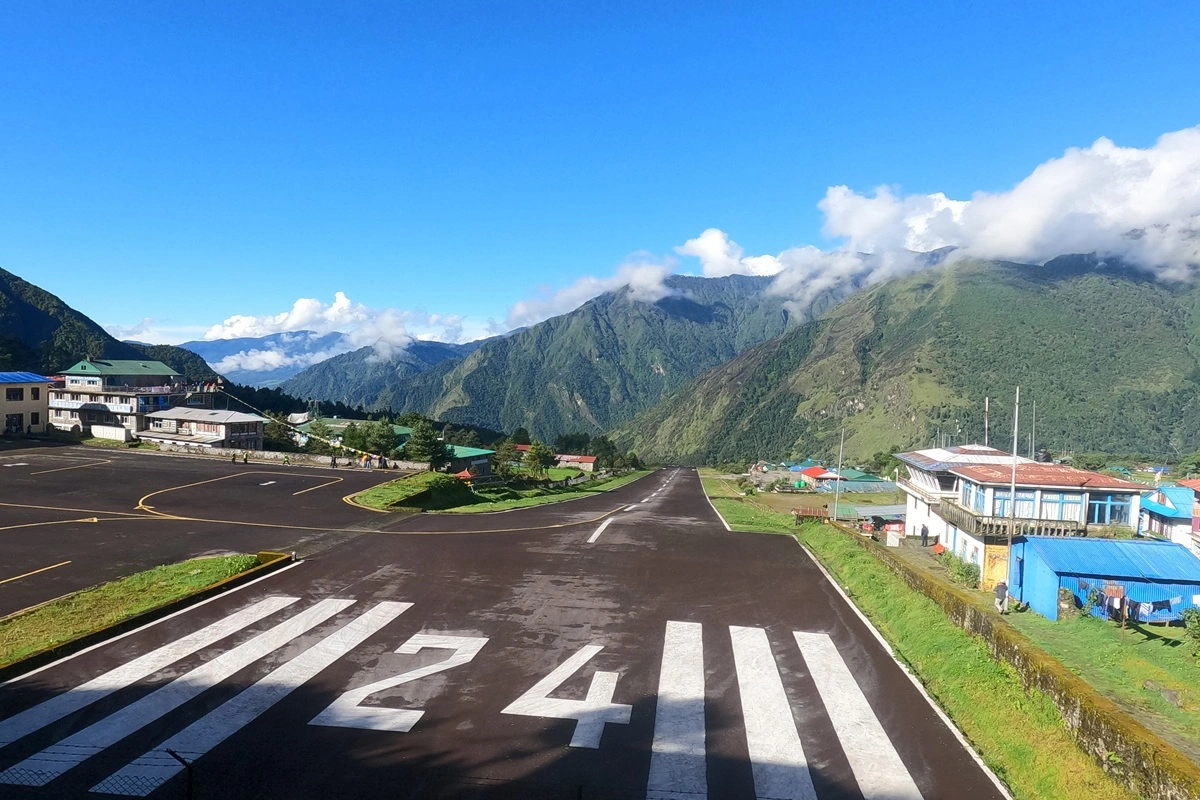
You will see mountains surrounding the valley as you fly closer to Lukla. Situated on steep slopes within the mighty Himalayas, Lukla is known worldwide as the entry point of the Everest Region. 

As the helicopter gently touches down at the Tenzing-Hillary Airport for a brief fuel stop and to refuel for a subsequent higher altitude flight into the Khumbu Valley, it picks up additional passengers. And instead of trekkers starting their multi-day adventure here, the passengers hop aboard for the next leg of the helicopter journey to Everest Base Camp.

Expert Insight

In under an hour, the helicopter has given you an astonishing variety of Nepalese scenery: agricultural villages set amidst fertile valleys, to the rocky slopes and high peaks of the Himalayas. 

When you land at Lukla, you will be over 1400 meters (4700 feet) higher than when you started and will have seen in this short time what others trek to reach over several days. This transition itself is a significant aspect of an Everest Base Camp Helicopter Tour.

8:00 AM - Lukla Landing, Refueling & Gateway to the Everest Region

Stop Duration: 10- 20 Minutes
Location: Tenzing- Hillary Airport, Lukla
Altitude: 2,845 meters (9,334 ft)
Flight Time from Kathmandu: Approximately 45- 50 Minutes

Following a spectacular and unforgettable flight from Kathmandu by helicopter, you begin to gently descend toward Lukla, the famed jumping-off point for all Everest adventures and treks into the heart of the Everest region. 

Nestled between steep ridges, Lukla is a gateway for mountaineers. The stay at Lukla is mandatory on helicopter excursions for logistical purposes, and it also gives you the first opportunity to soak in the beauty of the Nepalese high country. 

Upon touching down on the runway, and the whirl of the rotor blades slowing to a stop, the fresh mountain air hits you and you will sense the distinct contrast from Kathmandu; the temperature, the air, and of course the towering Himalayan panorama that rises before you. Lukla serves as the point where you leave behind the middle hills of Nepal and head into the Khumbu region.

Welcome to Lukla - The Gateway to Mount Everest

Also called Tenzing-Hillary Airport, Lukla is the most famous of mountain airports. Tens of thousands of trekkers, climbers, guides, and their support crew pass through Lukla each year on the journey to Everest Base Camp. Lukla is no Kathmandu: life in this small Sherpa town centres on trekking, mountaineering, and tourists. 

As the main airport in the Everest region, Lukla acts as a bridge between isolated communities and the capital of Nepal. 

For helicopter trips, Lukla is more than just a fuel point; it is the last aviation facility of significance before flying towards Sagarmatha National Park in the higher elevations.

Why Does the Helicopter Stop in Lukla?

Many travelers wonder, “Why is Lukla one of the stops in all our Everest Base Camp Helicopter Tours?"

The primary reasons are:

  • Helicopter refueling prior to beginning operations in a high altitude environment

  • Real time, pre-departure check for the weather forecast in Everest region

  • Pilot communication with local flight operations

  • Pre-flight performance check of the helicopter

  • Passenger comfort, if operationally permitted

Helicopters are able to fly at 5,000 meters but a very specific, prudent fuel plan and management system is essential andLukla enables us to refuel prior to operating in the higher, more challenging conditions of the Khumbu.

Experience the Famous Tenzing- Hillary Airport

Lukla Airport is renowned for its unique location and engineering.

Airport Facts

  • Official Name: Tenzing- Hillary Airport

  • Elevation: 2,845 meters (9,334 ft)

  • Runway Length: Approximately 527 meters

  • Runway Gradient: Steep uphill slope to assist aircraft during landing and takeoff

  • Airport Type: STOL (Short Take-Off and Landing)

Lukla has been listed as one of the most challenging airports in the world for conventional fixed-wing aircraft, owing to its steep surroundings and the rather short runway it possesses. Helicopters however, do not require the whole runway to land and take off.

What You'll See During Your Stop

While the stop is short, there’s still a lot to see. Here’s what you should look out for: 

  • Traditional Sherpa homes are constructed of local stones 

  • Colourful prayer flags gently blowing in the mountain wind 

  • Everest Base Camp trekking groups assembling 

  • Porters setting their loads, yaks and zopkios transporting supplies 

  • Snow-capped mountains looming over the village of trekkers 

  • Helicopters and STOL aircraft landing and taking off together 

You will also get to experience your first real dose of the culture of the Everest region up close.

Meet the Sherpa Heartland

Situated in the Khumbu area where the famous Sherpa people reside, these hardy climbers are known throughout the world for their mountaineering ability and Himalayan knowledge.

When wandering through the village, keep your eyes peeled for indications of Sherpa culture, such as:

  • Buddhist prayer wheels

  • Mani walls carved with sacred mantras

  • Traditional mountain lodges

  • Monasteries on surrounding hillsides

  • Colorful chortens marking village entrances

These significant sites illustrate years of Himalayan culture and provide a relevant insight into the people whose shoulders have carried countless climbers to Mount Everest.

Weather Conditions in Lukla

Weather in Lukla changes quickly and plays a major role in Himalayan aviation.

Before continuing toward Everest Base Camp, pilots carefully review:

  • Visibility

  • Cloud movement

  • Wind direction

  • Wind speed

  • Temperature

  • Conditions at higher elevations

Lukla weather can shift dramatically, heavily impacting air operations in the Himalayas. 

Photography Opportunities

Your Lukla stop offers some excellent photo opportunities.

Popular subjects include:

  • The famous mountain airport

  • Helicopter parked against Himalayan peaks

  • Traditional Sherpa village

  • Colorful prayer flags

  • Snow-covered ridgelines

  • Mountain lodges

  • Local trekking activity

These weather updates finalize safe choices on the best path for the flight's next leg and timing. If it needs to be, the plane cannot reach the schedule.

What Happens Before Takeoff?

During the refuelling of the aircraft, various operational checks are done by the pilot and ground engineers. 

These include:

  • Fuel quantity verification

  • Engine inspection

  • Rotor system inspection

  • Communication system check

  • Navigation confirmation

  • Updated weather briefing

  • Passenger seating confirmation (if required for weight distribution)

Only upon completion of these operational checks is the helicopter cleared to continue towards Everest Base Camp & Kala Patthar.

Expert Insight

Your stay in Lukla might only be for a brief period of 10-20 minutes, but it’s a pivotal stop that marks your Everest Base Camp Helicopter Tour experience in many ways. 

This is the part of the flight where you’ll be venturing higher up into the Khumbu Valley with increasingly stark landscapes, progressively thinner air, and the highest peaks on Earth surrounding you with a sheer awe-inspiring grandeur that will stick with you forever.

8:30 AM - Scenic Flight Over Namche Bazaar, Tengboche & the Khumbu Valley to Everest Base Camp

  • Flight Duration: 25- 35 Minutes
  • Maximum Flight Altitude: Approximately 5,500 meters (18,045 ft)
  • Flight Route: Lukla → Phakding → Namche Bazaar → Syangboche → Tengboche → Pangboche → Dingboche → Lobuche → Gorak Shep → Everest Base Camp → Kala Patthar

From your departure from Lukla, the rest of your Everest Base Camp Helicopter tour heads into the most beautiful part of the trip. Here you will experience the real majestic Himalayan range. The helicopter starts ascending from the valley of Khumbu up into a similar valley where the trekkers walk for about 8 to 10 days to make the journey.

In just a few minutes, you pass through rich, green forests, and the landscape changes into alpine terrain with glacier valleys taking over and some of the world's highest peaks towering on all sides. There is a fantastic view of Everest in all directions in this section, making it the main part of this experience.

Flying Into Sagarmatha National Park

Just minutes after you take off from Lukla, you’ll enter the territory of Sagarmatha National Park. Nepal's first UNESCO World Heritage site sprawls across over 1,148 km², encompassing the upper Khumbu Valley, along with Everest, ancient glaciers, alpine forests, unusual wildlife, and remote Sherpa villages. 

You'll see the land change before your eyes: dense pine and rhododendron forests are quickly replaced by jagged cliffs, icy streams, and high, snow-capped peaks.

Aerial View of Phakding

The first significant village we fly over is Phakding (2,610 m), a beautiful Sherpa village nestled on the banks of the Dudh Koshi River. Although helicopter visitors can only catch a glimpse from above, Phakding is a very significant village as it is the first stopover place for trekkers.

From the helicopter, you can observe:

  • Traditional stone-built lodges

  • Suspension bridges crossing the Dudh Koshi River

  • Yak caravans transporting supplies

  • Dense Himalayan pine forests

  • Winding trekking trails leading toward Namche Bazaar

The peaceful setting provides a striking contrast to the dramatic mountain scenery that lies ahead.

Namche Bazaar - The Sherpa Capital

Soon, the helicopter ascends to an elevation of 3,440 m to take you to Namche Bazaar - the biggest and liveliest town of Everest. Tucked away into a mountain amphitheater, this horseshoe-shaped village is the commercial hub and focal point of the Khumbu Valley. 

Most expeditions on Everest stop in Namche for their acclimatisation before reaching further up. 

From above, you'll clearly see:

  • Observe the colourful roofs spread across the hillsides.

  • The traditional houses of the Sherpas 

  • Hotels and lodges. 

  • Ancient Buddhist monasteries.

  • The vibrant and colourful mountain marketplace

In the morning, Everest is usually the first peak that trekkers can see, clear as the daylight, but from the helicopter, you get an even better view without having to walk for many days to see this majestic peak.

Syangboche Airstrip & Hotel Everest View

Higher up from Namche is Syangboche (3,880 m), a name recognised for being the home to the internationally renowned Hotel Everest View. While you're soaring, you'll see how unique the position of the hotel really is, towering over the valley beneath and standing alone in the shadow of snow-capped Himalayan mountains. 

You'll even make a stop here to enjoy your breakfast on this trip, but it is well worth experiencing it as you fly overhead in the early part of the itinerary.

Tengboche Monastery

Continuing in a northeasterly direction, we soon reach Tengboche (3,867 m), the site of the largest and most important monastery of the Khumbu region.

From above you'll see:

  • Ancient monastery buildings

  • Colorful prayer flags

  • Dense rhododendron forests

  • Open alpine meadows

  • Magnificent views of Ama Dablam

For many years, climbers and trekkers have been coming here to be blessed prior to the climb to the roof of the world.

Ama Dablam - The Jewel of the Himalayas

It is rare for any mountain to inspire as much awe as Ama Dablam (6,812m). The ‘Matterhorn of the Himalayas’ rises elegantly through the skyline, its perfectly pyramidal shape seen all along this flight segment. 

Many travelers feel Ama Dablam is a better photographic icon than Mt Everest with its sharp ridges and pristine symmetrical contours. The pilot frequently changes the flight path whenever operationally feasible to offer the best views.

Entering the High Himalayas

The terrain starts to get wilder past Tengboche.

Vegetation gradually disappears, replaced by:

  • Rocky alpine terrain

  • Glacial moraines

  • Permanent snowfields

  • Frozen rivers

  • Massive ice formations

We fly now through one of the highest inhabited valleys of the Earth, with mountain peaks of more than 7,000 or 8,000 meters surrounding us.

Villages You'll Fly Over

Further toward Everest Base camp, you will find yourself above some of the well-known Himalayan settlements.

Village

Altitude

Why It's Famous

Pangboche

3,985 m

Oldest Sherpa village in the Khumbu

Dingboche

4,410 m

Popular acclimatization stop

Lobuche

4,940 m

Final overnight stop before Everest Base Camp

Gorak Shep

5,164 m

Last settlement before Everest Base Camp

With the vegetation vanishing at higher elevations, the villages dwindle and are ultimately replaced by remote, highland wilderness. 

Khumbu Glacier & Khumbu Icefall

On the Everest Base Camp Helicopter Tour, another never-to-be-forgotten aspect of the trek will be witnessing the Khumbu Glacier, which is the highest glacier in the world. 

Located at the foot of Mount Everest, the glacier runs to nearly 17 kilometers, forming the Khumbu Icefall. It is the world's most formidable glacier on Mount Everest.

From the helicopter, you'll witness:

  • Towering ice towers (seracs)

  • Deep glacier crevasses

  • Massive frozen rivers

  • Constantly shifting ice formations

Features that are quite difficult to see to their fullest from the ground, hence making the overhead views unforgettable. 

Flying Above Everest Base Camp

On approaching the Mount Everest Base Camp (5,364 m), you fly over the most well-known mountaineering site in the world. 

Colorful expedition tents will be on display across the glacier during the Spring climbing season, which comes together in the form of an international community of climbers setting out to reach Mount Everest’s summit.

From above, you may observe:

  • Expedition camps

  • Icefall route preparations

  • Climbing equipment

  • Glacier formations

  • The South Face of Mount Everest

Being airborne provides a real perspective on the sheer scope and sophistication of a climb like this that’s so elusive down on the ground.

The Final Climb Toward Kala Patthar

Leaving Everest Base Camp behind, the helicopter will continue to ascend to its highest altitude on most standard EBC Heli Tours, Kala Patthar (5545m). 

Above the elevation of 5500m, the terrain transforms from earth into predominantly rock, ice, and snow, with the world’s highest mountains, Everest, Lhotse, Nuptse, Pumori, and Lingtren appearing on every side from every angle, offering an unparalleled 360-degree panoramic view of the highest mountains of the planet. 

This is the highlight of the Everest Base Camp Heli Tour, with the prelude of landing at Kala Patthar to get to see Mount Everest closer than you possibly could from a helicopter tour without embarking on days of strenuous trekking.

9:00 AM - Landing at Kala Patthar (5,545 m): The Closest View of Mount Everest

Landing Duration: 10- 15 Minutes (Subject to weather, aircraft weight, and aviation regulations)
Location: Kala Patthar, Khumbu Region, Nepal
Altitude: 5,545 meters (18,192 feet)
Nearest Distance to Mount Everest: Approximately 8- 10 km (line of sight)
Average Temperature: -10°C to -20°C (season dependent)

It is high time for your Everest Base Camp Heli Tour! Following our helicopter’s flight through glaciers, villages of Sherpa people, and then eventually Everest Base Camp, we land at Kala Patthar. It is widely accepted to be the best point to view Mount Everest.

While on Everest Base Camp, some of the summit points are hidden by other peaks, but Kala Patthar offers a clear and full-on view of Mount Everest along with Lhotse, Nuptse, Pumori, Lingtren, and Khumbu glacier. 

Because of that, a lot of professional trekkers, photographers, and climbing guides believe Kala Patthar is the best viewpoint in the Everest region. Also, the majority of commercial helicopter services land on Kala Patthar as the highest point, as it is feasible to do so with safety and stunning views.

Welcome to One of the World's Highest Helicopter Landing Points

The moment the helicopter sets down gently, you'll immediately feel how the scenery has changed.

Everything around feels changed; thin air, considerable temperature drop, the majestic mountains rise around in all directions. You'll witness the most stunning mountain scenery on the planet, since you are now standing 5545 meters above sea level, above almost all world-famous mountain peaks.

Why Does the Helicopter Land at Kala Patthar Instead of Everest Base Camp?

Most of us might think that helicopters land exactly at the Everest Base Camp. Well, Kala Patthar gives us an even more stunning view. Here’s why: 

  • Direct panoramic view of Mount Everest.

  • Safer landing area for helicopter operations.

  • Better photography opportunities.

  • Less congestion during climbing season.

  • Higher elevation than Everest Base Camp.

  • Wide open viewing platform.

Once you reach the Base Camp of Mount Everest, you won’t get a complete view of Everest because it is hidden by the shoulder of Nuptse and a large glacier in the front. You will be seeing the postcard-style, picture-perfect view of Everest only from Kala Patthar.

The First Moment You Step Outside

Upon arrival, when the helicopter doors open, you get to witness one of the most remarkable points of your entire trip. Your very first sensory perception would be the clean Himalayan air and the magnitude of the mountains all around you. 

Unlike lower elevations, there are:

  • No forests

  • No villages

  • No roads

  • No permanent settlements

Instead, you'll discover an untouched alpine world of snow, rocks, glaciers, and mountains.

The feeling of standing above the clouds with the tallest peaks on Earth around you is what defines the Everest Base Camp Helicopter Tour.

Mountains Visible from Kala Patthar

Kala Patthar offers a 360-degree Himalayan panorama.

During clear weather, you may see:

Mountain

Height

Mount Everest

8,848.86 m

Lhotse

8,516 m

Nuptse

7,861 m

Pumori

7,161 m

Lingtren

6,749 m

Khumbutse

6,665 m

Changtse

7,543 m

Few places in the Himalayas provide such a concentrated view of so many iconic peaks within a single panorama.

The Khumbu Glacier Beneath Your Feet

Another thing you’ll get from Kala Patthar is arguably the best on-ground and aerial perspective on Khumbu Glacier, the highest glacier in the world. This massive ice flow covers close to 17 km from the sides of Mt Everest through the Khumbu Valley.

You'll clearly see:

  • Massive ice formations

  • Deep glacier crevasses

  • Glacial moraines

  • The Khumbu Icefall

  • Snow-covered ridges

This perspective is impossible to appreciate fully from lower elevations.

Why Your Landing Time Is Limited

The other frequently asked question that tourists put forth is “Why are guests only allowed to stop for 10 to 15 minutes at Kala Patthar?” The reason is quite straightforward. 

The height over here is about 5,500 meters, and due to a shortage of oxygen supply, as there are very low concentrations, it is not advised to prolong the halt for too long, even for healthy tourists. 

So as a measure, helicopter operators try to limit it to 15 minutes, but it depends on certain weather conditions and aircraft conditions like weight,” added an official.

What Does It Feel Like at 5,545 Meters?

Every traveler experiences high altitude differently.

Some people notice:

  • Faster breathing

  • Cooler temperatures

  • Slight light-headedness

  • Dry mountain air

  • Increased heart rate

These conditions are standard at this elevation and normally will disappear as the helicopter lowers to a lower altitude. Because of this, helicopter pilots continually scan both their passengers and the weather during a stop.

Photography at Kala Patthar

Many consider Kala Patthar as the ultimate Photography Spot in Nepal.

Some of the most popular photo opportunities include:

  • Mount Everest directly behind you

  • The Khumbu Glacier

  • The Khumbu Icefall

  • Prayer flags fluttering in the mountain wind

  • Panoramic Himalayan landscapes

  • The helicopter with Everest in the background

The visibility is best, and the contrast is at its extreme during the morning hours with white snow on the mountains and the intense blue sky over the Himalayas.

Safety Guidelines During the Landing

Your pilot will provide clear instructions before you step outside.

For your safety:

  • Stay within the designated landing area.

  • Do not walk away from the helicopter without permission.

  • Avoid sudden physical exertion.

  • Secure hats, scarves, and loose items because of rotor wash.

  • Follow all instructions from the pilot and ground crew.

  • Return promptly when called for boarding.

These measures help ensure a safe and efficient high-altitude landing.

Why Kala Patthar Is the Highlight of the Tour

The trip involves an 8-10 day trek through the Khumbu Valley in order to see this viewpoint, but with our Everest Base Camp Helicopter tour, you can witness the same incredible vista within a few short hours. 

Once at Kala Patthar, facing the direct front view of Mount Everest above the Khumbu Glacier beneath you is the pinnacle of any visit, and it blends high-altitude flying with the world's most admired viewpoint for a journey rivaled by few other places.

9:30 AM - Breakfast at Hotel Everest View (3,880 m): The World's Highest Luxury Hotel

  • Stop Duration: 30- 45 Minutes (may vary depending on weather and flight schedule)
  • Location: Hotel Everest View, Syangboche, Khumbu Region
  • Altitude: 3,880 meters (12,729 feet)
  • Established: 1971
  • Flight Time from Kala Patthar: Approximately 10- 15 minutes

After landing at Kala Patthar, the helicopter then makes its way down a little lower to one of the most enjoyable stops of your trip: breakfast at Hotel Everest View. 

One of the highest and most unique luxury hotels in the world, sitting in the lap of the world's tallest mountains, gives you the perfect mix of comfortable lodging, luxury and panoramic views of the Himalayas. 

Down at 3,880 metres, this gives you a more comfortable atmosphere after the higher Kala Patthar stop, where passengers can have their breakfast and take in the stunning panoramic view of Everest and the nearby mountain ranges. 

Many Everest Base Camp Helicopter Tours, particularly of the more luxurious kind, include this popular stop as a highlight of the tour.

Welcome to the World's Highest Luxury Hotel

Set in a commanding position on a ridge above Namche Bazaar, Hotel Everest View is world-renowned for its unrivalled location with commanding views of the Everest massif. The hotel is designed to merge into the landscape and has been welcoming intrepid explorers, whether they're trekkers, mountaineers, photographers, or helicopter passengers from across the globe, for many decades. 

All rooms, terraces, and restaurants are situated to allow breathtaking vistas of the Himalayas. Forget the hordes of people crammed onto viewpoints - here, you can relax with breakfast and take in the splendour of Everest.

Why Does the Helicopter Stop Here?

Travelers ask us why breakfast is added before heading back to Kathmandu.

There are several reasons:

  • Lower altitude than Kala Patthar, making it more comfortable.

  • One of the finest panoramic viewpoints in the Khumbu region.

  • Opportunity to enjoy breakfast surrounded by Himalayan peaks.

  • Time to relax after the high-altitude landing.

  • Excellent photography conditions.

  • A memorable luxury experience that complements the adventure.

This enables visitors to take in all the splendor of the Everest region before making their way back.

Breakfast with Mount Everest in Front of You

There is simply nothing else on earth like eating breakfast with a direct view of the tallest mountain in the world.

Typical breakfast options may include:

  • Freshly brewed tea or coffee

  • Fresh fruit

  • Eggs cooked to order

  • Toast and pastries

  • Pancakes

  • Traditional breakfast selections

  • Juice and light refreshments

Your meal may come as part of your package, or you might pay for your breakfast at the hotel, but with the imposing snow-capped peaks in sight from the large windows or the terrace, you're sure to remember your meal.

Panoramic Himalayan Views

Located higher up, the hotel offers unhindered vistas of many of the famed Himalayan ranges.

During clear weather, you may see:

Mountain

Elevation

Mount Everest

8,848.86 m

Lhotse

8,516 m

Nuptse

7,861 m

Ama Dablam

6,812 m

Thamserku

6,608 m

Kangtega

6,782 m

Kongde Ri

6,187 m

Unlike the brief excursion you are compelled to make at Kala Patthar owing to its height, here at Hotel Everest View, you can savour the beautiful panoramas with a more leisurely approach.

The Atmosphere at Hotel Everest View

One of the unique aspects of this stop is the peaceful atmosphere.

Instead of engine noise and busy trekking trails, you'll experience:

  • Fresh mountain air

  • Quiet Himalayan surroundings

  • Gentle prayer flags moving in the breeze

  • Traditional Sherpa hospitality

  • Comfortable indoor and outdoor seating

  • Stunning 360-degree mountain panoramas

Many travelers describe this as the perfect balance between adventure and luxury.

Photography Opportunities

Hotel Everest View is one of Nepal's premier photography locations.

Popular photo spots include:

  • The famous hotel sign with Mount Everest behind it

  • Outdoor terrace overlooking the Himalayas

  • Helicopter parked beside the hotel (where permitted)

  • Panoramic mountain landscapes

  • Traditional Sherpa architecture

  • Sunrise lighting on Everest during morning departures

  • Garden viewpoints facing Ama Dablam

It’s also a bit lower in elevation, making it more comfortable to move about while clicking photos than at Kala Patthar.

Meet the Sherpa Culture

Namche Bazaar, the cultural heartland of the Sherpa people, sits below your accommodation. You will begin to experience some of the region's colourful heritage.

You'll notice:

  • Traditional stone architecture

  • Buddhist prayer flags

  • Mountain lodges

  • Sherpa hospitality

  • Historic trekking routes leading toward Everest Base Camp

And to add to that, on top of the breathtaking mountain scenery, is this unique cultural experience of the region.

Time to Relax Before Returning

Having experienced the breathtaking beauty of the Everest region through hours of incredible helicopter flights, there is nowhere better to slow down than at Hotel Everest View. 

Passengers often spend this time:

  • Enjoying breakfast

  • Taking photographs

  • Exploring the terrace

  • Admiring Mount Everest

  • Chatting with fellow travelers

  • Simply appreciating the peaceful Himalayan environment

The relaxed atmosphere at the hotel offers a wonderful contrast to the morning’s high-energy helicopter excursion.

Why This Stop Is One of the Tour Highlights

Most visitors agree that Hotel Everest View represents a harmonious combination of the ideal ingredients that constitute a great Everest Base Camp Helicopter Tour- amazing scenery, stunning mountain views, comfortable surroundings and warm, traditional Himalayan hospitality. 

As the stunning vistas of Kala Patthar and the Khumbu Glacier give way to a peaceful breakfast overlooking Mount Everest itself, the ideal end of your trek experience in the high Himalayas comes to an end. 

From Hotel Everest View, your helicopter will begin the wonderful journey back towards Kathmandu, thus concluding your unparalleled experience.

10:30 AM - Scenic Return Flight from Everest Region to Kathmandu

  • Flight Duration: 45- 60 Minutes (including operational stop at Lukla if required)
  • Route: Everest Region → Lukla → Kathmandu
  • Departure Altitude: Approximately 3,880 meters (Hotel Everest View)
  • Arrival Altitude: 1,400 meters (Kathmandu)

Breakfast with breathtaking views of Everest on a clear morning at Hotel Everest View brings your Everest Base Camp Helicopter Tour to its end, descending from the heavens back to Kathmandu. Don’t worry, though; you’re not going to be bored as the entire panorama of the Himalayas unfolds from a different angle. 

As you descend back towards the capital, morning light creates amazing contours and shadows of the various mountains, glaciers, valleys, and Sherpa villages below. It lets you contemplate your momentous flight into the roof of the world and view Everest from the closest vantage points on the planet.

Leaving Hotel Everest View and the Khumbu Valley

After you have concluded your breakfast break, you will fly back to the helipad area where your pilot conducts his pre-flight preparation for departure. 

Before takeoff, the crew will check:

  • Passenger seating arrangement

  • Weather conditions along the return route

  • Fuel requirements

  • Aircraft performance

  • Flight clearance

Upon confirmation, the helicopter will rise from Syangboche and start to descend towards the magnificent Khumbu Valley.

Final Views of Mount Everest and Himalayan Peaks

Leaving Everest on your helicopter tour, you will get one last chance to feast your eyes on some of the world’s tallest peaks.

Depending on weather visibility, you may see:

  • Mount Everest

  • Lhotse

  • Nuptse

  • Ama Dablam

  • Thamserku

  • Kongde Ri

  • Khumbu Glacier

  • Himalayan valleys

On the return leg of your flight, the scenery usually has a bit of a ‘deja vu’ feel, because now you can clearly identify the villages, glaciers, and mountains you saw during the day. They transform from strangers into a lasting reminder of your visit to the Himalayas.

Flying Back Through the Khumbu Valley

Returning along the popular path back down through the world-renowned Everest trekking corridor. 

During this section of the flight, you may see:

Namche Bazaar

The helicopter passes over Namche Bazaar, the historic Sherpa capital of the Everest region and a major marketplace.

From above, you can observe:

  • The horseshoe-shaped settlement

  • Mountain lodges

  • Trekking routes

  • Surrounding Himalayan peaks

Tengboche Monastery

On the return path, you get another glimpse of Tengboche monastery, arguably one of the most significant and beautiful monasteries in the Khumbu region. A backdrop of forests, mountains, and prayer flags against the monastery is one of the most captivating scenes in the country.

Himalayan Villages and Landscapes

As the helicopter continues toward Lukla, the scenery gradually changes:

From:

  • Snow-covered peaks

  • Glaciers

  • Rocky mountain terrain

To:

  • Alpine forests

  • Green hills

  • Rivers

  • Traditional villages

This dramatic transformation highlights the incredible geographical diversity of Nepal.

Lukla Refueling Stop (If Required)

According to the helicopter model, required fuel, number of passengers and flying conditions, the helicopter may make a short stopover at Lukla Airport and proceed towards Kathmandu.

This stop allows the crew to:

  • Refuel the helicopter

  • Complete safety checks

  • Confirm weather conditions

  • Prepare for the final flight segment

From Lukla, we again reach between the high Himalayas and the lowlands of Nepal.

Scenic Flight from Lukla to Kathmandu

As we depart Lukla, the final phase of the trip begins with our flight to Kathmandu. 

The landscape gradually changes as you fly over:

  • Himalayan foothills

  • Green valleys

  • Agricultural terraces

  • Rivers and settlements

  • Mountain villages

This flight allows passengers to take one last view of Nepal’s stunning geography - from the roof of the world to the bustle of Kathmandu Valley.

Photography Opportunities During Return Flight

The return journey provides excellent opportunities for final photographs.

Recommended shots include:

  • Helicopter flying above mountain valleys

  • Snow peaks disappearing into the distance

  • Sherpa villages from above

  • Terraced hillsides

  • Rivers winding through valleys

  • Kathmandu Valley approaching from the air

Keep your camera ready because every few minutes the landscape changes dramatically.

Arrival at Kathmandu Domestic Airport

After around 45 to 60 minutes of scenic flight, your helicopter touches down at the Kathmandu Domestic Airport. 

Upon arrival:

  • Ground staff will assist with exit procedures

  • You will collect your personal belongings

  • Your tour representative will arrange hotel transfer (if included)

  • You can continue with your remaining Kathmandu activities

After spending only a few hours, you have completed the trek, which normally takes over two weeks to traverse.

Hotel Drop-Off & Tour Completion

Upon reaching the airport, you are transferred to the previously checked hotel in Kathmandu.

Your entire Everest Base Camp Helicopter Tour comes to its completion with this tour:

  • Enjoy the spectacular panoramic helicopter ride above the Himalayas

  • Observe Lukla gateway, views over Namche Bazaar in the air

  • Explore the Everest Base Camp region

  • Land on Kala Patthar for breathtaking views of Everest

  • Savor a delicious breakfast at Hotel Everest View

  • Witness an epic panoramic sight of Mount Everest

The drive back from the airport is the end not of the entire expedition, yet, it's an outro of a beautiful expeditionary tale you just experienced in the mighty Himalayas.

11:30 AM - Tour Completion, Hotel Drop-Off & Final Experience Summary

  • Estimated Arrival at Airport: 11:30 AM - 12:00 PM
  • Estimated Arrival Place: Kathmandu Domestic Airport → Your previous hotel in Kathmandu
  • Estimated Duration: 4-5 Hours (depending on weather conditions, stops made and flight availability)

Following an ecstatic ride over Himalayan skies, the helicopter lands in the domestic airport of Kathmandu. The flight to Mount Everest Base Camp ends here. But the fun doesn’t end the moment you get off the helicopter. 

Our ground crew at the airport will escort you out, help with your baggage and facilitate your drop-back to your hotel. 

In a short span of one morning, you have visited Mount Everest’s backyard, marvelled at the views of the majestic mountains, been to Everest Base Camp and returned to Kathmandu safely, without days of arduous trekking!

Arrival at Kathmandu Domestic Airport

On arrival of the helicopter in Kathmandu, passengers always feel amazed and in contrast. 

Only a few hours earlier, you were surrounded by:

  • Mount Everest and the Himalayan giants

  • Glacial landscapes

  • Thin mountain air above 5,000 meters

  • Sherpa villages of the Khumbu region

Now you return to:

  • The warmer climate of Kathmandu

  • The busy atmosphere of Nepal's capital

  • Comfortable lower-altitude surroundings

It seems as though one has been on an exceptional journey for a change of landscape.

Post-Flight Assistance

The ground support crew assists with your landing to finalize the setup. 

This includes:

  • Assisting passengers while leaving the helicopter

  • Collecting personal belongings

  • Confirming all passengers have exited safely

  • Guiding guests through the airport area

  • Arranging hotel transportation if included in the package

Professional expertise for the remaining process to your final stop in the Everest Base Camp Helicopter Tour.

Hotel Transfer After the Helicopter Tour

Once at the airport and procedures are cleared, you will be driven back to your hotel in Kathmandu.

The return drive usually takes:

  • Around 20- 45 minutes depending on traffic

  • Longer during busy city hours

In the meantime, you will have an opportunity to sort out photos, share stories and memories of the awesome Himalayan journey you have just completed.

Memories You Take Back from the Everest Helicopter Journey

More than just a trip, Your Everest Base Camp Helicopter Tour will provide you with a complete Himalayan excursion in one day.

During the tour, you have experienced:

Aerial Views of the Everest Region

You witnessed the incredible landscape of:

  • Khumbu Valley

  • Namche Bazaar

  • Tengboche Monastery

  • Everest Base Camp area

  • Khumbu Glacier

  • Himalayan mountain ranges

High-Altitude Landing Experience

The journey includes reaching one of the most famous viewpoints in the Everest region:

  • Kala Patthar viewpoint (subject to current operational permissions and conditions)

  • Close views of Mount Everest

  • Panoramic Himalayan scenery

  • Professional mountain helicopter experience

Luxury Himalayan Breakfast Experience

Breakfast at the Hotel Everest View is one of the highlights and provides the ideal place for people to relax and enjoy the views from the world's best peaks.

This provides a perfect combination of:

  • Adventure

  • Comfort

  • Mountain scenery

  • Sherpa hospitality

Not satisfied with this regular itinerary?

Are you interested on planning custom trip? Feel free to contact us.

Cost Details
What's Included
  • Helicopter flight from Kathmandu to Everest region and return
  • Hotel pickup and drop-off in Kathmandu
  • Airport transfer and flight preparation assistance
  • Experienced helicopter pilot and ground handling team
  • Government taxes, airport charges, and required permits (as per package)
  • Scenic aerial views of Mount Everest, Khumbu Valley, and Himalayan peaks
  • Kala Patthar landing (5,545 m) or Everest region landing (as per selected package)
  • Breakfast stop at Hotel Everest View (for applicable packages)
  • Passenger insurance and emergency oxygen onboard
What's Excluded
  • International airfare and Nepal entry visa fees
  • Personal travel and medical insurance
  • Meals, drinks, and personal expenses
  • Tips for pilot, crew, and staff
  • Additional charges due to weather delays or flight cancellations
  • Extra services not mentioned in the cost includes section
Useful Info

Altitude and Acclimatization During The Tour

You will fly up from the low altitude of Kathmandu's 1400 m (4593 ft) to 5364 m (17598 ft) at Everest Base Camp in just a few hours - a swift increase that will leave your body short of getting used to it. Everest Base Camp helicopter tour doesn't let you go through an 8-12-day acclimatization procedure like trekkers in the standard EBC journey; instead, you are directly exposed to altitude stress.

By the time you get out at the altitude of 5,545m at Kala Patthar, or the Mount Everest Base Camp(EBC), your blood would contain much less oxygen. AMS may be caused as per some individuals, and due to 10-15 minutes only of reaching maximum height you might suffer with small head aches, light headedness, short of breath, faster heartbeat.

You stop for breakfast and visit Everest View Hotel (3,880m). You can enjoy a stay for about 30-40 minutes at this low-altitude intermediate level, but with limited time for adjustment. This is so that even when you reach a significantly higher altitude, the acclimatization from this is limited.

A lot of trekkers make the mistake of thinking this short duration alone keeps them “immune” to altitude sickness. You might not be totally immune. In simple terms, because the duration you remain at this height is very little, it is unlikely to get life-threatening altitude illnesses such as HACE or HAPE. Those people with heart, respiratory illness, or high blood pressure are more at risk and should seek medical advice before planning for the trip.

Clothing, Gear, and Equipment

When you land on Everest Base Camp or in any of the high-altitude villages (above 5500m), you must dress in layers of heavily insulated clothing suited for sub-zero conditions, even if you’re going there in a “good” season. 

Only the cabin of the helicopter will be heated - even if there will not be too much heat - all the time you’ll be outdoors (during landings and take-offs at high altitudes), you’ll find yourself having temperatures as low as -10C to - 25C. 

People who are travelling to these altitudes for the first time usually have no idea of the very extreme conditions of Everest Base Camp landing sites and usually use lightweight jackets, which leave them trembling during the whole trip and obviously make it difficult for them to enjoy. Please note that your operator will not supply any equipment!

Essential Items:

  • Down-insulated parka (rated for -20°C minimum)

  • Thermal base layers (merino wool or synthetic)

  • Insulated trekking pants or waterproof ski pants

  • High-quality trekking boots (broken-in, ankle support)

  • Thick wool or synthetic socks (2 pairs)

  • Insulated gloves (windproof outer layer)

  • Warm beanie or fleece hat

  • Sunglasses (UV 400 protection, glacier-rated)

  • High-SPF sunscreen (SPF 50+)

  • Lip balm with SPF

  • Small backpack (20L for personal items)

  • Camera with extra batteries (cold drains power rapidly)

  • Altitude sickness medication (Diamox, consult doctor)

  • Water bottle (1 liter minimum)

  • Cash (USD for tips, emergencies)

  • Arrival, Welcome, and Tour Start

Upon arriving at the Tribhuvan International Airport, you’ll be greeted by a Discovery World Trekking representative just outside the arrival lounge bearing your name written on a signboard.

You will be transferred to your hotel located in Thamel, the popular tourist area in Kathmandu. After checking into your hotel, you will attend a briefing session that covers all aspects of trip safety, backup weather plan, weight limit, itinerary, etc. 

You would also get to meet with your expedition leader the evening before departure. They would advise your exact morning’s time for take off - an early 6 am, 7 am departure for which depends on clearing morning clouds and favorable viewing from morning cloud break for better mountain views from helicopter.

On your departure morning, crew members ‘would pick you up from the hotel and transfer you to the domestic airport. After passenger and equipment/weight check-ups, together with necessary health and safety forms completed, you'd make your journey from there, ready for adventure. 

You will be divided into teams according to even weight of you + baggage capacity of aircrew, which only accommodates a maximum of 5 passengers onboard.

Weather can be a great obstacle which delays and at a certain point causes cancellation (in view of low cloud ceiling that limits visibility to see mountain peaks, and wind condition) of flight and you will be made to wait at the domestic terminal. Our operations staff kept you updated for every 30-60 mins regarding the flying decision (continue/delay/cancel). 

Usually, pilots and aircrew do not risk your safety regardless of delays; for a safe trip, the decision is more vital than ever.

Travel Insurance

You’ll need a high-value, tailored tour and travel policy to include helicopter evacuation from over 5,000 meters, as well as for Himalayan and adventure activities. Typical travel policies offer no cover for high-altitude helicopter evacuation - that will result in a $10,000 - $15,000 bill during your trip if you become ill with the unfortunate incidenthigh-altitudetude disease.

Your insurance policy should cover helicopter evacuation in emergencies, activities up to an altitude of 6000m minimum, trip cancellation, and coverage for medical treatment in Nepal. Standard budget policies usually won't cover you for any activities in the Everest region. 

When things go wrong, it means covering the evacuation cost yourselves, which can be a budget-busting disaster for unaware travelers.

Double-check your coverage details prior to the trip; especially altitude restrictions, restrictions from adventurous activities, and the maximum value for medical evacuation. 

Known companies offering international travel insurance that covers your trip to the Himalayas would include World Nomads, IMG Global, Global Rescue, and Specialty Travel Insurance; be sure that your insurer offers policies in the Himalayan region and provides travel to Nepal.

You must also present your insurance certificate to the trek company that you've chosen when travelling by air as any ethical trekking company confirms that everyone has sufficient cover.

Don’t assume regular travel cover is adequate; Don’t wait until you are already in Nepal before purchasing insurance (most will be invalid if this is your only policy or if it covers preexisting conditions); Don’t look only at a summary for altitude or other exclusions. 

Failure to notify or review these for exclusions may result in claim rejection if your cover, for example, indicates as exclusions “mountaineering or aviation activities”, which would cover a helicopter tour!

Currency Exchange in Kathmandu

In case you may need Nepalese Rupees (NPR), in this particular example for the tour tip, for several snacks and eventual personal issues, you will want them, as high prices are covered by your package for your helicopter tour. 

You are going to achieve good service with exchanging of money services at your arrival point in city, but, inside of the airport of the Tribhuvan International Airport with its poor currency dealers and 8-12percent more income lost rates you can find better conditions than inside of the city.

Most of the decent exchange rates can be found in Thamel with licensed money changers situated on and around Thidevi Marg and Kathmandu Guest House - you are likely to get 132-135 NRP per US dollar (this will vary). 

This beats the exchange rate at the airport, which varies from 125-128. Make sure the money exchange has a Nepal Rastra Bank license and gives a receipt ( you want one if you'll want to exchange rupees again just before you leave)

ATMs across Thamel can spit out NPR on foreign cards and the limits are around NPR 35,000- 50,000 ($250- $380) for a withdrawal, you'll be looking at 500 NPR for a bank fee on top of any international withdrawal fee back at home so ATM’s are handy but pricy if you need small amounts, most banks Visa and Mastercard should be fairly well accepted with Standard Chartered, Himalayan Bank, and Nabil Bank a safe bet.

Carry clean, undamaged US dollars (USD) money changers refuse ragged, stained, or creased bills. Most travellers pack nothing but credit cards, learning the hard way that while hotels accept foreign cards, outside this realm Nepal’s primarily a cash economy. You’ll need NPR 2000- 5000 just for helicopter tips for aircrew, water, and bits and pieces on your tour.

Extra Expenses

Budget from $100-$300 for misc expenses and tips. The cost of your heli tour package covers your flight, landing permits, and breakfast at the Everest View Hotel only; your budget will still need to cover additional tips, personal purchases, and any supplemental meals/services outside your booked tour package. 

The Helicopter Crew Tips are typically your biggest additional cost-plan for about $50-$100 per group (NOT per individual), shared between pilots and crew members; even if the tipping policy says that it is completely optional, and the amount isn't stated (especially for new travelers who may feel pressure from other travelers to participate or are unsure about how much to tip the tour operator with team recommendations to ensure you know what to tip per person). 

Meals in Kathmandu are anywhere between $8- $25, typically from "local joints" going from as low as $3-$5 for a normal dal bhat up to $15-$25 for a western meal at a Thamel tourist restaurant.

Breakfast is included as a treat with the "view", but keep snacks and drinks stocked during your pre-departure lounging time.

You will run into equipment costs in Kathmandu if you happen to show up unprepared with regards to Kathmandu heli tour preparation. These can range from rental cost from about $2- $5 daily with purchased price from $40-$80 dollars for a down coat. Gloves $15- $30. Sunglasses cost between $10 and $40 (this is going to be cheaper to buy here than to buy back at home -but calidad is what you get for price)-even at a tourist outfitter in Kathmandu.

Other possible expenses such as: water bottle $1-2 Photograph printing/ Souvenir $5 -30 Airport tax not paid prior to check out time $18-20 Contingent money for Emergencies (needed in case of, say weather delay: If delay from day to 2 days, an accommodation and extra meals might incur, and it could be expensive, Or you can pay extra to rescheduling fee).

Best Time to Go on the EBC Helicopter Tour

Spring Season (March-May)

With minimal rainfall and consistent mild conditions under clear skies, spring brings the most favorable conditions in the Everest area for flying in a helicopter. 

Over the course of your journey in March- May, expect flight success of 75- 85%, as compared to the risk in monsoon and winter, where flights may be grounded for several days, and you’ll need to adjust your trekking. Your spring helicopter landing near Everest will set against what could only be described as the crisp, clear post-winter skies.

Enjoy stunning unobstructed views of Everest, Lhotse, Nuptse, Ama Dablam, and surrounding giants: morning helicopter adventures launch from the heliport between 6-9 AM while mountain’s clear.

After mid-morning local thermal patterns, the atmosphere becomes less conducive; thus most tours complete full circuits in the clear, dry pre-mid-morning air.

It will be approximately -5 degrees at Base Camp during a typical spring morning - this is very cold but is manageable through layers. You will miss out on the -25 degrees to -35 degrees that make ground stops at altitude truly agonizing (even after a quick 10-15-minute landing), and you will be able to operate comfortably without numb fingertips within minutes while soaking in the scenery and snapping away photos.

Since spring will be during the climbing season on Everest, you should see tents, climbers and some base camp operations at the landing sites and can count on that for an authentic atmosphere-not desolate winter camps. 

However, since it will be the busiest season, from late April to May, anticipate more groups and helicopter activity at the landing sites; the experience may not be a solitary trip for some.

Rhododendron forest which lies under 4,000 meters in elevation is supposed to be in bloom during April-May and the slopes of mountains with abundant reds and pinks and whites can be observed during flight. At the low altitude section you get to see snow covered mountains as well as colorful valleys at once.

Autumn Season (September-November)

Next come the second-best weather windows. The post-monsoon in the fall season offers crisp air with settled atmospheric conditions and fewer chances of rainfall. 

From September to November, this destination guarantees 70-80 percent chances of flight operations, just below what they’ll experience in spring, save for the remnants of the summer monsoons that will still linger on during the earlier parts of September.

Monsoon rains will cleanse the air, which will in turn leave spectacularly clear views with unprecedented clarity of mountains. You will be able to see geological formations, ice sculptures and remote peaks sharp enough to inspire any photographer's eye (autumn light is especially good for this and has great definition). 

You'll experience better views than in spring generally for an hour or two on morning flights during October/November, and this will offset potentially large temperature differences.

Morning temperatures at high altitude landing areas will dip to between - 10C and -20C for autumn, and while this is cold, it is comfortable during flights with appropriate insulated clothing. It is worth noting that November will be decidedly colder than September or October, especially if you book for the latter half of November as winter will begin to grip. You will need high-quality expedition down jackets for being stationary during your visits in November on flights.

Post-climbing season Autumn means that when you reach Base Camp the landscape will look much quieter than spring: fewer tents and fewer climbers at expedition centres gives it a barren quality to which some are attracted (others prefer the hustle-and-bustle of a spring expedition. It all comes down to which you prefer: solitude or activity at landsites). 

On lower altitude valleys and lower down, the vegetation has turned brown and golden-brown from the green monsoon, and is quite different from spring’s spectacle of rhododendrons. You will probably spot the terraced fields being worked in the season as the planes fly past - as the farmers set about their year’s cultivation.

Off-Season: Why Helicopter Tours Are Not Recommended

These are generally poor-performing seasons due to extremely bad weather both in winter and monsoon (mid-June to midAugust), with the thick layers of atmosphere resulting in poor views. 

The winters involve intense cold (-25C to -35C at Everest Base Camp) which means any in/out of helicopter stop you take on landing on to ground for ten minutes could well make things unbearable as cold. 

Additionally, it will often be out of the question on helicopter travel, as flying could be disrupted due to build-up of ice on rotors, etc meaning disruption to tour routes, as ground-based activities may become out of reach too due to either.

Due to considerable snowfall in winters, there's no visibility that you can rely on, and last-minute cancellations will also occur at helipads when, among pilots, they find weather conditions worsen below flight standard.

In fact, December - February could easily bring a success rate of only 40 - 60%, and you will end up finding you might actually end up waiting several days for any window at all. 

You could be quite sure too that any of the few helicopter tours you might manage would not really let you gain a reasonable view of the mountains with a blanket of fog and cloud completely covering them - all this for quite a hefty cost for nothing. 

The worst season to undertake a helicopter tour would undoubtedly be the monsoon, where you would quite likely end up with heavy rain, permanent clouds, considerable turbulence and realistically, almost no chance of getting to see the mountains. 

Helicopter flight cancellations in the June to August period for touring probably number more than 70-80%, due to the ubiquitous cloud from dawn till dusk that removes most chance of even a morning window and so, even should the pilot take off, it will be a shot in the blind and a waste of your valuable funds.

Required Permits for Helicopter Tour

Special permits are needed to both enter Sagarmatha National Park and take off or land at specific points in the region, but don't worry; your helicopter operator includes all permit fees and processes the necessary permits within the price of your expedition. 

This requires a procedure which needs to be completed at least 3 to 5 days prior to take-off; your tour company will need your passport information, citizenship, arrival details, etc.

Sagarmatha National Park Entry Permit will be NPR 3,000 ($22-25) for foreign nationals and covers entry to all parts of the park, including EBC and other sites like Kala Patthar and heli sites. This permit serves as a Conservation Fee and Entry Permit, which is inspected by rangers at designated posts and landing zones during your tour.

We process the permissions and permits required for your tours through the Nepal Tourism Board office, which requires an additional day after arriving at our office to get permits from the government in Kathmandu. 

Certain helicopter landing zones have some landing surcharges that are a direct cost borne by tour operators, paid locally or to airport facilities. This price has been included in our cost without extra surcharge. Lukla airport fees will be applicable for those helicopter landing tours which make stops at the Lukla as primary destination otherwise no helicopter fees apply in case of direct EBC flying from another starting city.

Permit Type

Cost (Foreign Nationals)

Cost (SAARC Nationals)

Cost (Nepali Citizens)

Who Arranges

Processing Time

Validity Period

Sagarmatha National Park Entry Permit

NPR 3,000 ($22-25)

NPR 1,500 ($11-13)

NPR 100 ($0.75)

Tour Operator

2-3 days

Single entry, duration of stay

Khumbu Pasang Lhamu Rural Municipality Entry Permit

NPR 2,000 ($15-17)

NPR 2,000 ($15-17)

NPR 2,000 ($15-17)

Tour Operator

1-2 days

Single entry, duration of stay

Helicopter Landing Permit (Lukla)

Included in tour package

Included in tour package

Included in tour package

Tour Operator/Airline

Same day

Per landing

Helicopter Landing Permit (EBC/Kala Patthar)

Included in tour package

Included in tour package

Included in tour package

Tour Operator

1-2 days

Per landing

FAQs
  • In Nepal, no two-seater helicopters are offered for tourism charter flights. Helicopter companies mostly have five or six-seater helicopters and customers pay for an entire helicopter charter and not for individual seats.

    Cost of private helicopter charter in Nepal could be anything between USD 1300-3000, depending on type of aircraft, distance of route, altitude and operational conditions.

  • The reason is that Kala Patthar offers the best view of Mount Everest as compared to that of the Base Camp. Helicopters have space restrictions while flying at very high altitudes; hence landing at Kala Patthar is better than Base Camp.

  • Since they are unable to lift sufficient weight during the flight due to the tenuous nature of the atmosphere at the altitude, helicopter normally stops at Pheriche. As people had been divided into three teams, everyone had to be transported via small helicopter to light weight on Kala Patthar to carry as maximum weight at a time.

  • Absolutely. The Everest Base Camp Helicopter Tour, when the visibility is fine, provides outstanding views of Mount Everest and its famous neighbors like Lhotse, Nuptse, Ama Dablam, Pumori, Thamserku, and Cho Oyu among others. Travelers will be amazed by the beauty of glaciers and valleys which otherwise cannot be experienced during a trek. 

  • Although you spend little time at the altitude, Kala Patthar delivers you over 5,500 meters and slight altitude sickness is a real possibility. However, travelers usually do not suffer from any serious ailments upon landing for a little while. Still, drinking plenty of liquids and avoiding alcohol, before the flight is recommended.

  • Definitely yes. The Everest Base Camp Helicopter Tour is perfect for people who have little time, or don’t want to do the exhausting two weeks trek. You can see the highest mountain of the world at the same day and have breakfast at the famous hotel Everest View.

  • Yes. The majority of operators run these as both as a shared groups departure or as an exclusive helicopter charter. Private charters enable flexibility of time to depart as you wish; you design the tour; they are better suited for couples, families or groups. The price of a private flight is also based on higher costs as you won't be able to share the cost.

  • A maximum weight limit can prevent accidents that occur on helicopter tours in the Himalayan region. At higher elevation, there is less lift generated because of the thin air. So, the passenger weight is limited so as to make sure that the aircraft is able to take off, land, and maneuver in the mountainous terrain.

  • Make sure you wear warm clothes irrespective of traveling in spring or autumn. It is recommended to put on a windproof jacket, insulated outfit, sunscreen, sunglasses, gloves, sturdy footwear, etc. The temperature may fall below zero in the mornings in the Everest region.

  • Yes. After finishing the trek, many people decide to take a helicopter flight from Lukla instead of walking back. This flight is a great option since it gives the trekkers an opportunity of saving several days on the trip and also enjoying the views of the Khumbu region.

  • While trekking to Everest Base Camp is a several-day adventure that requires physical training and acclimatizing, the helicopter tour allows you to see similar sights of the Himalayas within just a few hours making it the best choice for those who want to have magnificent views of the mountains, save their time and have a luxurious experience.

What Our Clients Say...
  • A
    Adriana SharpeUnited KingdomMay 20, 2026
    rating star

    Highly Recommended

    Booking this Everest Base Camp Heli Tour was a part of the wonderful plan that we made in our Nepal trip. The Helicopter flight ride was pleasant, views were eye-catching and it was well-designed trip plan, the team provided efficient assistances any time we want it throughout the tour. It gave us an easygoing travel plan to the Himalayas.

    TrustPilot
  • T
    Trey DalyUnited StatesApril 15, 2026
    rating star

    Breathtaking Himalayan Panorama

    Experience the most remarkable and sensational heli-tour over the unparalleled grandeur of glacial formations, Sherpa inhabited towns and snow-capped peaks of the majestically adorned Himalayas which feels like fulfilling a lifelong dream journey. Adventure Altitude Treks rendered an exceptional service from the time of our reservation till we departed. Every individual associated was so hospitable and prompt at their services enabling us a care-free journey. If you wish to enjoy the marvelous views of Mt. Everest without a trek, here is your go to place.

    Google
Add-ons Trips
You may also like

Ask a Question

Need Help? We're at your service
Trip Planner (Rohit)+977 9845449032
Operation Manager (Raju)+61 423 765 587
Send Us a Message[email protected]